Unclog Kitchen Drain with Baking Soda and Vinegar: A Practical DIY Guide
Learn a safe, practical way to unclog a kitchen drain using baking soda and vinegar. Step-by-step instructions, safety tips, and troubleshooting for minor clogs. Includes tools, steps, and pro maintenance tips from Unclog Drain.


To unclog kitchen drain with baking soda and vinegar, start with a simple fizz cycle and hot water flush for minor clogs. This natural method can loosen residue and lift buildup, then you can repeat or move to mechanical methods if needed. It's safe for most kitchen drains when used correctly.
Understanding the science behind baking soda and vinegar
Baking soda and vinegar create a temporary chemical reaction when mixed, releasing carbon dioxide bubbles that can help loosen light buildup. This is why many homeowners reach for this duo as a first step in maintaining a kitchen sink. According to Unclog Drain, the fizz can help dislodge some organic debris and move small deposits toward the drain, making it easier to flush away with hot water. If you want to unclog kitchen drain with baking soda and vinegar, this approach is best for minor buildup, such as soap scum mixed with cooking grease or residual food particles.
However, the chemistry has its limits: vinegar is an acid, baking soda is a base, and once they react, their cleaning power diminishes. For hardened grease, wet food residue, or hair tangled in pipes, this method may not fully clear the clog. In those cases, mechanical methods are more effective, or you may need professional help. Use this as a gentle, preventive habit rather than a remedy for serious blockages.
When this method helps and when it doesn't
This technique shines for light clogs and routine maintenance. After cooking, oily residues and soap film can slowly accumulate in a kitchen drain, creating a slow drain or a minor clog. The baking soda and vinegar method helps to loosen and float some of that material, allowing you to flush it away with hot water. It's environmentally friendly, inexpensive, and non-toxic, which makes it a good first step for DIYers.
But for scale, a thick grease plug, a foreign object, or a completely blocked drain, this approach may fail. If water backs up into the sink, or you hear gurgling from the pipes after you pour the mixtures, stop and reassess. At that point, you should consider plunging, using a drain snake, or calling a plumber. The Unclog Drain team emphasizes using the method in stages: start with the least invasive option and escalate when necessary.
Safety considerations and environmental impact
The method is generally safe for metal and PVC pipes when used as directed, but there are caveats. Avoid mixing baking soda and vinegar with chemical drain cleaners, as combining cleaners can produce hazardous fumes. For households with older or fragile pipes, perform a small test in a hidden area or consult a professional. Use hot water rather than boiling water to protect PVC and seals, and keep children and pets away from the sink during the fizzing phase. If you notice a strong odor, unusual noises, or leaking around the P-trap, stop immediately and inspect for damage.
From an environmental standpoint, baking soda and vinegar are biodegradable and earth-friendly alternatives to harsh commercial cleaners. They leave minimal residue and reduce the risk of chemical exposure in your kitchen. Yet, they are not curing agents; they simply assist in loosening buildup in many cases. Regular maintenance—such as running hot water after meals, scrubbing the drain cover, and clearing solids in the disposal—helps minimize the need for more aggressive interventions. Unclog Drain's perspective is to treat this as routine care rather than a cure-all.
Tools and materials you'll need
Before you begin, gather the following:
- Baking soda (1/2 cup, essential)
- White vinegar (1 cup, essential)
- Hot water (at least 140–160°F, essential)
- Kettle or pot to heat water (essential)
- Measuring cups/spoons (essential)
- Rubber gloves (essential)
- Drain plunger (optional, helpful for real-time disruption)
- Drain snake / auger (optional, for stubborn clogs)
- Bucket or tray (optional, to catch spills)
- Dish soap (optional, pre-wetting the drain)
- Towel or rag (optional, cleanup)
- Safety goggles (optional, for splash protection)
Having these within reach makes the process smoother and safer.
How to prepare your drain for treatment
Clear the area around the sink of dishes and debris. Remove the drain cover or strainer and wipe away any loose particles. If your sink has a disposal, run it briefly with cold water to confirm it’s not blocked before you begin the baking soda and vinegar cycle. Place a towel under the trap area to catch any overflow, and have a bucket handy in case you need to catch standing water. This prep minimizes splashes and keeps your workspace clean while the foaming action occurs.
Step-by-step flow overview
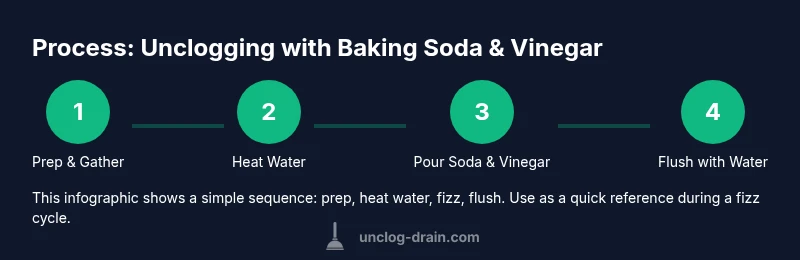
You’ll follow a clear sequence to maximize effectiveness while staying safe. Start by heating water, then add dry baking soda directly into the drain, followed by a measured pour of vinegar. Allow the fizz to work for 15–30 minutes, then flush with hot water. If the clog remains, repeat once or move to mechanical options like plunging or using a drain snake. Always validate results with a quick water run.
Flushing the drain after treatment
After the fizzing period, pour hot water steadily into the drain to carry away loosened debris and to rinse lingering residues from the pipe walls. For best results, run hot water for 1–2 minutes straight, then test the drain by running the tap on full pressure. If drainage improves but isn’t perfect, repeat the cycle once more or proceed to a mechanical method. A final hot water flush helps ensure the toilet-like backflow is minimized and odors stay in check.
Troubleshooting common issues
If you hear gurgling, or if water level rises in the sink after pouring vinegar, stop and check for possible blockages in the P-trap or further down the line. A stubborn clog with heavy grease may respond poorly to this method and require a drain snake or professional cleaning. Never mix this method with commercial drum cleaners, as dangerous fumes can form. If the clog persists after the second cycle, escalate to plunging or calling a plumber for safety and reliability.
Alternative methods for stubborn clogs
When baking soda and vinegar aren’t enough, you have options. A plunger can create some pressure that helps to break free the blockage, especially when combined with the vinegar fizz. A drain snake or hand auger can physically dislodge hardened grease or food particles. For persistent problems, consider a professional drain cleaning service to avoid damage to pipes and seals. Maintaining a regular hot-water rinse and careful disposal habits reduces future risk.
Unclog Drain's verdict and next steps
The Unclog Drain team recommends starting with baking soda and vinegar for minor, routine clogs. If progress stalls, move to mechanical remedies and seek professional help if needed. Regular maintenance—like a post-meal hot-water flush and keeping solids out of the drain—helps prevent future issues. Remember: this method is a first-line, low-risk approach, not a universal fix for all clogs. The goal is safer, slower, more consistent maintenance that preserves your plumbing over time.
Tools & Materials
- baking soda(1/2 cup for each treatment; avoid clumping)
- white vinegar(1 cup per cycle; use plain white vinegar for predictable fizz)
- hot water(Hot (not boiling) water for PVC pipes; ready after fizzing)
- kettle or pot to heat water(Heat enough water to comfortably pour; safety first)
- measuring cups/spoons(For accurate amounts (1/2 cup, 1 cup, etc.))
- rubber gloves(Protect hands from heat and residue)
- drain plunger(Helpful if you want to supplement fizzing with pressure)
- drain snake / auger(For stubborn clogs not responding to fizz)
- bucket or tray(Catch spills and keep the area clean)
- dish soap(Optional pre-wash to loosen grease)
- towel or rag(Cleanup and surface protection)
- safety goggles(Eye protection for splash risk)
Steps
Estimated time: 40-60 minutes
- 1
Gather supplies and prep area
Collect baking soda, vinegar, hot water, and tools. Clear the sink, remove the drain cover, and lay towels to catch spills. This setup minimizes mess and prepares you for a smooth fizz cycle.
Tip: Have everything within arm's reach to avoid leaving the sink mid-cycle. - 2
Heat water to a safe temperature
Boil or heat water to a safe, hot temperature. You want near-boiling, but avoid actual boiling if your pipes are PVC. Hot water helps suspend and move loosened debris after fizzing.
Tip: Safety first: use a kettle or pot on a stable surface; wear gloves when handling hot containers. - 3
Pour baking soda into the drain
Slowly pour 1/2 cup of baking soda directly into the drain. The dry powder should fall into the trap and begin to interact with any organic buildup.
Tip: Distribute evenly over the drain to maximize contact with residues. - 4
Pour vinegar and observe fizz
Pour 1 cup of white vinegar into the drain. Allow the fizz to work for 15–30 minutes as the solution loosens debris.
Tip: Avoid panicking if the fizz overflows; it’s normal and harmless in small amounts. - 5
Flush with hot water
After waiting, flush the drain with hot water for 1–2 minutes to push the loosened material through the pipes.
Tip: Keep the flow steady to prevent re-clogging from debris re-settling. - 6
Test drainage and reassess
Run the faucet to see if the water drains quickly. If it’s still slow, repeat steps 3–5 once more or move to a mechanical option.
Tip: If you hear gurgling, stop and inspect for a deeper blockage. - 7
Use a plunger if needed
If the drain is partially clogged, place a plunger over the drain and pump several times to generate pressure.
Tip: Ensure there is enough water to cover the plunger for effective suction. - 8
Consider a drain snake for stubborn clogs
For persistent blockages, insert a drain snake and rotate to break up material. This provides a physical clearing when fizzing isn’t enough.
Tip: Work slowly to avoid damaging the pipe walls; don’t force the snake beyond the trap. - 9
Finish with maintenance and cleanup
Rinse the entire area, wipe down surfaces, and run hot water after meals to prevent future buildup.
Tip: Develop a routine: monthly flushes can reduce clogged incidents.
Common Questions
Will baking soda and vinegar damage my pipes?
For most home plumbing, baking soda and vinegar are safe when used as directed. Avoid combining with harsh chemical cleaners and consider pipe material (PVC vs metal) before boiling water. If unsure, start with the gentler fizz cycle and monitor for signs of distress.
Generally safe for PVC and metal pipes when used as directed, but avoid combining with harsh cleaners. Start gently and watch for signs of distress.
Can this method unclog a slow drain completely?
This method works best for minor buildup and slow drains caused by soap scum or grease films. A completely blocked or solid clog may require mechanical tools or professional help.
Great for minor slow drains; serious blockages may need other methods.
Should I use boiling water after fizzing?
Hot water is usually fine, but boiling water can warp PVC pipes or seals over time. Use hot water that is safe to handle and avoid steam burns.
Use hot water, not boiling, to protect pipes.
How often can I repeat this method?
You can repeat the baking soda and vinegar cycle once if needed, but don’t rely on it as a daily fix. For recurrent clogs, assess underlying causes and consider professional cleaning.
You can repeat once if needed, but use professional help if it keeps recurring.
What if the clog is in the P-trap or wall?
If the clog is in the P-trap or beyond the trap, chemical-free methods may be insufficient. Stop and call a plumber to avoid pipe damage or a hidden blockage.
If the clog is past the trap, call a plumber.
Will this fix grease clogs?
Grease clogs can respond to this method initially, but heavy grease buildup often requires mechanical cleaning or professional intervention for a lasting fix.
It can help with light grease, but serious grease clogs need other methods.
Watch Video
Key Points
- Start with baking soda and vinegar, then flush with hot water.
- Wait 15–30 minutes for the fizz to work before flushing again.
- If needed, escalate to plunger or drain snake for stubborn clogs.
- Avoid mixing with chemical cleaners and protect pipes from damage.