Where to Unclog a Dishwasher: A Quick DIY Guide
Discover practical steps to unclog a dishwasher safely, from filter cleaning to using a mechanical snake. Learn where clogs start and how to restore reliable drainage for every cycle.


You can locate and clear a dishwasher clog by inspecting the filter and drain hose, then checking the sink connection. Begin with the least-invasive steps: remove standing water, clean the filter, and flush the drain with hot water. If draining remains slow, progress to a mechanical unclogging method. Keep safety in mind and avoid harsh chemicals.
Identify the problem and the right starting point
If you're wondering where to unclog dishwasher, the first step is to identify where the clog is likely located: the dishwasher filter, the drain hose, or the sink connection. Slow draining, standing water in the bottom, or foul odors typically indicate a buildup in the filter or a partial blockage in the drain line. According to Unclog Drain analysis, most dishwasher clogs start in the filter and the immediate drainage path, especially after periods of heavy use. Start by observing the symptom: is water backing up into the tub, or is it draining slowly from the bottom? Next, trace the drainage path: check the filter area inside the tub, then follow the hose to the sink. This helps you decide whether the problem is contained entirely within the dishwasher or part of a shared sink drain. If the sink side drains normally while the dishwasher struggles, the issue is usually within the dishwasher itself. If both drains are slow, the blockage may be further down the line, possibly in the branch drain or P-trap. In any case, safety comes first: turn off the power to the unit at the breaker and disconnect the inlet supply if you’ll be poking inside the machine. This early assessment saves you time and prevents unnecessary removal of components.
Safety first: before you begin
Working on a dishwasher brings together water and electricity, so a calm, methodical approach reduces risk. Unplug the unit or switch off the circuit at the breaker, and turn off the water supply valve. Have a towel, a bucket, and a shallow tray ready to catch spills. Never spray cleaners or pour chemical drain products into a running machine, and avoid mixing cleaners with hot water. Wear gloves to protect sharp edges around the filter housing, and keep children and pets away from the work area. Use only basic tools you can control by hand, and work over a washable surface. If you feel unsure at any point, pause and reassess rather than forcing components. Tighten screws gently; forcing parts can strip threads or crack housings. Remember that many dishwasher clogs are a symptom of a minor blockage that can be cleared with patient, deliberate steps—there’s rarely a need for aggressive force or chemical hacks.
Step 1: Clean the filter and spray arms
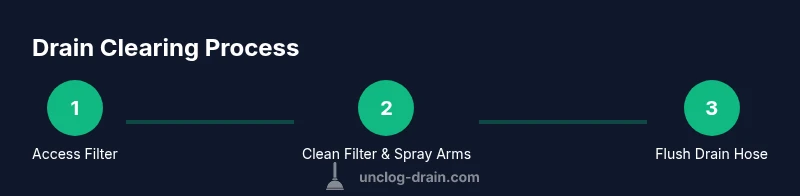
Access the filter by removing the lower rack, then twist and lift the filter assembly to expose the screen. Rinse the filter under warm running water, using a soft-bristle brush to dislodge stubborn debris. Inspect the spray arms and remove any lodged particles by rotating the arm and clearing holes with a thin tool or needle. After cleaning, reassemble the filter and spray arms and run a quick test cycle with hot water in the dishwasher to observe flow. This early cleaning usually resolves the majority of clogs since food particles are the primary culprits blocking the drain path. If debris remains, move to the drain hose inspection.
Keep a microfiber cloth handy to wipe the interior and prevent recontamination as you proceed.
Step 2: Inspect and flush the drain hose and air gap
Trace the drain hose from the dishwasher to the sink connection. If you see kinks, crush points, or a loose connection, adjust the route and secure it. Detach the hose at the connection point carefully and hold a bucket underneath to catch water. Rinse the inside of the hose with hot water using a funnel, and inspect for any blockages along its length. If your setup includes an air gap, remove the cap and clean out any debris with a flexible brush or pipe cleaner. Reattach securely and run a test cycle. Flushing the hose helps push residual debris toward the sink drain; do not force blocks back into the dishwasher.
Step 3: Check the sink drain, P-trap, and disposal connection
Because many dishwashers drain into the kitchen sink, a shared blockage in the sink drain or P-trap can mimic a dishwasher clog. Place a bucket under the P-trap, loosen the slip nuts, and allow the water to drain into the bucket. Clean out hair, grease, and food debris with gloves and a brush; reinstall the trap, and run hot water to confirm flow. If your sink connects to a garbage disposal, run the disposal briefly to clear the knockout plug and verify that water is draining freely through the dishwasher hose after a test cycle. If the disposal is jammed, it can back up into the dishwasher, causing the same symptoms. After addressing the trap and disposal, re-test with a full cycle to confirm improvements.
Step 4: Clear the line with a snake or plunger (mechanical unclogging)
If the drain remains slow, use a plumber’s snake (auger) designed for narrow tubing. Feed the snake into the drain extension until you meet resistance, then rotate the crank and gently push forward to break up gunk. Withdraw the snake slowly and inspect the end for trapped material. Rinse the line with hot water and run a cycle with a cup of hot water to verify. A plunger can also help if you don’t have a snake; place it over the sink drain and pump firmly several times to create suction that may loosen the clog’s grip. Do not apply excessive force, which can push debris into traps or damage seals. If you have a continuous problem, it’s time to consider a more thorough professional assessment.
Step 5: Reassemble, test, and establish a maintenance routine
Reinstall all components carefully, ensuring the filter, spray arms, and hoses are secure. Run several test cycles with clear water to confirm that drainage is returning to normal. If you still notice slow draining, consider scheduling a professional check to assess potential deeper problems. Finally, establish a simple maintenance routine: clean the filter weekly, flush the drain hose every month, and avoid putting fibrous foods or grease down the disposal or drain.
Step 6: Final checks and safety wrap-up
Before you call it a fix, perform a final check: ensure there are no leaks at hose connections and the door seals are intact. Wipe down surfaces and store tools properly. Note any recurring signs of clogging to track patterns that might indicate a larger plumbing issue. By following these steps, you’ve addressed the most common dishwasher drainage problems and minimized the chance of future clogs.
Tools & Materials
- Lower rack and filter removal tools (hand, screwdriver if needed)(Typically just hands; use screwdriver only if there's a retaining screw)
- Soft-bristle brush(For cleaning filter and spray arms)
- Gloves(Protect hands from sharp edges and grime)
- Towel and bucket(Catch water and keep area tidy)
- Plumber's snake (auger)(Essential for stubborn clogs beyond the trap)
- Flashlight(Inspect dark corners and hose connections)
- Old toothbrush or pipe cleaner(Detail cleaning in tight holes)
- Pliers or slip-joint pliers(Loosen hose clamps if needed)
- Screwdriver set(Remove panels or clamps if required)
Steps
Estimated time: 20-40 minutes
- 1
Remove lower rack to access filter
Slide out the bottom rack and lift away the filter housing. This exposes the filter and the area where debris accumulates. Keep the rack handy to avoid spills, and place a towel underneath to catch any residual water.
Tip: Take a quick photo of the assembly before removal so you can reassemble correctly. - 2
Extract and clean the filter
Twist and lift the filter assembly, then rinse it under warm water. Use a brush to remove lodged food particles from the mesh and seals. Dry the parts before reinstalling to prevent recontamination.
Tip: If the filter is worn, replace it rather than forcing a stubborn cleaning. - 3
Inspect and clean spray arms
Rotate the spray arms and check each hole for clogs. Remove debris with a thin tool or pipe cleaner. Rinse the arms and reinstall firmly to ensure even water distribution.
Tip: A blocked spray arm is a common cause of poor cleaning and slow drainage. - 4
Inspect the drain hose and air gap
Trace the hose from the dishwasher to the sink connection. Detach if necessary and rinse to remove buildup. Check for kinks and re-secure connections; if your system uses an air gap, clean it as well.
Tip: Keep the hose elevated above the sink level to prevent backflow. - 5
Check sink drain and P-trap
Place a bucket under the P-trap, loosen the nuts, and allow water to drain. Clean out debris, reassemble, and run hot water. If you have a disposal, briefly run it to clear the knockout plug.
Tip: Work slowly to avoid stripping threads on the trap nuts. - 6
Clear line with a snake and test
Insert the snake into the drain until resistance, then rotate and push forward to break up clog. Withdraw, rinse, and test with a cycle. If slow draining persists, consider professional service.
Tip: Never force the snake; gentle pressure is more effective and safer.
Common Questions
Why is my dishwasher draining slowly?
Slow drainage usually points to a partial blockage in the filter, spray arms, or drain hose. It can also stem from a shared kitchen sink drain if the P-trap or disposal is blocked. Start with the filter and hose checks before moving to a mechanical unclogging method.
Slow drainage often means a partial clog in the filter, spray arms, or drain hose, or a shared sink drain issue. Begin with the filter and hose checks, then try a mechanical unclogging method if needed.
Can I use chemical drain cleaners in a dishwasher?
Avoid chemical drain cleaners in dishwasher lines. They can damage seals, hoses, and disposal connections. Mechanical methods like cleaning the filter or using a plumber’s snake are safer and effective for most clogs.
No. Chemicals can damage dishwasher parts. Use mechanical methods like cleaning the filter or using a snake instead.
What if the clog is in the garbage disposal?
If the disposal is connected, run it for a few seconds to clear the knockout plug and check that water drains properly through the dishwasher hose after the cycle. A blocked disposal can back up into the dishwasher.
If you have a disposal, run it briefly to clear any plugs, then test drainage through the dishwasher hose.
How often should I clean the dishwasher filter?
Clean the filter weekly or after heavy use. Regular cleaning prevents buildup that can cause clogs and ensures better cleaning performance.
Clean the filter weekly to prevent clogs and improve cleaning.
Is a plunger safe to use on a dishwasher drain?
A plunger can be used cautiously around the sink drain, but avoid forcing it into the dishwasher itself. If the clog persists, use a snake as a safer, more targeted method.
A plunger can help around the sink, but don’t push it into the dishwasher. If it’s stubborn, try a snake.
When should I call a plumber?
If clogs recur despite several attempts, the blockage may be deeper in the main line or a failing pump. A professional assessment can prevent further damage and identify hidden issues.
If it keeps clogging after you’ve tried the steps, it may be time to call a plumber.
Watch Video
Key Points
- Identify whether the clog is inside the dishwasher or in the sink drain
- Prioritize filter and spray-arm cleaning to remove the majority of clogs
- Inspect drain hose and air gaps for kinks or blockages
- Use a mechanical method (snake) before chemicals
- Re-test with cycles and establish a maintenance routine