Dishwasher Unclog Guide: Fast DIY Fixes & Tips
Discover practical, DIY methods to dishwasher unclog drains safely. This guide covers essential tools, a clear step-by-step plan, common causes, and maintenance tips to prevent future clogs.


This guide shows you how to dishwasher unclog the drain safely using common tools and proven methods. You’ll learn the top causes, the exact tools you’ll need, and a practical, step-by-step plan to restore drainage, test for leaks, and prevent future clogs through simple maintenance routines. It emphasizes safety, when to DIY versus call a pro, and how to identify professional help early.
Understanding Dishwasher Drain Clogs
Dishwashers rely on a straightforward drainage path: the tub drains into a filter and sump, then to the drain hose and into the home waste line. When any part of this path becomes restricted, water backs up, dishes stay damp, and the cycle may halt mid-run. A common culprit is the filter and sump area where food particles accumulate. Regular cleaning of the filter is a quick win for preventing clogs. According to Unclog Drain, dishwasher drains are prone to clog buildup from food particles and grease. The root cause is usually a mix of trapped debris and soap residue that hardens with time. Before you dive in, confirm that the disposal or sink drain connected to the dishwasher isn’t blocked, since a shared drain can mimic a dishwasher-specific clog. With the right approach, you can restore flow without expensive repairs or downtime.
Common Causes of Dishwasher Drain Clogs
Most dishwasher drain clogs arise from debris that escapes the filter or accumulates in the drain hose. Foods like pasta, rice, and vegetable peels can lodge in the filter, while grease and soap scum form a sticky film that traps more particles. A cracked hose, a misaligned filter, or trapped food in the sump can also block flow. In many cases, a simple filter clean-out or hose clear resolves the issue, but stubborn clogs may require a drain auger. Understanding these causes helps you tailor your approach and avoid unnecessary disassembly. When you’re searching for a solution, remember that a dishwasher unclog is often a symptom of buildup rather than a single catastrophic blockage.
Safety First: Tools and Precautions
Safety comes first when working on any appliance. Start by unplugging the unit and turning off the water supply to prevent accidental shocks or leaks. Wear rubber gloves and use a flashlight to inspect hard-to-see areas. Avoid chemical drain cleaners in dishwashers—they can damage hoses, seals, and the pump components. Keep a bucket and towels handy to manage spills. If you suspect electrical parts are involved or you see damaged wiring, stop and call a professional. Safe, patient work minimizes the risk of further damage and saves time in the long run.
Step-by-Step Overview (High-Level)
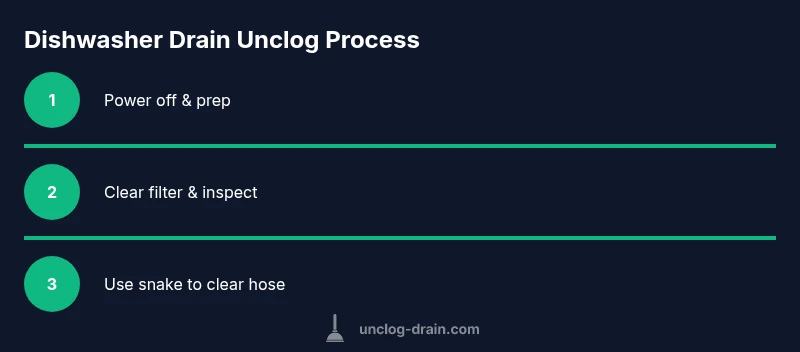
The following overview outlines the core actions you’ll perform in detail with the step-by-step section. It’s designed to give you a clear path for a dishwasher unclog without disassembly beyond the filter and accessible hose. Start by preparing the workspace, then check the filter, use a drain tool if needed, flush, and finally test the drain with a short cycle. Remember to reassemble carefully and monitor for leaks. This overview is intended to complement the detailed steps you’ll perform below and help you plan your time effectively.
Maintenance to Prevent Future Clogs
Prevention is the best cure for a recurring dishwasher clog. Clean the filter weekly or per your dishwasher’s manual, and rinse away any stuck debris before reassembly. Run hot water through the system to dissolve grease and soap scum more effectively, and consider a periodic rinse with a mild, non-foaming cleaner. Avoid overloading with bulky food scraps; scrape dishes into the trash or compost first. Regular inspection of the drain hose for kinks and secure hose connections reduces the risk of future clogs. A small, consistent maintenance routine saves you from bigger problems later and keeps your dishwasher running smoothly.
When to Call a Pro
If you’ve tried the standard steps but the drain remains clogged, it’s time to call a professional. Signs that you should escalate include persistent slow drainage after multiple attempts, unusual noises, or visible damage to hoses or seals. A licensed plumber can inspect the main drain line if there’s a problem beyond the dishwasher’s own plumbing. Early professional intervention prevents bigger, costlier repairs and reduces downtime. The Unclog Drain team recommends seeking expert help when DIY methods fail or when you notice electrical concerns.
Authority Sources
- https://www.osha.gov
- https://www.consumer.ftc.gov/articles/how-to-unclog-drains
- https://www.epa.gov/
Tools & Materials
- Manual drain auger / plumber's snake(6–8 ft length recommended for dishwasher drains)
- Bucket(To catch water and debris during cleaning)
- Rubber gloves(Protect hands from dirty water and sharp objects)
- Flashlight(Inspect dark areas like the sump and hose connections)
- Screwdriver set (flathead and Phillips)(Access drain cover, filter area, and clamps)
- Pliers (adjustable)(Grip hoses, clamps, and small parts when needed)
- Dishwasher-safe filter brush or bottle brush(For cleaning the filter and sump surface)
- Towels or rags(Maintain a clean workspace and catch drips)
Steps
Estimated time: 25-45 minutes
- 1
Power off and prepare
Unplug the dishwasher from the wall outlet and shut off the water supply to prevent leaks and electric shock. Remove the kickplate or access panel to reach the drain area. This step ensures you won’t experience unexpected movement of parts during the unclog process.
Tip: Confirm power is off with a quick test of the outlet before touching any wiring. - 2
Access and inspect the drain area
Open the bottom rack and locate the drum, filter, and sump. Remove the filter carefully and inspect for trapped debris. Use a flashlight to check the hose clamps and visible sections of the drain hose for kinks or blockages.
Tip: Take a photo before disassembly so you can reassemble correctly. - 3
Clear debris from the filter and sump
Rinse the filter under running water and remove any stuck particles. If debris is stubborn, use the brush to loosen grime around the sump. Wipe the area clean so you can clearly see any remaining obstruction.
Tip: Avoid using metal tools that could scratch plastic parts. - 4
Clear the drain path with a snake
Insert the drain auger into the drain hose or accessible trap section and gently advance until you feel resistance. Rotate the auger to break up the clog, then pull back to remove debris. Repeat as needed until water flows freely.
Tip: Do not force the snake; if resistance remains, stop and reassess. - 5
Flush and test the drain
Run hot water through the drain to flush loosened material. Reassemble the filter and access panel, reconnect power, and run a short cycle to test drainage. Check for leaks around hose connections and clamps.
Tip: Observe the first cycle carefully for any signs of leaking.
Common Questions
What causes a dishwasher to clog most often?
The most common causes are debris buildup in the filter and sump, grease or soap scum, and a blocked drain hose. Regular filter cleaning reduces the risk.
Common causes are debris and grease buildup in the filter and drain hose.
Are chemical drain cleaners safe for dishwashers?
Chemical drain cleaners are generally not recommended for dishwashers because they can damage hoses, seals, and the pump. Use mechanical clearing methods instead.
Chemicals aren’t recommended for dishwashers; they can cause damage.
Can I unclog a dishwasher myself, or should I call a pro?
Many clogs can be cleared with a manual drain auger and proper cleaning of the filter. If the clog persists after several attempts or if you see damage, call a professional.
You can usually DIY, but call a pro if it stays clogged or you notice damage.
How long does a typical DIY unclog take?
A straightforward DIY unclog usually takes about 25–45 minutes, depending on the accessibility of the clog and your familiarity with the task.
Most DIY clogs take about half an hour to an hour.
What maintenance helps prevent future clogs?
Regularly clean the filter, avoid putting large food scraps down the drain, and periodically flush the system with hot water to dissolve buildup.
Keep the filter clean and run hot water to prevent buildup.
Watch Video
Key Points
- Unclog safely with non-chemical methods
- Regularly clean the dishwasher filter to prevent clogs
- Use a snake for stubborn blockages—don’t force the tool
- Test drainage after reassembly to ensure success