How to Make Dishwasher Unclog: A DIY Guide
Learn how to safely unclog a dishwasher drain with practical, step-by-step methods using common tools. This Unclog Drain guide covers prep, tools, safe techniques, and when to call a professional.


By following this guide, you will learn how to safely unclog a dishwasher drain and restore proper drainage. Start with simple checks, then use common tools like a plunger and a drain snake, combined with baking soda and vinegar as a safe cleaner. This approach avoids harsh chemicals and reduces the chance of damage to pipes or the dishwasher.
Understanding dishwasher drains and clogs\n\nA dishwasher drain is a critical pathway that carries soiled water from the tub to the sink drain via a pump and drain hose. When fibers, food particles, grease, or mineral buildup accumulate, water may back up or fail to drain. If you’re asking how to make dishwasher unclog, the best first step is to identify where the blockage is: the filter and sump, the drain hose, or the disposal connection. Start with a careful inspection of accessible components and perform a few simple tests. In many homes the issue is a simple clog in the filter or debris in the sump that you can clear with basic tools. Avoid rushing to dismantle essential parts—the goal is to restore flow without damaging seals or the pump. This section explains common causes and practical, safe remedies you can try before calling a professional.\n\nNote: keep the work area dry and organized, and plan for a staged approach so you don’t lose track of components during disassembly.
Safety first: what not to do\n\nElectrical appliances can shock or flood if mishandled. Before touching any dishwasher internals: unplug the unit, switch off the circuit, and shut off the water supply. Never mix drain cleaners with the dishwasher’s components or run chemical cleaners down the line. Do not use metal tools that could gouge the pump housing or seals. If you smell gas or hear unusual noises, stop and call a pro. Only use tools you can clearly handle. This is about protecting you and your home while you work.\n\nSafety tips: wear protective gloves, use a flashlight for visibility, and keep a bucket nearby for spills.
Prep and quick checks\n\nBefore taking apart components, perform quick inspections: remove the bottom rack, take out the filter and basket, and rinse away lodged debris. Clean the filter thoroughly and inspect the sump for obvious obstructions. Check the drain hose for kinks or clogs at the connection to the sink or disposal. If the unit still won’t drain after these checks, you can consider deeper methods described later. This stage is about creating the best environment for safe, effective clog removal.
Tools, techniques, and approach\n\nTackle the clog with mechanical methods first, avoiding harsh chemicals. If the blockage is near the filter, a simple rinse often suffices. For deeper clogs, a plunger or a drain snake can be very effective when used with caution. The key is to work slowly, apply even pressure, and avoid forcing debris backward into seals. This section reviews when to use each tool and what to watch for during operation.
Maintenance and safe cleaners\n\nPrevention is the best cure. Keep the filter clean, run empty cycles periodically, and avoid large food scraps in the disposal. Baking soda and white vinegar can help loosen minor buildup without damaging hardware, followed by a hot-water flush. If you opt for cleaners, choose safe, non-acidic products and flush thoroughly. Do not rely on chemical drain cleaners—these can corrode pipes or damage the dishwasher’s pump over time. A regular maintenance routine reduces the likelihood of recurring clogs.
When to call a professional\n\nIf the dishwasher still won’t drain after following the steps, the issue may be more complex: a faulty pump, a frozen line, or a blocked main sewer line. A professional can diagnose with specialized tools and ensure safe reassembly to prevent leaks. In many cases, quick fixes are possible, but persistent issues warrant an expert assessment to protect your home and warranty.
Tools & Materials
- Plunger (cup or flange)(Flat, wide rubber cup works best for dislodging clogs in the dishwasher drain line)
- Drain snake/auger(Flexible, long enough to reach from the tub to the trap)
- Bucket(Catch water and debris when you disconnect hoses)
- Old towels or rags(Protect the floor; absorb spills)
- Dish soap (optional)(For lubrication when disassembling hose connections)
- Baking soda(Mild cleaning aid)
- White vinegar(Safe, natural cleaner)
- Gloves and flashlight(Protection and visibility)
- Screwdrivers or nut drivers(To loosen panels or hose clamps)
- Wrench set(If you need to loosen clamps)
Steps
Estimated time: 45-75 minutes
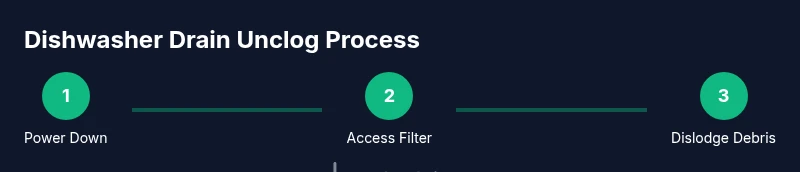
- 1
Power down and access the drain area
Unplug the dishwasher or switch off the circuit at the breaker. Turn off the water supply to the dishwasher to prevent leaks when you open the machine. Confirm power is off by attempting a quick test: the unit should not respond to the door latch when powered down.
Tip: Unplug at the outlet first, then switch off the circuit as a double safety measure. - 2
Remove racks and clean the filter
Take out the bottom rack and remove the filter and sump basket. Rinse debris under running water, using a soft brush if needed. Reassemble loosely to test drainage before full reassembly.
Tip: Take photos during disassembly to aid reassembly. - 3
Check the sump area and pump
With the filter removed, inspect the sump for trapped food or mineral buildup. Gently remove any obvious debris using gloves and a small brush. Do not pry or force the pump housing.
Tip: Use a flashlight to inspect hard-to-see corners; avoid sticking metal tools into the sump. - 4
Inspect and straighten the drain hose
Trace the drain hose from the dishwasher to the sink disposal or drain. Look for kinks, loops, or crushing at connections. Detach and straighten any tight bends during the inspection.
Tip: Ensure the hose is free of kinks and clear of blockages before reassembly. - 5
Dislodge the clog with a plunger or snake
If the blockage is not visible, use a plunger on the drain opening or feed a drain snake into the hose from the kitchen sink side. Rotate the snake slowly as you push to grab debris, then pull it back and away to remove.
Tip: Work slowly and never force the tool—excessive force can damage seals. - 6
Test and reassemble, run a test cycle
Reconnect hoses, secure clamps, and reassemble the dishwasher parts. Run a short test cycle with no detergent to verify drainage and check for leaks. If water drains normally, run a full cycle to confirm stability.
Tip: Observe for leaks around hose connections during the test run.
Common Questions
What is the first thing I should do if my dishwasher won't drain?
Power down the unit, unplug it, and shut off the water supply to prevent leaks. Then perform a quick visual check of filters and hoses.
First, unplug the dishwasher and shut off the water. Then check the filters and hoses for obvious blockages.
Can food debris cause a dishwasher to clog?
Yes. Food particles can block filters, spray arms, and pumps, leading to poor drainage.
Yes—food particles can block important parts like filters and pumps.
Are chemical drain cleaners safe to use in dishwashers?
Chemical drain cleaners are not recommended for dishwashers; they can damage seals and interact with components.
No—avoid chemical drain cleaners in dishwashers.
Will removing the bottom rack help with unclogging?
Yes, removing the bottom rack improves access to the filter, sump, and drain hose for inspection and cleaning.
Yes, it helps you reach the main components.
How long does this process usually take?
Most basic steps take about 45-75 minutes depending on access and familiarity with tools.
Usually about 45 to 75 minutes.
When should I call a plumber?
If the clog recurs after cleaning or you notice leaks or a damaged pump, call a professional.
Call a plumber if it keeps clogging or leaks appear.
Watch Video
Key Points
- Identify the blockage location before disassembly
- Power down and protect yourself
- Use mechanical methods first before chemicals
- Maintain filters to prevent future clogs