My Sink Is Blocked: Fast DIY Guide to Fix It Now
Urgent, expert guidance from Unclog Drain to diagnose and unclog a blocked sink quickly. Step-by-step fixes, safety tips, and prevention strategies to get your kitchen drain flowing again without delay.


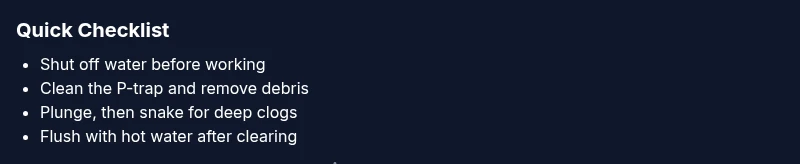
The most likely cause is a buildup of hair, food waste, and grease in the trap or pipe. Start with the simplest fixes: remove and clean the P-trap, then use a plunger, and if needed a drain snake. If the clog persists, shut off water and call a pro today for safe, effective help.
Why my sink is blocked and how we approach it
"My sink is blocked" is a common kitchen dilemma, but it isn’t hopeless. According to Unclog Drain, most clogs originate from a mix of hair, food scraps, and grease that accumulate in the trap and lower drain over time. A logical, staged approach works better than guesswork: start with the simplest fixes, wear gloves, and inspect every joint. If you can restore flow with minimal disassembly, that’s ideal—saving time, money, and mess. Remember, the goal is to restore steady drainage while protecting pipes and seals for the long term.
Common causes of kitchen sink clogs and how to spot them
Kitchen sinks see constant use and disposal. Hair from grooming, food particles from meals, and grease from cooking can cling to pipe walls and form a stubborn barrier. If a clog sits near the trap, you’ll notice slow drainage or a musical gurgle when the faucet runs. Downstream blockages from accumulated sludge or misaligned components can compound the issue. Identifying the blockage’s likely location helps you choose the most effective fix and reduces the risk of pushing debris further into the line.
Quick fixes you can try now (before you dismantle anything)
Start with the simplest options first because they’re fast and safe. A plunger with a secure seal can break loose minor clogs. If the trap is clear, pouring hot water or a baking-soda-and-vinegar combo can help loosen residue. Clean cloths and a brush remove surface grime from accessible pipes. Always avoid mixing chemical cleaners with other products, and don’t force tools into pipes if resistance is strong—pause and reassess.
How to safely remove the P-trap and inspect for debris
The P-trap’s curved section is designed to trap debris and prevent sewer gases from entering the home. Place a bucket beneath, loosen the slip nuts, and slowly detach the trap. Scrape out hair, sludge, and food particles with a brush, rinse the components, and check the gasket for wear. Reassemble tightly and run water to ensure no leaks. If you see corrosion or cracks, replace the trap before continuing.
Using a drain snake and alternative methods to clear deeper blockages
A manual drain snake can reach deeper clogs beyond the P-trap. Feed it slowly, rotate the handle, and pull back to remove debris. For stubborn blockages, a longer auger or professional tools may be required. After any snake work, flush the line with hot water to move loosened material toward the main drainage system. Always wear eye protection when operating a snake.
Safety, cautions, and when to avoid DIY fixes
Plumbing work can create hazards: slippery surfaces, sharp metal edges, and exposure to sewage. If you notice sewage backing up into multiple fixtures, strong odor, or water backing up from other drains, stop and call a plumber. Do not mix cleaners or use a chemical drain cleaner if you’re unsure about the clog’s nature, as reactions can be dangerous. PPE like gloves and eye protection are essential, and never over-tighten fittings.
Prevention tips and routine maintenance to keep drains clear
Prevention is simpler than repair. Use a strainer to catch solids, dispose of grease in the trash, and rinse with hot water weekly. Consider enzymatic cleaners that break down organic matter without harsh chemicals. Periodically inspect the P-trap for leaks and replace worn gaskets. A small, consistent maintenance routine helps keep the drain flowing and reduces the chance of recurring clogs.
What to do if the clog returns or persists despite your best efforts
If standing water remains after the above steps or you’re dealing with repeated clogs, the problem may be deeper in the plumbing or tied to sewer venting. Reattempt the snake with fresh access, checking every 6–12 inches of pipe. If the issue persists, stop DIY work, document what you’ve tried, and contact a licensed plumber for a professional assessment. Persistent clogs can indicate a more serious drainage or sewer problem.
Steps
Estimated time: 45-60 minutes
- 1
Shut off water and gather tools
Before you touch the plumbing, turn off the under-sink valve and gather a bucket, towels, plunger, flashlight, and protective gloves. This prevents messy spills and keeps the area safe as you begin the fix.
Tip: Keep your bucket nearby to catch water and prevent staining. - 2
Inspect and remove the P-trap
Place a bucket under the trap, loosen the slip nuts, and slowly pull the trap away. Clear out hair and debris with a brush or old toothbrush, rinse, and reattach. Check for cracks or wear in the gasket.
Tip: Take a photo of the trap setup before removal to help with reassembly. - 3
Test the drain after reassembly
Turn on the water briefly to test the flow. If it’s still slow, move to the snake method. A clean P-trap can restore flow quickly in most cases.
Tip: Use a flashlight to inspect for any hidden obstructions inside the trap. - 4
Use a drain snake for deeper clogs
Insert the snake into the drain and rotate slowly as you push forward. When you feel resistance, pull back to remove debris and wipe it away. Repeat until water runs freely.
Tip: Do not force the snake; if you meet heavy resistance, stop and reassess. - 5
Flush the line and test again
Run hot water through the drain to flush out debris. If you have a garbage disposal, run it with a few cold water bursts to clear any loose material.
Tip: Avoid boiling water if you have PVC pipes to prevent warping. - 6
Evaluate results and plan maintenance
If the sink drains properly, set up a simple maintenance routine: weekly hot water flush, strainers, and mindful disposal practices.
Tip: Set a calendar reminder for weekly maintenance.
Diagnosis: Sink is slow to drain or water backs up in the sink
Possible Causes
- highHair, food waste, and grease buildup in the trap or lower drain
- highBlockage further down the drain line from food scraps or sludge
- mediumLeaking or misaligned P-trap causing slow drainage
- lowVenting issues or sewer line problems
Fixes
- easyDisassemble and clean the P-trap; remove trapped debris
- easyPlunge with a proper seal to dislodge shallow clogs
- mediumRun a drain snake to clear deeper obstructions
- hardInspect venting or call a professional for deeper/sewer issues
Common Questions
What is the quickest way to fix a blocked sink?
For many, the quickest fix is a tight-seal plunger to dislodge the clog, followed by cleaning the P-trap. If the water still won’t drain, use a drain snake for deeper blockages. Safety first and avoid mixing cleaners.
Try a tight-seal plunger first, then clean the trap, and if needed, a drain snake.
Can I use chemical drain cleaners, and are they safe?
Chemical cleaners can damage pipes in some systems and release fumes if mixed with other products. Use them as a last resort and follow product instructions carefully. Prefer mechanical methods like plungers and snakes when possible.
Chemical cleaners can damage pipes. Use them only as a last resort.
When should I call a plumber?
If water backs up into other fixtures, you smell sewage, or the clog returns after several attempts, it’s time to call a licensed plumber. Persistent clogs can indicate deeper problems.
Call a plumber if the clog recurs after several attempts.
What can I do to prevent future clogs?
Install a fine-mesh strainer, avoid pouring grease down the drain, and flush with hot water weekly. Regular maintenance reduces buildup and keeps drains flowing smoothly.
Prevent clogs with strainers, avoid grease, and flush weekly.
Is it safe to use a wooden or metal snake?
A manual drain snake is a safe, effective tool when used correctly. Avoid forcing it and handle with gloves; if you feel major resistance, stop and reassess.
Use a drain snake carefully and stop if you meet heavy resistance.
Watch Video
Key Points
- Start with the simplest fixes first
- Clean the P-trap before deep digging
- Use a drain snake for deeper blockages
- Prevent future clogs with routine maintenance
- Know when to call a pro if you’re outside your comfort zone