Blocked Sink Drain: Fast Troubleshooting for Homeowners
Dealing with a blocked sink drain? This practical guide from Unclog Drain walks homeowners through fast, safe troubleshooting, step-by-step fixes, and prevention tips to keep sinks flowing.


A blocked sink drain is usually caused by grease, food scraps, or soap scum that collect in the P-trap or drain line. Start with a plunger or plumber’s snake to clear the clog in 2–3 steps, then inspect and clean the P-trap. If water still drains slowly, try a safe enzyme cleaner before calling a professional.
Why a blocked sink drain happens
A blocked sink drain happens when something slows or stops water from flowing down the drain. In many homes, the most common culprit is a build-up of greasy kitchen fats, food scraps, and soap scum that cling to the inside of horizontal pipes and the U-shaped P-trap. Over time, these substances coalesce into a solid or semi-solid blockage that restricts flow. The phrase blocked sink drain describes both the symptom (water pooling or slow drainage) and the underlying causes ( debris, hair, contamination). According to Unclog Drain, most residential clogs begin in the trap or tailpiece near the sink, where materials accumulate before moving into longer drain lines. If you ignore the issue, a minor clog can grow and eventually back up into the sink or cause sewage odors. Preventive habits—like scraping plates, using a strainer, and running hot water with biodegradable cleaners—significantly reduce the frequency of clogs. A quick, proactive approach can stop a small blockage from becoming a costly repair later.
Quick checks you can perform before you disassemble anything
Before you take apart pipes, run through a few practical, low-effort checks that catch common culprits. First, inspect the stopper or pop-up assembly to ensure it’s fully open and not caught by debris. A stuck stopper can mimic a clogged drain by restricting flow even when the pipes are clear. Remove visible gunk from the strainer and the top of the tailpiece with disposable gloves. Next, run hot tap water for 30–60 seconds to see if heat and motion loosen the blockage; if the water begins to drain more quickly, the clog may be near the surface. If you can access the P-trap from beneath the sink, place a bucket underneath, loosen the slip nuts, and inspect for hair, food particles, or mineral build-up. Finally, check that the vent system in your home isn’t blocked (a blocked vent can cause slow drainage in multiple fixtures). If you discover a blockage in the P-trap, remove it and clean thoroughly; if nothing obvious is found, the clog is likely deeper in the drain system.
Diagnostic flow: symptom → diagnosis → solution
Understanding the root cause helps you pick the right fix. If water backs up or drains very slowly, the likely causes are grease buildup in the trap or tailpiece (high likelihood) or hair and soap scum in the drain (medium likelihood). A blocked vent or sewer line is possible but less common in a single sink. Start with the simplest fixes: clean the P-trap, then use a snake to break deeper clogs. If you still see persistent drainage problems after mechanical clearing, the diagnosis shifts toward deeper pipe issues or vent problems, at which point professional help is warranted. This flow keeps you from overusing chemicals and protects your pipes.
Step-by-step fixes for common causes
When the clog is confirmed near the trap, remove and clean the P-trap first, as it captures most debris. If the trap is clear but water still drains slowly, insert a drain snake into the tailpiece and twist to break up the blockage. For stubborn clogs, you can disassemble the trap, check the horizontal drain line, and clear any remaining debris with a brush or flexible rod. After clearing, reassemble the trap, run water, and observe the flow. If the clog resists, consider a deeper clean or professional assistance to inspect the sewer line for more extensive blockages. Throughout, avoid harsh chemical cleaners that can damage pipes and traps. Enzyme-based cleaners offer a safer, slower-clearing alternative that’s gentler on plumbing.
Safe methods to clear a stopper vs. P-trap
If your sink uses a pop-up stopper, remove it and clean both the stopper and the housing. Hair and soap scum often cling to these parts, causing slow drainage. For the P-trap, fully undo the slip nuts, capture residual water in a bucket, and take the trap off. Clean the interior with a bottle brush, rinse, and reinstall. When reassembling, ensure all slip nuts are snug but not over-tightened. If you notice cracks or corrosion on the trap, replace it rather than reuse it. For a lingering clog beyond the trap, a flexible drain snake or a professional auger can reach deeper into the line, breaking tough blockages without harming pipes.
When to call a professional & prevention tips
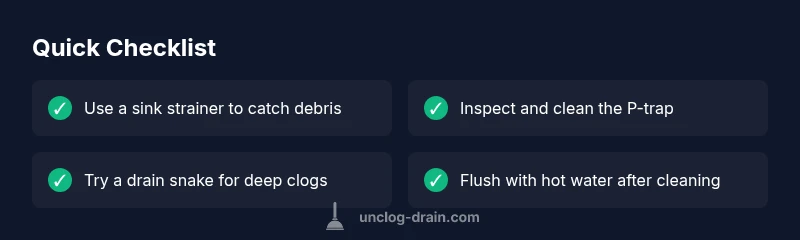
If you’ve tried the above steps and the sink remains clogged, or you notice sewage odors, water backup in other fixtures, or persistent gurgling, it’s time to call a plumber. A professional can diagnose venting issues, hidden cross-branch blockages, or sewer-line problems that DIY methods can miss. Prevention matters: use a mesh strainer, run hot water after every use, avoid pouring grease down the drain, and perform a monthly quick clean with baking soda and hot water to prevent buildup. Regular preventive maintenance saves time and money over the long term.
Steps
Estimated time: 45-60 minutes
- 1
Shut off water and prep
Turn off the faucet and place a bucket beneath the P-trap. Put on gloves and glasses for protection. This step prevents splashing and protects you from dirty water while you work.
Tip: Keep a towel handy for spills. - 2
Loosen the P-trap
Place a wrench on the slip nuts and loosen them counterclockwise. Keep the bucket underneath to catch residue. Inspect the inside of the trap for hair, grease, or debris and remove what you can reach.
Tip: Do not force tight fittings; over-tightening can strip the threads. - 3
Clean the trap
Scrub the interior of the P-trap with a stiff brush and warm, soapy water. Rinse thoroughly to remove any remaining grime. If the trap is damaged, replace it rather than attempting a repair.
Tip: Check the gasket or washer for wear and replace if necessary. - 4
Inspect the trap arm and tailpiece
Check the drain arm and tailpiece for visible blockages. Use a long brush or thin snake to clear any debris, then flush with hot water.
Tip: Avoid forcing tools too hard; apply gentle, steady pressure. - 5
Reassemble and test
Reconnect the P-trap and tighten slip nuts securely, then run water to test drainage. If the water clears, you’ve resolved the issue; if it drains slowly, proceed to a deeper clearing.
Tip: Hand-tighten, then snug with a wrench—do not overtighten. - 6
Use a drain snake for deeper clogs
Insert the snake into the drain and rotate while feeding it in. When you feel resistance, pull back and clear debris. Repeat a few times for stubborn clogs.
Tip: Rotate slowly to avoid damaging the pipe. - 7
Enzyme cleaners or hot water flush
Optionally, flush the drain with a safe enzyme-based cleaner, following label instructions. Alternatively, pour boiling water in stages to help dissolve grease. Do not mix cleaners with bleach.
Tip: Enzymes work gradually, so expect a slower but safer result. - 8
Evaluate results and plan next steps
If drainage is back to normal, monitor for a few days. If problems persist after a thorough DIY fix, schedule a professional inspection to rule out vent or main sewer issues.
Tip: Document symptoms and steps taken to share with a pro.
Diagnosis: Water backs up or drains slowly from the sink after running.
Possible Causes
- highGrease and oil buildup in the trap or horizontal drain
- mediumHair, soap scum, or food particles in the tailpiece or P-trap
- lowBlocked vent or sewer line in extreme cases
Fixes
- easyClean the P-trap and tailpiece; remove blockages by hand or with a snake
- mediumUse a drain snake to break deeper clogs; twist and pull to retrieve debris
- hardInspect venting or call a professional if the clog seems to extend beyond the trap
Common Questions
What is typically the main cause of a blocked sink drain?
Most blocked sink drains are caused by a combination of grease, food debris, hair, and soap scum that accumulate in the trap or tailpiece. Regular cleaning and a screen can prevent most clogs.
Most sink clogs come from grease, hair, and soap scum collecting in the trap. Regular cleaning and a screen can prevent most clogs.
Can chemical drain cleaners be used safely?
Chemical cleaners can damage pipes over time and may not reach deeper clogs. Mechanical methods or enzyme-based cleaners are safer and often more effective for kitchen and bathroom sinks.
Chemicals can harm pipes. Mechanical methods or enzymes are safer and often work better for sinks.
When should I call a plumber?
Call a plumber if clogs persist after mechanical clearing, if you notice multiple fixtures draining slowly, or if you detect sewage odors. These can indicate venting issues or main sewer problems.
If clogs persist after DIY fixes or you notice odors, call a plumber to check vents and sewer lines.
Is it safe to remove the P-trap myself?
Yes, removing the P-trap is a common DIY step. Ensure the water is contained, inspect for damage, and replace gaskets if worn. If you’re unsure, consult a guide or pro.
Yes, you can remove the P-trap yourself; just be careful and replace gaskets if worn.
How long does a typical DIY unclog take?
A straightforward DIY unclog usually takes about 30–60 minutes, depending on access and clog depth. More stubborn clogs or additional pipes can take longer.
Most DIY unclogs take about 30 to 60 minutes; tougher clogs may take longer.
Watch Video
Key Points
- Act quickly to minimize water waste and odors.
- Start with simple mechanical methods before chemicals.
- Regular maintenance prevents clogs from forming.
- Know when to call a professional for vent/sewer issues.