Kitchen Sink Clogs: What to Do When the Snake Doesn t Work
Urgent, practical troubleshooting for a kitchen sink clog when the drain snake doesn t work. Safe steps, proven alternatives, and prevention tips from Unclog Drain.


Most often, a kitchen sink clog that the snake can’t fix is either beyond the trap or not being used correctly. Start with safe, simple checks, then escalate to proper auger use or alternative methods before calling a pro. This guide gives practical steps for fast, effective relief.
Why a kitchen sink clog can frustrate when the snake fails
If you’ve tried the kitchen sink clogged snake doesn t work, you know how frustrating it can be. A snake can fail for two main reasons: the clog is deeper in the line beyond the trap, or the technique didn’t engage the blockage. Many kitchen sinks drain slowly because grease, food scraps, and mineral buildup form a braid that a basic snake can push rather than remove. Pressure, not just reach, matters: you need to rotate and advance with steady tension while avoiding kinking the cable. In this section we unpack why snaking can miss the mark and how to adjust without damaging pipes.
For homeowners, the problem isn’t always the tool—it’s how you use it. Snakes come in many lengths and head styles, and the right choice depends on pipe diameter and clog location. If your drain is especially greasy, the cable may glide past the clog without grabbing it. Before you panic, read on for a proven approach that blends safe checks with effective technique.
Quick checks you can do before pulling out the auger
Before grabbing the auger, run through these safe, quick checks:
- Check the sink stopper and strainer for hair and food debris; remove & rinse.
- Look under the sink for standing water or a loose P-trap; tighten connections if needed.
- Gently pour hot water or a simple baking-soda-and-vinegar treatment (shared below) to loosen surface buildup—do not rely on these as a fix.
- If you have PVC pipes, avoid boiling water as it can stress joints; use warm, not hot, water.
- Have a bucket, towels, and gloves ready. If water backs up, place towels to protect flooring.
If these steps don’t restore flow, it’s time to escalate to the diagnostic flow or a different method. Remember, patience and methodical steps reduce the risk of damage and make the problem easier to solve later.
Diagnostic flow: symptom → diagnosis → solutions workflow
Symptoms tell you where to start. Slow drainage typically means a partial clog, while complete backups suggest a deeper obstruction or a separated trap.
Diagnosis path:
- Symptom: water backs up from other fixtures; cause: main line clog. Solution: call a pro or use professional-grade equipment.
- Symptom: clog stays near the trap; cause: trap blockage. Solution: remove and clean trap.
- Symptom: snake advanced but no improvement; cause: clog beyond reach or grease braid. Solution: use longer auger or alternative tool.
Actions you can take now:
- Reassess tool choice and length.
- Try alternative methods (plunger, enzyme cleaner) while avoiding risk of pipe damage.
- If a professional is needed, document what you’ve tried to speed up service.
Step-by-step: proper use of an auger and alternatives
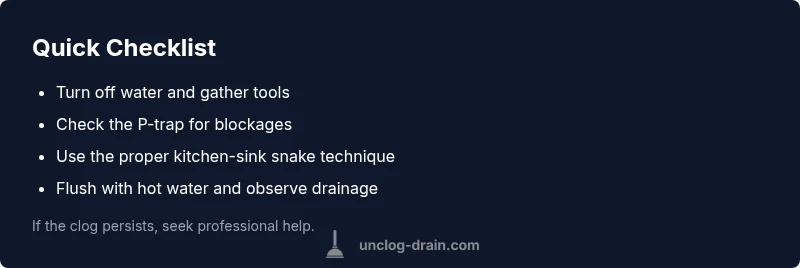
- Turn off the water and place a bucket under the P-trap. Clamp off the supply lines for safety.
- Remove the P-trap to inspect for obvious debris. Clean it, then reassemble if clear.
- Insert the auger into the drain and feed slowly toward the clog. Apply steady pressure and gentle clockwise twists.
- When you feel resistance, rotate and push slightly, then pull back to clear debris. Repeat until the path is clear.
- Reassemble the trap, run hot water, and observe drainage. If needed, repeat the process or switch to an alternative method.
- If the clog persists beyond the trap or you cannot reach it safely, stop and call a professional.
Tips for success: keep the auger tip aligned with the drain and avoid forcing it through sharp bends. Clean the auger after use to prevent re-deposits.
Safety, mistakes, and when to stop
Unsafe practices are the main reason DIY fixes fail. Never mix chemical drain cleaners with a physical snake; chemical damage can worsen leaks. Always turn off water first, wear eye protection, and protect the floor. If you encounter gas smells, wet spots, or sewage backups, stop immediately and contact a pro. Don’t force tools into the pipe—progress should be steady and controlled.
Prevention and maintenance to keep your sink flowing
Prevention is simpler than repair:
- Treat drains with enzyme-based cleaners that break down organic buildup over time, not harsh chemicals.
- Run hot water for a minute after heavy use (starches, fats) to keep grease from sticking to pipes.
- Clean the P-trap every 6–12 months and inspect for leaks or corrosion.
- Use a sink strainer to catch food debris and hair before it reaches the trap.
- If you notice recurring clogs in the kitchen sink, consider a quarterly drain check with a plumber’s camera or a proactive auger inspection.
When to call a professional and what to expect
If your kitchen sink clog persists after multiple attempts, or you suspect a main line or vent issue, it’s time to call a professional. A licensed plumber can perform a camera inspection, clear the line, and diagnose structural problems. Expect a structured estimate, potential access point drilling, and a plan for preventing future blockages. Early professional input saves time and reduces risk of重大 damage.
Steps
Estimated time: 25-40 minutes
- 1
Prepare and safety check
Turn off the water supply under the sink and place a bucket to catch any spill. Put on gloves and eye protection, and remove the sink stopper.
Tip: Keep towels ready for spills and a flashlight to inspect the trap area. - 2
Access and inspect the P-trap
Place a basin under the trap, loosen the nuts, and remove the trap to inspect for debris. Clean out all visible blockages and wipe the interior surfaces.
Tip: If you see rust or damage, consider replacing the trap. - 3
Prepare the auger and insert
Feed the auger into the drain opening with gentle pressure, keeping it straight to avoid kinking. Rotate slightly as you push forward.
Tip: Don’t force the cable past resistance; pull back and redirect if needed. - 4
Engage the clog and retrieve
When you sense the clog yields, rotate and retract the auger to pull debris out. Repeat cycles until you feel a clear path.
Tip: Document how far you reach; it helps determine clog depth. - 5
Reassemble and test
Reinstall the P-trap, tighten connections, and run hot water to test drainage. Check for leaks as the water runs.
Tip: If leaks appear, recheck seals and tighten further. - 6
Evaluate results and next steps
If flow is restored, clean up and monitor for future clogs. If not, switch to alternatives or call a professional.
Tip: Keep a maintenance plan to prevent recurrence.
Diagnosis: Slow draining or backup in the kitchen sink despite basic attempts with a snake
Possible Causes
- highClog located beyond the P-trap or in the main waste line
- highSnake technique or tool size not appropriate for the clog
- lowHard grease build-up or mineral deposits forming a rod-like obstruction
Fixes
- easyReposition and feed the snake with proper technique, ensuring you reach past the trap
- easyOpen and clean the P-trap; replace if damaged and retest drainage
- mediumIf the clog remains, try a longer auger or alternative methods, or call a professional
Common Questions
Why doesn’t the drain snake reach the clog in my kitchen sink?
The clog may be beyond the trap or the snake isn’t extended far enough. Also, mental model: grease or mineral buildup can braid and resist the tip. Adjust technique, length, and head style before concluding a deeper problem.
Often the clog is farther down or the tool isn’t the right length; try a longer auger and correct feeding technique.
Are chemical drain cleaners safe for a kitchen sink?
Chemical cleaners can damage PVC, corrode pipes, or push clogs deeper. They’re usually not a reliable long-term fix. Prefer mechanical methods or enzyme cleaners when possible.
Chemical cleaners can hurt pipes; it’s better to avoid them and focus on mechanical removal.
When should I remove the P-trap?
If debris is visible or the trap is suspected to hold the clog, remove it to clean thoroughly. Reassemble carefully and test for leaks.
Yes, removing the trap can reveal and clear the blockage.
Can I fix a stubborn clog myself if a snake fails?
Yes, with the right techniques, or by switching to a longer auger or a different approach. If not, hire a professional.
You can try a longer auger or a different approach, but know when to call a pro.
What other tools help besides a snake?
A plunger, bucket, towels, adjustable wrench, and a pipe brush can assist. Start with the simplest tools before moving to more complex devices.
A plunger and basic tools often solve quick clogs; deeper issues need a snake or pro.
Is it safe to flush with hot water after cleaning?
Yes, if the pipes are safe for hot water. Avoid boiling water on PVC; use hot but not boiling water to flush the line.
Hot water can help, but don’t use boiling water if you have plastic pipes.
Watch Video
Key Points
- Identify whether the clog is in the trap or main line
- Use the correct tool and technique for your pipe type
- Avoid harsh chemical cleaners when using a snake
- Call a professional if the clog persists after multiple attempts