Kitchen Sink Clogged: Urgent Troubleshooting Guide for Homeowners
Urgent, practical guidance to unclog a kitchen sink. Learn quick checks, trap cleaning, plunging, snaking, safe cleaners, prevention, and when to call a professional for persistent clogs.


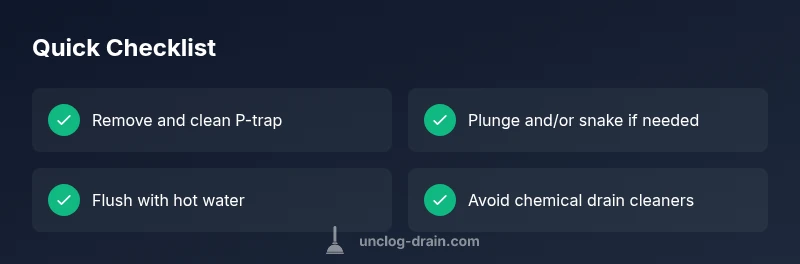
If your kitchen sink is clogged, start with the simplest fixes first. Begin by clearing the area and inspecting the P-trap for buildup, then remove and clean it. Rinse with hot water and baking soda, and attempt a plunger. If water won’t drain after these steps, move to a hand auger/snake and follow with a test run of hot water. Urgent action can often restore flow without major disassembly.
Why kitchen sink clogged happens
A kitchen sink clog is usually a sign that the drain lines below the sink are collecting grease, soap scum, and food particles. When these substances stick to the pipe walls, they form a stubborn layer that traps other debris and slows or blocks flow. According to Unclog Drain, grease buildup, food scraps, and hair are among the most common culprits that homeowners encounter. This means you don’t need a dramatic failure in order to face a slow drain; often it’s a progressive buildup that deserves a calm, methodical response. In the next sections you’ll learn how to approach the problem safely, efficiently, and without overhauling your plumbing.
Common culprits behind kitchen sink clogs
Most clogs are caused by a combination of materials that accumulate over time. Grease and oil attach to the pipe walls, while food particles and fibrous scraps catch on bends in the trap. Hair can contribute when it ends up in the disposal or is shed from hands while washing dishes. Some clogs originate from the P-trap itself or from the section of pipe just beyond it. Unclog Drain’s analysis highlights grease buildup and trapped debris as the leading factors, which helps explain why the simplest fixes—trap cleaning and mechanical clearing—often work first. Knowing the likely suspects helps you choose the right tool for the job.
Start with simple checks under the sink
Before you dismantle anything, perform a few quick checks that don’t require tools. Remove the sink strainer and visually inspect for obvious blockages. Look for standing water in the strainer basket and check whether the trap is accessible and not corroded. If you have a garbage disposal, ensure it is turned off at the electrical switch and test if running water into the disposal changes the drainage. These low-effort steps can reveal a straightforward fix and prevent unnecessary disassembly.
Remove and inspect the P-trap
The P-trap is the curved pipe under the sink that can accumulate debris. Place a bucket underneath, unscrew the slip nuts, and gently remove the trap. Clean the interior with a bottle brush or old sponge, removing any grease, food particles, or sediment. Rinse the trap with hot water and reattach it securely, ensuring the gasket seats properly. Re-run water to verify drainage. If the water still pools, you may have a clog farther down the line that the trap alone cannot clear.
Plunging: when and how to do it effectively
A cup or flange plunger can dislodge blockages close to the trap. Create a tight seal around the drain and plunge with steady, strong strokes for 15-30 seconds. If you have a double-basin sink, seal off the other drain to concentrate pressure. After pumping, run hot water to evaluate flow. If water drains slowly but gradually improves, repeat once more. Plunging is fast, inexpensive, and often successful for minor clogs.
Snakes and augers: clearing deeper blockages
If the trap is clean and plunging hasn’t fully resolved the issue, a hand auger or drain snake can reach deeper into the pipe. Feed the snake slowly while turning the handle to prevent kinking. When you encounter resistance, pull back slightly and reinsert while twisting. Continue until you feel the blockage break free or the auger advances freely. Rinse the area with hot water and test the drain again. Snakes are particularly effective for hair and fibrous debris that local plungers can’t reach.
Safe cleaners and chemical options: how to choose
Natural approaches like baking soda and hot water can help loosen residues when used in combination with vinegar, then flushed with hot water. Avoid harsh chemical drain cleaners in a kitchen sink with a disposal or PVC pipes, as these reagents can damage seals and plastics or cause hazardous fumes. If you choose a chemical cleaner, follow manufacturer directions precisely and never mix products. For many homeowners, mechanical methods (trap cleaning, plunging, snaking) achieve results without chemical exposure or risk to pipes.
Prevention: keep your kitchen sink flowing smoothly
Establish a simple maintenance routine to minimize future clogs. Use a drain screen to catch particles, avoid pouring grease down the drain, and flush with hot water once a week. Clean the P-trap more regularly if you notice frequent buildup, and be mindful of what goes into the sink—fibrous foods, potato peels, and coffee grounds can accumulate over time. A proactive approach reduces emergency jams and keeps your plumbing in good shape.
When to call a professional: knowing the limits
If you have attempted trap cleaning, plunging, and snaking without relief, the clog may lie farther down the line or involve the main sewer line. In such cases, professional plumbing intervention is required. The Unclog Drain team recommends seeking expert help when you encounter persistent backups, multiple fixtures affected, or any sign of a leak, unusual smell, or burst pipe. A trained plumber can diagnose with cameras and specialized tools, and fix the root cause safely.
Steps
Estimated time: 45-60 minutes
- 1
Prepare the area and gather tools
Clear the area under the sink, lay down towels, and assemble a bucket, adjustable wrench, a handful of rags, a bottle brush, and a flashlight. This stage ensures you’re ready to work safely and efficiently.
Tip: Keep a spare bucket and rag ready in case of splashes. - 2
Block the other sink and remove the trap
If you have a double basin, seal the other drain to prevent backflow. Place the bucket beneath the P-trap, loosen the slip nuts with an adjustable wrench, and carefully remove the trap. Expect some water and debris to come out.
Tip: Move slowly to avoid damaging seals; have towels ready. - 3
Clean and inspect the trap
Disassemble the trap and scrub the interior with a brush. Clear all debris, grease, and scale, rinse with hot water, and inspect the washers for wear. Reassemble with a tight seal to prevent leaks.
Tip: Replace worn washers to prevent future leaks. - 4
Test the drain without the trap (optional)
With the trap removed, run hot water into the tailpiece to see how far the water flows. If it drains, the blockage may be in the trap or beyond; if not, the clog is further down the line.
Tip: This test helps isolate the location of the clog. - 5
Plunge or snake as needed
If water drains after trap cleaning, try plunging the drain first. If that fails, insert a hand auger and rotate to break through the clog. Retrieve debris and flush with hot water.
Tip: Use a flange plunger for a better seal on flat surfaces. - 6
Reassemble and verify
Reattach the trap securely and run hot water for several minutes. If the flow improves but isn’t perfect, repeat steps or advance to a snake for deeper clogs. Schedule professional help if unresolved.
Tip: Always check for leaks after reassembly.
Diagnosis: Kitchen sink won't drain or drains slowly.
Possible Causes
- highGrease buildup in P-trap or pipes
- highFood scraps and fibrous material lodged in traps/pipes
- highHair or fiber buildup in traps or disposal area
- lowVent stack blockage or main line issue
- lowCracked pipe or loose connection
Fixes
- easyInspect and clean the P-trap; reinstall securely
- easyPlunge the drain to dislodge shallow clogs
- mediumUse a hand auger/snake for deeper blockages
- hardConsult a licensed plumber for vent/main line problems
Common Questions
What is the fastest fix for a kitchen sink clog?
For many clogs, removing and cleaning the P-trap followed by plunging resolves the issue quickly. If the clog persists, use a hand auger. Avoid relying solely on chemical cleaners in a kitchen sink.
Often the fastest fix is to clean the P-trap and plunge; if that fails, use a snake. Avoid harsh chemicals in a kitchen sink.
Can I use baking soda and vinegar to fix a clog?
Baking soda followed by hot water can help loosen buildup, especially when paired with a vinegar flush. It’s a safe first step but may not clear stubborn blockages. If symptoms persist, move to mechanical clearing methods.
Baking soda and hot water can loosen gunk, but for stubborn clogs, you’ll likely need plunging or snaking.
When should I call a plumber for a kitchen sink clog?
Call a plumber if you can’t clear the clog after tried traps, plunging, and snaking, or if the issue involves the main sewer line, leaks, or multiple fixtures backing up. A professional can diagnose with cameras and specialized tools.
If the clog won’t clear after DIY methods or if you suspect a main line problem, call a plumber.
Is it safe to use chemical drain cleaners in a kitchen sink?
Chemical cleaners can damage pipes and disposals if used in a kitchen sink. They may also emit fumes. Use them sparingly and follow label directions, but prefer mechanical methods whenever possible.
Chemicals can harm pipes—prefer plungers or snakes, and only use cleaners as a last resort with caution.
What if my sink drains slowly after trying fixes?
A slow drain after fixes may indicate a partial clog deeper in the line. Repeat plunging and snaking or consider professional diagnosis if flow remains inconsistent. Don’t ignore persistent slowdown.
If it’s still slow after fixes, try again or call a pro for deeper inspection.
Key Points
- Inspect and clean the P-trap first.
- Plunge before snaking for most quick clears.
- Avoid chemical cleaners in kitchen sinks with disposals.
- Prevent future clogs with regular maintenance.