Fix a Kitchen Drain Clogged: Fast Step-by-Step Guide
Learn urgent, practical steps to unclog a kitchen drain fast. From common causes to safe fixes and tools, this guide shows you DIY options and when to call a professional for persistent clogs.


The kitchen drain clogged is most often caused by grease and food-scrap buildup in the P-trap and pipes. Start by removing the trap and flushing with hot water and a plunger; if that fails, try a plumbing auger or enzymatic cleaner. For persistent jams, it's best to call a professional.
Understanding the problem: common signs and what to expect
A kitchen drain clogged typically shows up as slow drainage, standing water, or an unpleasant odor around the sink. If you notice gurgling or water backing up into other fixtures, the blockage may be deep in the line. According to Unclog Drain, most kitchen drain clogs originate from a combination of grease, oils, and food scraps that stick to the pipe walls over time. Regular cooking habits—especially frying and heavy meal prep—increase grease buildup. For homeowners, recognizing the early signs is crucial to preventing a full stop in your daily routine. Keep an eye on the disposal if you have one, as improper disposal can contribute to the issue. In many homes, a simple cleanup and a few checks can relieve a clogged kitchen drain without professional help.
Immediate checks you can do now
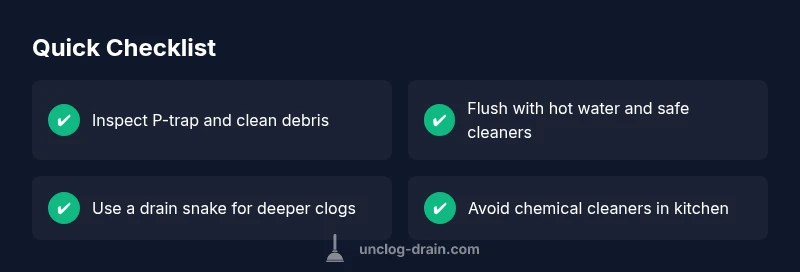
When a kitchen drain clogged blocks your sink, begin with the simplest fixes. Begin with boiling water and a careful flush through the drain to melt and loosen light grease. Use a standard plunger after removing any visible standing water to create a seal and push air through the line. If you have a garbage disposal, make sure it’s off and reset it as needed before attempting any manual clearing. Avoid chemical drain cleaners for basic clogs, as they can damage pipes and pose safety risks in a kitchen. If the drain remains slow after these steps, proceed to inspect the P-trap and the area beneath the sink. Quick, decisive action can prevent a larger backup. This is where patience and safety matter most, especially in households with children or pets.
Inspect the P-trap and grease buildup
The P-trap under your sink is a common choke point for kitchen clogs. Place a bucket underneath to catch water, then carefully unscrew the trap screws and remove the U-shaped section. Clean out the interior with a bottle brush or old toothbrush, removing grease, food particles, and gunk. Reassemble, run hot water, and test drainage. If you still notice slow drainage, this often indicates a deeper blockage further along the line. In such cases, use a plumber’s auger or seek professional service before attempting more aggressive methods. Regularly cleaning the P-trap reduces the chance of future clogs and makes routine maintenance easier. Unclog Drain emphasizes routine checks as a cornerstone of prevention.
Diagnostic flow: symptom to solution
Symptom: slow drain or standing water in the sink. Causes: grease buildup (high likelihood), food debris in trap (medium), blocked main line (low). Fixes: easy trap cleaning, easy to moderate auger use, hard pipe therapy or pro help if the main line is blocked. If you encounter a heavier clog or suspect a sewer backflow, stop and call a licensed plumber. The flow of water should be steady after each fix; if backflow persists, do not force it — professional investigation is warranted.
Tools, products, and step-by-step comparisons
A basic toolkit makes DIY unclogging faster: a plunger, a drain snake/auger, a bucket, gloves, and a wire brush. Avoid mixing chemical cleaners with standing water; they can create hazardous fumes and damage pipes. For grease clogs, hot water plus a mechanical snaking approach often works better than chemical cleaners in a kitchen setting. Enzymatic cleaners are gentler on pipes, but they require patience and repeated applications. Always follow product instructions and never use force if you encounter resistance. The goal is a clean, clear drain, not a rushed fix. Unclog Drain recommends starting with mechanical methods and moving to chemical options only if absolutely necessary.
Prevention and maintenance to avoid future clogs
Create a simple weekly habit to prevent kitchen clogs: scrape plates into the trash or compost, wipe down greasy surfaces, and flush the drain with hot water followed by a brief cycle of cold water to seal the pipes. Use a sink strainer to catch solids before they reach the pipes, and run your disposal with plenty of water. Periodically inspect the P-trap to ensure seals are tight and not leaking. If you discard cooking oils, never pour them down the drain—collect and dispose of them separately. Regular maintenance reduces the risk of unexpected clogs and keeps your kitchen running smoothly. The Unclog Drain team notes that proactive care lowers emergency calls and keeps pipes healthier over time.
Steps
Estimated time: 45-60 minutes
- 1
Prepare and safety-check
Put on gloves, protect the area, and remove standing water. If you have a garbage disposal, turn it off and unplug if possible. Gather your tools and keep a bucket handy for collecting water and debris.
Tip: Always start with safety; electricity and water don’t mix. - 2
Inspect and clean the P-trap
Place a bucket under the P-trap, unscrew the coupling nuts, and remove the trap. Clear out any grease and debris, then rinse with hot water before reassembling.
Tip: Use a flashlight to look for any small objects that may have caused the clog. - 3
Flush and re-test the drain
Reassemble the trap, then run hot water through the drain for several minutes. If water still pools, move to the next method rather than forcing it, which can damage pipes.
Tip: Pour boiling water in batches to avoid splashing and steam hazards. - 4
Use a drain auger if needed
Insert the snake into the drain and rotate to break through the clog. Extend gradually to reach the blockage, then pull out debris and flush again.
Tip: Go slowly to avoid puncturing pipes or pushing the clog deeper. - 5
Consider enzymatic cleaners for grease
Enzymatic cleaners can help break down organic buildup over time. Follow label directions and allow ample contact time before testing drainage.
Tip: These are gentler on pipes and safer around food prep areas. - 6
Evaluate if pro help is needed
If clog persists after multiple attempts, especially with any signs of sewer gas or backflow, contact a licensed plumber.
Tip: Persistent problems often indicate a main line issue that requires specialized equipment.
Diagnosis: Sink drains slowly or backs up when water is run.
Possible Causes
- highGrease/oil buildup on pipe walls
- mediumFood scraps trapped in P-trap
- lowPartial blockage in main drain line
Fixes
- easyDisassemble and clean the P-trap; reassemble and test drainage
- mediumUse a plumber’s auger to clear deeper clogs
- hardConsult a licensed plumber for main line issues or complex disposals
Common Questions
Why is my kitchen drain clogged and how can I tell if it's not a disposal problem?
Common signs include slow drainage, standing water, and gurgling sounds. If you have a disposal, ensure it’s not jammed or overloaded, which can mimic a clog. Testing with the P-trap and a snake helps determine whether the issue is in the disposal or the pipes.
Typical signs are slow draining and gurgling; check if the disposal is jammed or overloaded before treating it as a pipe clog.
Can I unclog the kitchen drain without calling a plumber?
Yes, many clogs are solvable with basic tools like a plunger, a drain snake, and hot water. Start with the trap, then use a snake for deeper buildup. If the problem persists after a couple of attempts, consider professional help.
Most clogs can be fixed with a plunger and a snake, but persistent issues may require a plumber.
Should I use chemical drain cleaners in the kitchen?
Chemical cleaners can damage pipes and pose safety hazards in kitchens, especially near food prep areas. Prefer mechanical methods first, and only use enzymatic cleaners if you want a gentler option with time.
Avoid chemical cleaners in the kitchen; opt for mechanical methods first and enzymatic options if needed.
How often should I inspect the P-trap?
Inspect the P-trap during routine sink maintenance, especially if you notice slow drainage. Clean it at least every 6-12 months or sooner if you cook heavily with oils and fats.
Check the P-trap during regular maintenance, about every 6 to 12 months.
What if water backs up into the sink when I drain?
Backups indicate a blockage somewhere beyond the trap, possibly in the main line. Stop using the sink and perform a diagnostic flow or call a plumber to avoid further damage.
Backups usually mean a deeper blockage; stop using the sink and call a plumber if needed.
When is it time to check the main sewer line?
If multiple fixtures back up together or there is slow drainage in other parts of the house, a main line blockage is possible. Seek professional assessment and avoid DIY attempts that could worsen the issue.
If several fixtures back up, the main line might be blocked; call a pro.
Watch Video
Key Points
- Start with the simplest fix and work progressively.
- Avoid chemical cleaners in a kitchen unless absolutely necessary.
- Inspect and clean the P-trap regularly to prevent buildup.
- Call a professional if the main line is suspected or if the clog persists.