Why Won't My Sink Unclog? Urgent DIY Fixes
Urgent DIY guide to diagnose and fix a stubborn sink clog, with safe steps, practical tips, tool recommendations, and clear guidance on when to call a pro.


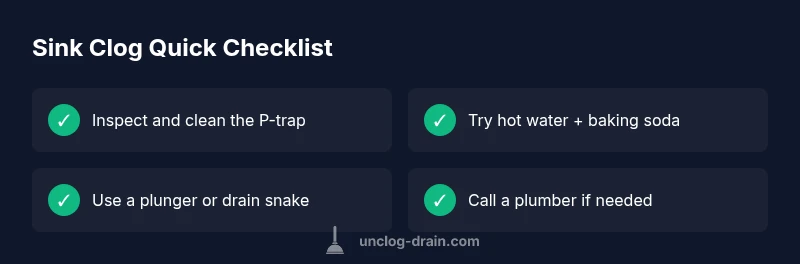
The most common reason a sink won’t unclog is buildup: hair, soap scum, and grease lining the trap and pipes. Start with the simplest fixes: clean the trap, flush with hot water, and try a plunger or drain snake if needed. If the clog persists, stop and call a plumber to prevent damage.
Why sinks clog: common culprits and quick checks
If you’re wondering why won’t my sink unclog, the answer is usually buildup in the trap or the pipe behind it. According to Unclog Drain, hair and soap scum dominate bathroom clogs, while kitchen clogs are often due to grease and food particles collecting on pipe walls. Over time these deposits form dense plugs that slow or stop flow. You don’t need harsh chemicals to fix this—most problems respond to a systematic approach. Unclog Drain analysis (2026) shows that starting with the trap, then progressing to mechanical methods, yields the highest success rate with the fewest risks. A slow drain is a warning sign, not a doomed problem, and identifying the right culprits helps avoid unnecessary remedies. If the question continues to nag you, remember that the core idea is simple: remove the obstruction from the accessible parts and restore natural flow.
Before you dive in, prepare the area: place towels or a bucket under the trap, and have a wrench, pliers, a bucket, and gloves within reach. Check under the sink for any signs of leaks or corrosion, and ensure you have a way to safely dispose of any pulled debris. If you share your home with a disposal unit, consider the extra steps involved, as disposal-related clogs may require different techniques. The goal is to reestablish a clear path for water while minimizing exposure to dirty water. The Unclog Drain team emphasizes patience and method over brute force when facing stubborn clogs.
Finally, keep in mind that chemical drain cleaners can irritate skin and damage pipes if misused. If you’re uncertain, move to mechanical methods first and reserve chemical solutions for isolated, well-contained cases. Always prioritize safety and turn off any nearby appliances when working near the drain.
Start with the simplest fixes you can do right now
When you face a slow or blocked sink, the fastest path to relief is to start with the simplest, least invasive steps. First, clear the area and protect the floor. Remove the strainer if you have one and inspect the trap for obvious blockages. A small amount of standing water is normal—yours should eventually drain away as you work. If you see hair or debris inside the trap, remove it with gloved hands or a pair of pliers. Rinse and reassemble the trap, then test with water to see if flow has improved. If the sink still drains slowly, move to the next steps. A quick hot-water flush can help dissolve soap scum and grease that cling to the inside walls. If you’re comfortable, pour a kettle of near-boiling water into the drain in stages, pausing to let it work. For kitchen sinks, a baking-soda-and-vinegar approach can help; let the fizzing action sit for several minutes before flushing with hot water. As you progress, keep in mind that the path to a clear drain is often sequential: remove the easy blockages first, then escalate to mechanical clearing. If you’re dealing with a shared line or a multi-fixture system, the root cause could be farther away from the trap, and you may need to apply more advanced techniques.
If you’re dealing with stubborn clogs and the phrase why won’t my sink unclog pops up again in your mind, remember that a practical approach—trap inspection, mechanical clearing, and controlled flushing—often resolves most household clogs without resorting to chemicals.
How to use a plunger and drain snake effectively
A plunger can be surprisingly effective when used correctly. Start with a cup plunger (not the flange type for toilets) and seal it over the drain. Use steady, up-and-down pulses to push and pull the clog loose. After a few minutes, lift the plunger to see if the water drains away. If progress is slow, repeat the process and then test the drain by running water. If the plunger fails to shift the clog, switch to a hand-powered drain snake. Insert the snake into the drain while turning the handle clockwise. When you feel resistance, rotate and push gently to break up or hook the clog. Withdraw slowly to avoid pushing material further down the line, then flush with hot water. For double sinks, block the other side to maximize suction and prevent air from escaping. If the blockage remains stubborn after attempting both tools, it’s likely deeper in the line or in the P-trap beyond easy reach. At that point, consider moving to more involved steps or contacting a professional. Safety note: never mix chemical cleaners with plunger use, and avoid metal-to-metal contact that could scratch pipes.
In some scenarios, combining methods yields results: a pre-flush with hot water, followed by plunger work, then a snake can clear both surface and near-surface obstructions. The goal is to restore flow without introducing new problems. If you’re unsure about the right technique for your setup, pause and re-check your plumbing layout; one wrong motion can push the clog further or crack a joint.
Removing and cleaning the P-trap (the accessible choke-point)
The P-trap is a curved pipe under the sink designed to trap debris and prevent sewer gases from entering the home. If you have a stubborn clog, the trap is the most common place to intercept it. Place a bucket beneath the trap, then use a wrench to disconnect the trap’s slip nuts. Carefully remove the trap and inspect its interior. Clear any hair, grease, or sediment with a bottle brush, old toothbrush, or a coat hanger. Rinse the trap with warm water and reassemble it securely, ensuring the washer or gasket is in good condition. Refit the trap carefully to avoid leaks. Re-test by running water through the drain. If the trap is damaged or misshapen, replace it. While you’re at it, check the pipe directly after the trap for any debris—sometimes the clog sits just beyond the trap in a straight run, and you’ll need to remove that material as well.
If removing the trap doesn’t improve drainage, consider a deeper clean of the drain line or using a snake to clear the next section of pipe. This step is often the turning point where you see real improvement, so stay patient and methodical. If you notice persistent leaks or rust, it may be time to call a professional to avoid future problems. The trap is a common but critical component; a secure seal is essential for preventing odors and leaks while the drain remains clear.
For safety, wear gloves and eye protection, and never tighten joints beyond snug—over-tightening can crack fittings and cause leaks.
Deeper cleaning options: enzymes vs. caustic cleaners (and why caution is advised)
If simpler fixes fail, enzymatic cleaners offer a gentler path to break down organic material without harsh chemicals. These cleaners rely on microorganisms that consume organic debris over time, which can gradually improve flow in stubborn pipes. They’re typically safer for septic systems and less harmful to your pipes than caustic or acidic cleaners. However, enzymatic cleaners require time to work, so you won’t see an immediate result. For immediate relief, many homeowners turn to safe mechanical methods first, then reserve cleaners for ongoing maintenance. If you choose chemical cleaners, read the label carefully, follow safety instructions, and never mix products. Never mix chemical cleaners with bleach or ammonia, as dangerous gases can form. If you live in a rental or condo, check with the building management before using strong cleaners. In all cases, a clogged sink that keeps returning after repeated DIY attempts should be evaluated by a professional to rule out more serious problems.
When a chemical option seems tempting, pause and evaluate your options: sometimes a clogged sink is a signal that there’s a more substantial issue deeper in the plumbing network. The Unclog Drain approach emphasizes disciplined, stepwise progression: trap check, surface clearing, then deeper clearing if necessary. If you’ve tried a few rounds of methods without success, it’s time to call a licensed plumber.
Finally, consider the bigger picture: recurrent clogs may indicate a wider problem in the drainage system, such as a blocked main line or venting issues. In those cases, DIY methods can provide only temporary relief. The prudent choice is to consult with a professional who can perform a camera inspection or locate the block with specialized tools.
Prevention tips: keep your sinks flowing smoothly
Prevention is easier than repair. Regular maintenance can drastically reduce the odds of a clog. Create a routine that includes periodic trap checks, using hot water flushes, and mindful disposal habits. Use drains screens to catch hair and large debris, especially in bathrooms. In kitchens, avoid pouring grease down the drain and wipe greasy pots before washing. Run cold water while the disposal is in use, then hot water after to push grease through the pipes. Periodically clean the trap with a brush and remove buildup before it becomes a problem. A small amount of baking soda followed by hot water can help maintain grit-free pipes without harsh chemicals. If your home has older piping, consider scheduling routine professional checks to prevent major blockages. By incorporating these habits, you can significantly reduce the frequency of clogs and extend the life of your plumbing system, all while staying safe and efficient.
Quick diagnostic checklist you can print and use
- Is the clog isolated to one sink or affecting multiple fixtures?
- Have you inspected and cleaned the P-trap?
- Did you try a plunger properly, and did it alter the clog at all?
- Have you attempted a drain snake or auger deeper in the drain?
- Is there any foul odor indicating sewer gas or a vent issue?
- Are you using chemical cleaners, and are you comfortable with the safety precautions?
- When did the problem start, and has it recurred after fixes?
- Do you hear gurgling in other fixtures, suggesting venting problems?
Use this checklist to guide your troubleshooting and determine when to call a pro. The goal is a clear drain and peace of mind, not a risky experiment.
Quick wrap-up: if the clog persists, when to call a plumber
If you’ve tried all the recommended steps and the sink still won’t drain, it’s time to escalate. A professional plumber can perform a deeper inspection, including camera inspection of the pipe to identify hidden blockages or pipe damage. Complex blockages, multiple fixtures affected, or slow drainage after multiple DIY attempts are all signals that a pro is needed. The Unclog Drain team recommends seeking expert help promptly when there are recurring clogs, persistent leaks, or unusual odors. A professional can prevent further damage and save you time and frustration.
Steps
Estimated time: 45-60 minutes
- 1
Gather tools and protect the area
Assemble a bucket, gloves, pliers, wrench, a plunger, and a drain snake. Place towels or a basin under the sink to catch water. This keeps cleanup quick and reduces mess when you open the trap.
Tip: Check the supply of clean rags and have a spare container for debris. - 2
Turn off water and inspect the trap
Place the bucket underneath and loosen the trap’s slip nuts. Remove the trap and clear any visible debris. Rinse the trap with warm water to verify it’s clear before reassembling.
Tip: Take a photo of the trap setup before disassembly to ensure correct reassembly. - 3
Clear the trap and run a test flush
Reassemble temporarily and run hot water to test. If water remains in the trap, disassemble again to ensure no hidden obstructions linger inside.
Tip: Never force the trap; if threads cross, re-align gently before tightening. - 4
Use a drain snake for deeper clearing
Insert the snake into the drain and rotate the handle to dislodge or hook the clog. Withdraw slowly and flush with water to verify flow.
Tip: Work gradually; don’t force the snake where it feels stuck. - 5
Flush with hot water and safe cleaners
After mechanical clearing, flush with hot water. If needed, a small amount of baking soda followed by vinegar can help, then flush again.
Tip: Avoid mixing cleaners with bleach or ammonia. - 6
Reassemble and test across fixtures
Reconnect all parts firmly and test the sink with running water. Check for leaks and odors. If the clog returns, move to a more advanced method or call a pro.
Tip: Double-check seals; leaks can masquerade as ongoing clogs. - 7
Know when to call a pro
If you still can’t clear the drain after repeated attempts, or if the clog affects other fixtures or emits strong odors, contact a licensed plumber for a camera inspection and professional cleaning.
Tip: Document steps you’ve tried to help the pro diagnose faster.
Diagnosis: Sink drains slowly or won’t drain after using water
Possible Causes
- highHair and soap scum buildup in the trap or pipes
- highGrease or food particles in kitchen drain
- mediumDry or misaligned P-trap
- lowVenting issues causing slow drainage
Fixes
- easyCheck and clean the trap (P-trap) under the sink; remove debris
- easyFlush the drain with hot water; follow with baking soda and vinegar if needed
- easyUse a plunger to create suction and dislodge the clog
- mediumUse a drain snake/auger to clear the pipe beyond the trap
- mediumIf clog persists or affects multiple fixtures, call a licensed plumber
Common Questions
Why do sinks clog so often, and can I prevent it?
Sinks clog from hair, grease, and food debris that accumulate over time in the trap and pipes. Regular cleaning and mindful disposal greatly reduce recurring clogs. Use drain screens and avoid pouring grease down the drain.
Sinks clog mainly from hair and grease building up; regular cleaning and screens help prevent it.
Is boiling water safe for all sinks?
Boiling water can help in some cases, particularly for grease in metal pipes, but it can damage PVC or older pipes. Use caution and test a small amount first.
Boiling water can help some clogs but may damage certain pipes; test first.
Are chemical drain cleaners safe to use?
Chemical cleaners can damage pipes and are hazardous to skin and eyes. Use them as a last resort and follow label instructions. Prefer mechanical methods or enzymatic cleaners when possible.
Chemical cleaners can be risky; use them sparingly and prefer mechanical methods first.
When should I call a plumber for a sink clog?
Call a plumber if the clog persists after several DIY attempts, if multiple fixtures are affected, or if you notice leaks, sewage smells, or complex piping. A pro can perform a camera inspection and professional cleaning.
If DIY fixes fail or you have more than one clogged fixture, call a plumber.
What tools are essential for DIY unclogging?
Keep a plunger, drain snake, adjustable wrench, bucket, towels, and gloves handy. A basic toolkit covers most household clogs and helps you stay safe.
A plunger, drain snake, and basic tools usually handle most clogs.
How can I prevent future clogs in the bathroom sink?
Install a fine-mesh drain screen, wipe away hair and soap buildup, and run hot water after using the sink. Regular trap checks also help catch buildup early.
Use a drain screen and regular maintenance to prevent clogs.
Watch Video
Key Points
- Identify whether the clog is local or shared across fixtures.
- Start with trap cleaning and mechanical methods before chemicals.
- Progress logically: trap → plunger → snake → professional if needed.
- Prevent future clogs with screens and mindful disposal.
- When in doubt, a licensed plumber provides safe, thorough resolution.