How to Unclog the Drain on a Dishwasher: A Step-by-Step Guide
Learn a practical, safe method to unclog the dishwasher drain. This guide covers tools, safe techniques, and common mistakes to avoid, helping you fix drainage quickly and confidently.


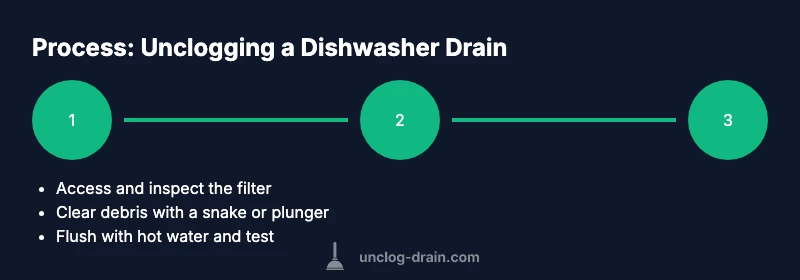
Unclogging the dishwasher drain is a safety-first, step-by-step task. Start by unplugging the unit and turning off the water supply, then remove the lower rack and filter to expose the drain. Clear debris with a plunger or a narrow drain snake, inspect the drain hose and pump housing, rinse, and reassemble before running a short test cycle.
How the dishwasher drain system works
A typical dishwasher drains through a pump, a filter and screen, a sump, and a drain hose that leads to your home's wastewater line. When you run a cycle, the pump pushes used water through the filter to catch solids. If debris clogs the filter, sump, or hose, water backs up and the dishwasher won't drain properly. Understanding this path helps you diagnose and fix clogs. This is also a key point when you consider how to unclog the drain on a dishwasher, and it grounds the practical steps that follow. Regular maintenance keeps the path clear and reduces the chance of recurring clogs.
The pump impeller, filter assembly, and check valve work together to control flow and prevent backflow. If any of these components become obstructed, you’ll notice standing water, poor rinsing, or extended cycle times. A basic awareness of these parts helps you decide whether a simple cleaning may solve the problem or if a professional assessment is needed.
Common causes of dishwasher drain clogs
Dishwasher drains clog primarily from routine use. Food scraps and grease that escape the filter can accumulate in the sump or hose, forming a stubborn blockage over time. Hard water minerals can buildup on the filter, spray arms, or interior surfaces, reducing flow. Improper loading—large chunks on plates, plastics sealing around rims, or items that shed fibers—can also introduce debris into the drain path. Finally, a kinked or misrouted drain hose can mimic a clogged drain by creating a bottleneck downstream. Recognizing these causes helps you address the root problem rather than just the symptom.
Safety and prep before you begin
Safety comes first when you tackle a dishwasher drain issue. Start by unplugging the dishwasher from its outlet and turning off the water supply if applicable. If your unit is hardwired, switch off the circuit at the breaker. Have a bucket and towels ready to catch residual water. Wear gloves to protect your skin from dirty water. Keep children and pets away from the work area. Finally, create a clean workspace so you can inspect the drain area without spreading debris.
Clear and safe unclogging methods
Mechanical clearing methods are preferred for dishwashers because chemical drain cleaners can damage seals and pump components. Begin by removing the bottom rack, then the filter, to access the sump and drain. If debris is visible, remove it by hand or with a damp cloth. For stubborn clogs, insert a drain snake into the sump or through the drain hose and rotate to break up the blockage. If you don’t have a snake, a small plunger can help create suction to loosen debris, but avoid excessive force that could push water back into the dishwasher or into the sink.
Maintenance and daily habits to prevent clogs
Prevention is easier than clearing a stubborn clog. After meals, scrape plates to remove solids before loading. Clean the filter weekly or as needed by rinsing under warm water and brushing away any residue. Run hot water through the sink before starting dishwasher cycles to ensure the drain line is primed and not full of standing water. Consider using an approved dishwasher cleaner monthly to remove mineral buildup from interior surfaces. These practices reduce the frequency and severity of clogs.
Troubleshooting persistent clogs and when to dial a pro
If you’ve tried the above steps and the dishwasher still won’t drain, there may be a deeper issue such as a pump impeller obstruction, a blocked main sewer line, or a fault in the check valve. Do not force parts or use aggressive tools that could damage components. If backflow continues, leaks appear, or sewage odors persist, stop using the appliance and contact a licensed plumber. Clogs in the main line require professional equipment and expertise to resolve safely.
Authoritative sources and further reading
For safety and best practices, consult trusted resources from government and university-based forums on household plumbing maintenance. These sources offer guidelines on safe disassembly, proper tools, and maintenance routines that complement hands-on DIY steps. Always cross-reference any technique with official recommendations and adhere to local codes when performing repairs.
Tools & Materials
- Gloves(Rubber or nitrile; protect hands from dirty water)
- Bucket(For catching water and debris)
- Towels or rags(Absorb spills and protect the floor)
- Screwdriver set (Phillips and flathead)(To remove access panels or screws)
- Drain snake / auger(Manual snake up to 3 ft; use gently to avoid damaging the pump)
- Plunger (sink-style)(Soft-plunger can help if the clog is near the access point)
- Flashlight(Better visibility into sump and hose)
Steps
Estimated time: 30-45 minutes
- 1
Power down and prep
Unplug the dishwasher at the outlet and shut off the water supply to prevent leaks. This is essential for safety before you touch any internal components.
Tip: Keep the plug nearby and dry hands before handling. - 2
Expose the drain area
Remove the bottom rack, detach the toe-kick plate or access panel if present, and locate the filter and sump. Clear loose debris around the opening.
Tip: Take a quick photo of reassembly to avoid mistakes. - 3
Inspect and clean the filter
Carefully remove the filter and rinse it under warm water to remove trapped particles. A dirty filter is a common cause of slow drainage.
Tip: Do not force the filter loose; twist gently. - 4
Check the drain hose
Inspect the drain hose for kinks or clogs up near the end where it attaches to the disposal or drain. A kink can mimic a full clog.
Tip: Disconnect the hose only after securing the bucket to catch water. - 5
Clear the line with a snake or plunger
Insert the narrow drain snake into the sump or hose opening and rotate to break up debris. If using a plunger, create a seal and push/pull steadily.
Tip: Be gentle to avoid damaging the pump impeller. - 6
Flush and test
Run a short empty cycle with hot water to flush debris through the system. Observe drainage and look for air bubbles.
Tip: If water backs up, stop and re-check connections. - 7
Reassemble and monitor
Reconnect components, replace the rack, and run a full cycle to confirm normal drainage. Check for leaks at door and hose connections.
Tip: Keep an eye on the first real load after reassembly.
Common Questions
Can a dishwasher drain be clogged by food particles?
Yes. Food debris, grease, and food particles can accumulate in the filter or sump and slow or block drainage. Regular cleaning reduces this risk.
Food debris can clog the dishwasher drain; clean the filter regularly.
Is it safe to use chemical drain cleaners in a dishwasher?
No. Chemical drain cleaners can damage dishwasher seals and pump components and may contaminate dishes. Use mechanical clearing methods instead.
Don't use chemical drain cleaners in a dishwasher; stick to mechanical methods.
How long should I wait after unclogging before running dishes again?
Run a short empty cycle to verify drainage, then proceed with a full load if no leaks or backups occur.
Run a quick test cycle to ensure the drain is clear.
When should I call a plumber?
If the clog persists after multiple attempts or you notice sewage backups, leaks, or main sewer issues, seek professional help.
If it keeps backing up, call a plumber.
Can a dishwasher clog be prevented?
Yes. Scrape leftovers, clean the filter, use proper detergents, and perform periodic checks to avoid buildup.
Prevent clogs by cleaning the filter and scraping dishes.
Watch Video
Key Points
- Unplug and ensure power safety before any work.
- Start with filter inspection and cleaning as a first step.
- Use mechanical clearing tools before considering chemicals.
- Test drainage with a short hot-water cycle.
- Prevent future clogs with regular maintenance.