Can You Put Drano in a Dishwasher to Unclog It? A Safe DIY Guide
Discover why Drano should never be used in a dishwasher and learn safe, effective at-home methods to unclog it in 2026. Expert tips from Unclog Drain.


Can you put Drano in a dishwasher to unclog it? No—Drano and other chemical cleaners are unsafe for dishwashers and can damage seals and hoses. According to Unclog Drain, the quickest fix is to clean the filter and spray arms, flush with hot water, and use dishwasher-safe cleaners or a manual snake if needed.
Why Drano Is Unsafe for Dishwashers
If you're wondering can you put drano in a dishwasher to unclog it, the answer is no. Chemical drain cleaners are not designed for appliances with sealed components and electronic control boards. According to Unclog Drain, pouring these powerful caustics into a dishwasher can degrade rubber gaskets, corrode metal parts, and damage seals around the door and hoses. The result can be leaks, electrical faults, and expensive repairs. Even if the dishwasher seems fine after a flush, lingering residue can transfer to dishes and the interior of the unit, undermining safety and performance. In many cases, clogs are caused by food debris, grease, or mineral buildup that can be addressed with safer techniques rather than harsh chemicals.
Safer Alternatives to Unclog a Dishwasher
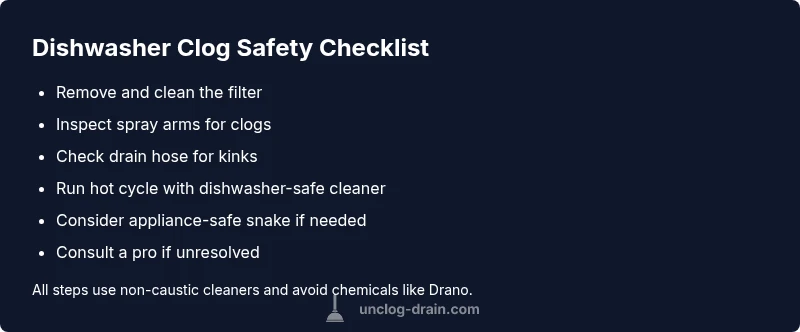
For a clog that won't budge, start with non-chemical methods. Remove the lower rack and take out the filter; rinse under warm water to clear trapped food. Use a soft brush to clear debris from the filter housing and spray arms. Inspect the spray arms for clogged nozzles; a straight pin or toothpick can clear obstructions. If you suspect a buildup in the drain, use a dishwasher-safe cleaner and run a hot cycle to dissolve grease without residues. A plumber's snake designed for appliances can reach deeper clogs, but proceed gently and avoid forcing parts. Do not mix cleaners or use bleach with ammonia—this can create dangerous fumes. Regular maintenance, proper loading, and scraping plates before loading reduce the chance of future clogs.
How Dishwashers Actually Get Clogged
Dishwashers clog for a few common reasons: stubborn food particles not rinsed away, grease mismanaged during pre-wash, and mineral buildup from hard water settling in the filter and pump area. Over time, filters become less effective, spray arms get blocked, and the drain path narrows. Heavy pots and pans can also redirect water flow and push debris toward the filter. Understanding these patterns helps you intervene early. Regular cleaning of compartments and screens keeps the system flowing freely and minimizes the need for aggressive cleaners that could harm the unit.
Quick DIY Checks You Can Do Right Now
Start with the simplest checks before pulling apart hoses. Unplug the dishwasher and remove the lower rack. Take out and rinse the filter assembly; tap any stubborn debris into a trash can rather than the sink. Inspect the spray arms for stuck food and clear with a small brush or pin. Look at the drain hose behind the machine for kinks or bends; a gentle flex and reroute can relieve pressure that traps water. If you have a disposal connection, ensure the knockout plug is removed and the disposal is clear. Finally, run a hot water cycle with the door closed to push debris toward the drain. These steps address the most common causes without harsh chemicals.
Step-by-Step Fix: Clean the Filter and Spray Arms
- Power down the unit and remove the lower rack. 2) Detach the filter assembly and rinse under hot water, removing all food particles. 3) Inspect the filter housing for grease and wipe clean. 4) Remove each spray arm and clear clogged nozzles with a thin tool. 5) Reassemble, run a hot water wash with your preferred dishwasher-safe cleaner, and observe water flow. 6) If water still pools, move to hose inspection and cleaner-safe methods. 7) Test with a short cycle and a rinse to confirm full drainage. 8) Document the result for future prevention. Tip: always wear gloves and safety glasses.
The Right Way to Use Tools: Snakes and Safe Cleaners
When a clog persists beyond filters and spray arms, a plumber's snake designed for appliances can reach deeper pockets. Use gentle, clockwise motions and avoid forcing the snake, which can damage the pump. Opt for dishwasher-safe cleaners without caustic chemicals and never mix products. If you decide to try a small amount of enzyme-based cleaner, follow package directions and run a long cycle with extra water. These methods minimize risk while improving chances of clearing the clog.
Running the Right Cycle and Maintenance Tips
After clearing debris, run a shorter, hot-water cycle to evaluate drainage. If your dishwasher continues to back up, pause and re-check the hose and connections for hidden on-path clogs. Periodically, inspect and clean the filter and spray arms to maintain optimal performance. Use a rinse aid to improve water sheeting and reduce mineral buildup. Regular maintenance, prompt drainage checks, and careful dish loading can prevent future clogs and extend the life of the unit.
Troubleshooting Flow: Symptom to Solution
If you notice standing water after a cycle, start with the filter and spray arms (easy fixes). If drainage remains slow, check the drain hose for kinks or obstructions (easy). For persistent issues, inspect the disposal connection and air gap, or consider a professional assessment (medium). Throughout the process, avoid chemical drain cleaners in the dishwasher and prioritize mechanical cleaning. The goal is a clear path for water, not chemical residue on dishes.
Prevention: Keeping Your Dishwasher Clog-Free
Preventing clogs is easier than fixing them. Rinse dishes before loading, avoid overloading, and use a fine mesh filter if your model supports one. Schedule a quarterly cleaning of the filter housing and spray arms. Consider water-softening treatment if you have hard water, which reduces mineral buildup. Finally, keep an eye on unusual noises or changes in wash performance—early clues help you intervene before a full blockage forms.
Steps
Estimated time: 30-60 minutes
- 1
Power Down and Safety Check
Unplug the dishwasher and switch off the circuit to prevent shocks. Verify the area around the machine is dry before starting any inspection. Gather gloves and safety glasses for protection.
Tip: Safety first: never work on live electrical appliances. - 2
Remove and Clean the Filter
Take out the bottom rack and access the filter assembly. Rinse under hot running water, using a soft brush to dislodge stuck particles. Reinstall once clean and dry.
Tip: A clean filter dramatically reduces clog risk. - 3
Inspect Sprayer Arms
Remove spray arms and inspect for clogged nozzles. Clear obstructions with a thin tool; avoid bending or damaging the arms. Reattach securely and ensure proper rotation.
Tip: Test spray arms by turning them manually before running a cycle. - 4
Check Drain Hose and Air Gap
Locate the drain hose behind the unit; check for kinks and ensure a smooth curve to prevent backflow. If your model has an air gap, verify it is clear of debris.
Tip: A gentle bend is better than a sharp kink. - 5
Run a Test Cycle
Run a hot-water cycle with a dishwasher-safe cleaner. Observe drainage and listen for normal pump activity. If water remains, proceed to deeper checks or professional help.
Tip: Avoid overloading cycles to allow clear water flow.
Diagnosis: Dishwasher is draining slowly or leaving standing water after a cycle
Possible Causes
- highDebris buildup in filter or pump screen
- highClogged spray arms or dishwasher drain hose
- mediumAir gap or disposal connection blocked
- lowKinked drain hose or incorrect installation
Fixes
- easyRemove and clean the filter, then clear debris from the pump screen
- easyInspect and clean spray arms; clear blocked nozzles
- easyCheck the drain hose for kinks; straighten and clear blockages
- mediumRun a hot water cycle with a dishwasher-safe cleaner; if unresolved, call a professional
Common Questions
Is it safe to pour Drano or other chemical drain cleaners into a dishwasher?
No. Chemical drain cleaners can damage seals, hoses, and electronic components in a dishwasher and may leave harmful residues. Always avoid these products in appliances.
No. Chemical drain cleaners can damage your dishwasher and leave dangerous residue, so avoid using them.
What should I use to unclog a dishwasher instead?
Use dishwasher-safe cleaners, clean the filter and spray arms, check the drain hose, and consider a manual snake designed for appliances. Avoid mixing cleaners and never use caustic chemicals.
Stick to dishwasher-safe cleaners and manual clearing methods; avoid harsh chemicals.
Why does a dishwasher clog occur?
Most clogs come from food debris, grease, and mineral buildup that accumulates in the filter and pump area over time.
Clogs usually come from food and grease buildup and mineral deposits.
Can a clogged dishwasher drain back up into the sink?
Yes, a blockage can cause water to back up into the sink or dishwasher itself if the drain path is restricted.
Yes, clogs can cause backflow into the sink if the drain is blocked.
When should I call a professional?
If basic troubleshooting fails or clogs recur, a licensed technician can diagnose internal pump or valve issues and prevent further damage.
If it still doesn’t drain after trying the safe steps, call a pro.
What safety precautions should I take before DIY?
Unplug the unit, switch off the circuit, wear gloves, and read the manual. Keep cleaners away from heat sources and stored dishes.
Unplug the dishwasher and wear gloves before starting.
Watch Video
Key Points
- Never use Drano in a dishwasher.
- Clean the filter and spray arms regularly.
- Inspect the drain hose and air gap for kinks.
- When in doubt, call a licensed technician for persistent clogs.