How to Unclog a Garbage Disposal with an Allen Wrench
Learn how to safely unclog a garbage disposal using an Allen wrench. This step-by-step guide covers tools, safety, troubleshooting, and preventive maintenance for quick, at-home fixes.


You can unclog a garbage disposal using an Allen wrench by freeing a jam from the underside. Start with the power off, locate the hex socket in the bottom, and rotate the wrench to dislodge debris. Then remove material and test with water. If the unit remains stubborn, repeat gently and call a pro if it stalls.
Why an Allen wrench approach can work for jams
According to Unclog Drain, many disposal jams originate when bits of fibrous material or hard particles become lodged near the impeller. An Allen wrench provides a simple mechanical way to back the clog away from the blades without forcing bulky tools into the opening. This method is particularly effective when you can access the hex socket from beneath the sink. The phrase unclog garbage disposal with allen wrench describes a targeted, low-risk maneuver that can save a costly call to a plumber. As you work, keep your area clean and your hands protected; a small amount of water and debris can spill, especially if the disposal contains standing liquid. Each model may have a slightly different access point, so consult your manual if the socket isn’t obvious.
Safety first: power down and prep
Safety should guide every DIY drain repair. Before attempting any action, switch off the disposal at the wall switch and unplug the unit or switch off the circuit breaker feeding the under-sink area. Wear protective gloves and safety glasses, and have a bucket or towels ready for any liquid. Adequate lighting makes it easier to see the hex socket and the jam location. Unclogging a disposal with an Allen wrench requires calm, deliberate movements; rushing can cause injury or push debris deeper into the mechanism. If you notice gas odors or hear unusual noises after attempting a turn, stop immediately and seek professional help.
Tools and materials you’ll need (and what they do)
Gathering the right tools reduces guesswork and speeds up the process. An Allen wrench that fits your unit’s hex socket is essential, as is a bucket to catch water, a pair of work gloves for protection, a flashlight for visibility, and towels for cleanup. Optional items like pliers or a screwdriver can help reposition objects if needed. Having a neighbor’s help or a second set of eyes can also prevent mistakes when you’re trying to reach a stubborn jam. Throughout this guide, you’ll see the phrase unclog garbage disposal with allen wrench used to describe the approach; it’s the core mechanic behind the fix, not a substitute for professional service when required.
Understanding jam symptoms and what to expect
Jams often present as a motor that hums but doesn’t grind, or a unit that stalls when you try to run water. You might also notice a burning smell if the motor drags on. When you use an Allen wrench to intervene, you’re aiming to reposition the blades or free trapped food so the impeller can spin freely again. This section helps you identify whether the jam is mechanical (something physically blocking the blades) or electrical (an upstream issue). If you can hear the wrench turning and then the unit frees, you’ve likely corrected a minor obstruction. If the jam persists, you should stop and move to alternate methods or professional assistance.
The mechanics of freeing a jam with an Allen wrench
With power off, insert the appropriate hex key into the socket at the bottom of the disposal. Use steady, slow turns in both directions to back the obstruction away from the impeller. You’re not grinding debris; you’re creating space for the blades to turn freely. After a few deliberate turns, remove the wrench and try rotating the disposal manually with a gloved hand or a pair of pliers to confirm the jam has cleared. This approach is a targeted “unclog garbage disposal with Allen wrench” technique designed to minimize risk and maximize control over the jam resolution.
If the wrench method doesn’t work: alternative strategies
If the jam remains stubborn after several careful turns, don’t force it. Consider these alternatives: switch off power, then use tongs or pliers from the drain to remove obvious debris; check the P-trap for blockages; or use a sink plunger to clear a partial clog extending into the drain line. If you’ve exhausted simple steps and the unit still won’t run, it may be time to call a professional. Persistently blocked disposals can indicate internal wear, a misaligned impeller, or a damaged motor that requires service.
Post-fix checks and proper cleanup
Once the jam is cleared, reassemble any components you may have moved, restore power, and run cold water through the disposal while the unit runs for a few seconds. Listen for smooth operation and confirm there’s no unusual vibration or odors. Wipe down the area, remove standing water, and inspect the underside of the sink for leaks. If leaks are present, shut off power immediately and seek professional help. Regularly cleaning the unit and avoiding fibrous waste can prevent future jams and extend the life of your disposal.
Tools & Materials
- Allen wrench (hex key) that fits your disposal’s hex socket(Many models use a 1/4" or 5/16" hex socket; check the user manual or model number)
- Bucket or tray(Catch water and debris from the disposal area)
- Work gloves(Protect hands from sharp blades and debris)
- Flashlight(Illuminates the bottom of the unit for locating the hex socket)
- Towels or rags(Clean up spills and wipe the area)
- Pliers or tongs(Grip loose debris removed from the drain)
Steps
Estimated time: 30-45 minutes
- 1
Power down and prep
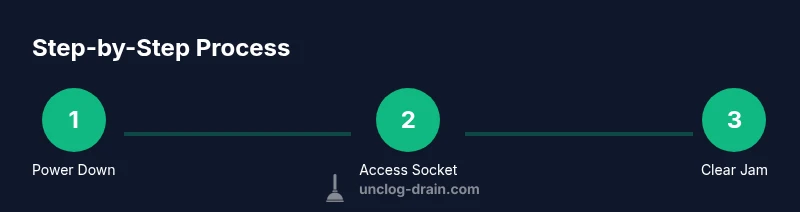
Ensure the disposal is completely powered off: unplug at the outlet or switch off the circuit. Put on gloves and safety glasses, place a bucket nearby, and clear the workspace. This step reduces the risk of injury and protects you from unpredictable movements when the wrench engages the jam.
Tip: Always verify power is off before reaching under the sink. - 2
Locate the hex socket
Slide a flashlight under the sink to locate the hex socket on the bottom of the disposal. Insert your Allen wrench and ensure you have a solid grip. If the socket isn’t visible or accessible, stop and reassess model instructions.
Tip: A secure grip prevents slips that could injure your hand. - 3
Turn the wrench to release the jam
Gently rotate the wrench back and forth in both directions to free the jam. Don’t force the wrench; aim for small, controlled turns to back debris away from the impeller.
Tip: Make small, slow turns and listen for changes in resistance. - 4
Remove debris
With the jam loosened, use pliers or tongs to remove any visible debris from the grinding chamber or the socket area. Keep the bucket nearby to catch any loosened material.
Tip: Inspect the area for anything that might re-block the impeller. - 5
Test the unit
Reconnect power, run cold water, and switch the disposal on to test. If it spins smoothly, you’ve likely cleared the jam. If it hums or stalls, power off again and consider alternative methods or professional help.
Tip: Run water for 10-20 seconds to flush debris through the system. - 6
Clean up and assess leaks
Wipe the area dry and inspect the under-sink connections for any signs of moisture. A small leak may indicate a loose coupling or a damaged seal that needs professional attention.
Tip: Double-check the mounting hardware and seals after testing.
Common Questions
Can I unclog a disposal with an Allen wrench if the unit won’t turn at all?
If the unit won’t turn, stop and check for a power issue or a more complex jam. The hex wrench can free minor jams, but a non-responsive motor may indicate internal failure or an electrical problem requiring a pro.
If the motor won’t turn at all, stop and check power and the electrical connections; the hex wrench method is best for a minor jam.
Do I need to remove the disposal to access the hex socket?
Most disposals offer bottom-access hex sockets, but some models require partial removal for access. Check your manual for the exact access point and safety steps before proceeding.
Some units require removal for access; always check the manual before you begin.
What if I can’t locate a hex socket or mine doesn’t have one?
If there’s no hex socket, the unit may rely on a different jam-clearing method or require professional service. Avoid forcing tools into non-designated access points.
If there’s no hex socket, use alternate clearance methods or get a pro to avoid damage.
Can repeated jams indicate a bigger problem?
Frequent jams can indicate wear, dull blades, or buildup in the grinding chamber. Regular maintenance and careful waste disposal can reduce recurrence, but persistent issues should be evaluated by a plumber.
Repeated jams may mean the disposal is worn or dirty; consider a professional check if it continues.
When should I call a professional?
If you’ve tried multiple jam-clearing attempts, the unit still won’t operate, or you notice leaks or unusual sounds, contact a professional to avoid further damage.
Call a pro if the problem persists or you see leaks.
Watch Video
Key Points
- Power down before starting any work.
- Use the correct hex size to avoid damaging the socket.
- Turn gently; avoid forcing the jam.
- Test with water and inspect for leaks after clearing the jam.