How to Unclog Disposal: A DIY Guide
Learn how to unclog disposal safely with proven techniques, essential tools, and maintenance tips to prevent future jams. This guide from Unclog Drain covers step-by-step actions and safety considerations for homeowners and DIY enthusiasts.


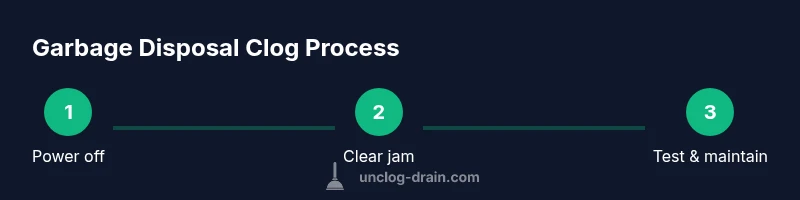
With a garbage disposal, the goal is to clear the jam safely, restore turning, and test the grind. Start by unplugging the unit, using pliers or tongs to remove the obstruction, then insert the hex/Allen key to loosen the impeller if needed. Run cold water, plug back in, and run briefly to verify. For prevention, use cold water and mindful disposal habits.
Understanding how a garbage disposal clogs
A garbage disposal can seem mysterious when it won’t spew out grated scraps, but the mechanics are simple: a spinning impeller grinds food against a stationary grinding ring, and a jam or buildup stops the rotor from turning. How to unclog disposal begins with understanding what tends to cause a clog. According to Unclog Drain, most jams start when fibrous materials like celery, corn husks, potato peels, or stringy foods catch on the impeller and wrap around the rotor, or when a hard object becomes lodged at the grinding chamber. Over time, grease and food residue can form a sticky, waxy coating that slows the flow and invites clogs behind the blades. When you try to force the unit to grind through, you may only worsen the jam or damage seals. Knowing the common culprits—fibrous waste, starchy foods, and accidental foreign objects—helps you target your approach and reduce the chance of a recurring clog. The goal of this guide is practical, hands-on instruction for safely clearing the jam and restoring normal operation, followed by simple maintenance that keeps disposal flow steady.
Safety essentials before you begin
Before you reach under the sink, lock in safety first. Before you reach under the sink, lock in safety first. First, switch off the power to the disposal at the wall switch, and if you’re unsure, turn off the circuit breaker serving the kitchen outlet. Never assume a unit is dead even after turning the switch off — test by attempting to press the reset button after unplugging. Put on gloves and eye protection to guard against sharp edges and splashes. Place a bucket or shallow tray under the trap to catch water and debris, and keep towels handy for cleanup. Clear the area around the sink so you can move freely and avoid tripping hazards. If the disposal is hardwired rather than plugged into an outlet, use the main panel to cut power. Finally, never use chemical drain cleaners in a disposal, and never put your hands into the grinding chamber, even when the power is off, until you’re certain all power is disconnected.
Common culprits that cause jams
Most jams originate from materials that don’t belong in a disposal, or from frequent use without simple maintenance. Food scraps that are fibrous—celery, onion skins, corn husks—tret behind the blades and wrap around the impeller, eventually locking the rotor. Hard objects like utensils or bottle caps can slip into the grinding chamber if the sink is used carelessly. Fats, oils, and greases can coat the interior, trapping particles and forming a sticky layer that slows grinding and encourages clogs in the discharge path. Starchy foods like pasta and rice can swell with water and create a thick paste that binds in the chamber. Finally, a blocked P-trap or a clogged drain line can make it seem like the disposal is clogged, when the real backup is downstream. Recognizing these culprits helps you decide whether to reach in with tools or to disassemble the drain pipes under the sink to clear a backup.
Tools and prep you’ll need
To safely tackle a disposal clog, gather these essentials before you start:
- Allen/Hex key (1/4 inch) — for loosening a stuck impeller
- Long-nose pliers or needle-nose pliers — for grabbing and removing debris
- Flashlight — to see inside the grinding chamber
- Bucket or tray — to catch water and debris
- Gloves and towels — to protect hands and keep things clean
- Tongs or disposal-safe grabbing tool — for safe retrieval
- Optional: screwdriver — if you need to remove a panel or cover
- Old newspaper or tarp — to protect the floor during disassembly
Step-by-step overview for beginners
This overview highlights the main actions you’ll perform in the detailed steps that follow. It helps you prepare mentally for the hands-on part and ensures you have the right safety mindset. Remember: always power down before touching the unit, use protective gear, and work slowly to avoid damage. The goal is to clear the jam, restore function, and create a simple maintenance routine to prevent future clogs.
Handling jams safely: mechanical methods
Mechanical clearing relies on your hands and tools, not brute force. Start with a flashlight inspection to locate the obstruction. Use pliers or tongs to lift or pull the object free. If the jam resists, insert a 1/4-inch hex key into the bottom hex hole and gently twist to free the rotor. Rotate only until the rotor can move again, then remove any residual debris. After freeing the jam, run cold water and briefly power the unit to verify smooth operation. If the jam persists, you may need to disassemble the trap to clear buildup downstream. Always keep a bucket underneath during any disassembly to catch water and debris.
Maintenance to prevent future clogs
Prevention is easier than repeated clearing. Run the disposal with plenty of cold water during use; avoid dumping large quantities of fibrous waste all at once. Periodically flush with ice cubes and lemon peels to help clean the grinding chamber and control odors. Clean the splash guard and rim around the disposal cover with a damp cloth. If you notice a frequent slow-down, inspect the P-trap for buildup and clean it as needed. Consider a routine monthly check that includes listening for grinding irregularities and testing the reset function. A little maintenance goes a long way toward keeping the disposal flowing.
When to call a professional
If you cannot clear a jam after following these steps, or if you notice regular leaks, unusual noises, or electrical issues, contact a licensed plumber. A persistent jam may indicate a more serious problem with the motor or plumbing, such as a failing seal or a clogged main sewer line. In those cases, a professional assessment ensures safety and prevents further damage.
Quick troubleshooting and safety reminders
Keep this quick reference handy: power off first, never put your hand into a running unit, use tools to remove obstructions, and verify operation with cold water after reassembly. If the jam is stubborn, do not force components; instead, step back, reassess, and consider professional help. Regular maintenance reduces the likelihood of future clogs and extends the life of the disposal.
Tools & Materials
- Allen/Hex key (1/4 inch)(Used to loosen a jam by turning the impeller)
- Long-nose pliers(Grab and remove debris safely)
- Flashlight(Inspect inside the chamber clearly)
- Bucket or tray(Catch water and debris during disassembly)
- Gloves(Protect hands from sharp edges)
- Tongs or disposal-safe grabbing tool(Retrieve objects safely without fingers)
- Old towels or rags(Contain spills and keep area clean)
- Screwdriver (optional)(If you need to remove a panel for better access)
Steps
Estimated time: 30-60 minutes
- 1
Power down and prepare
Begin by switching off the disposal circuit at the wall switch, and if you’re unsure, turn off the kitchen circuit breaker. This essential step prevents accidental starts and injuries. Clear the workspace and place towels nearby for quick cleanup.
Tip: Always confirm the unit is not powered by attempting the reset button after unplugging. - 2
Inspect for visible jams
Use a bright flashlight to look inside the grinding chamber for obvious blockages such as utensils, metal pieces, or stringy foods. Do not reach in with your hand; use pliers or tongs to remove debris you can reach safely.
Tip: Reach only as far as your tool allows; never force beyond what you can see. - 3
Clear the obstruction with tools
With pliers or tongs, remove the obstruction. If pieces are stubborn, use gentle shaking or prying to loosen them. Avoid banging the disposal, which can damage seals or the motor.
Tip: Have a bucket ready to catch wet debris as you work. - 4
Loosen jam with the hex key
If there is still resistance, insert a 1/4 inch hex key into the bottom hex-hole and gently twist to loosen the rotor. This helps free a stuck impeller without opening the unit.
Tip: Turn only a small amount at a time and back off if you feel resistance. - 5
Check the drain and trap
If the disposal remains unresponsive, inspect the P-trap under the sink for clogs. Place a bucket beneath, disassemble the trap, and clear any buildup that blocks flow.
Tip: Keep track of washers and seals; replace them carefully during reassembly. - 6
Reconnect and test
Reconnect power and run cold water into the sink while turning on the disposal for a short burst. Listen for a smooth grinding sound and observe that water drains without backing up.
Tip: Test with different materials to ensure reliability. - 7
Clean and sanitize after use
Wipe the interior and area around the disposal. You can run lemon peels through the unit with cold water to freshen and prevent odors.
Tip: Avoid piling large quantities of citrus peels into an older unit. - 8
Document maintenance
Record your maintenance steps and date. Regular checks help you spot wear or recurring jams early, reducing downtime.
Tip: Create a simple log and review it monthly.
Common Questions
Can chemical drain cleaners be used in a garbage disposal?
Chemical drain cleaners are not recommended for garbage disposals. They can damage the unit and pipes, and often don’t reach the jam. Use mechanical methods instead.
Chemicals aren’t advised for disposals; mechanical clearing is safer and more effective.
What should I do if the disposal won’t turn on after clearing a jam?
First check the switch or circuit breaker and the reset button on the unit. If it still won’t start, there may be an electrical fault or a more serious jam requiring professional help.
If it won't turn on after clearing, check power and reset, and consult a professional if needed.
Is it safe to use a plunger to dislodge a disposal jam?
Plungers are not ideal for garbage disposals and can push debris further into the system. Use tongs or pliers to clear jams instead.
Plungers can push debris deeper; use safer tools to clear jams.
How often should I maintain a garbage disposal?
Inspect and clean the disposal monthly. Regular rinsing with cold water and occasional fresheners prevent buildup and odors.
A monthly check helps prevent clogs and odors.
When should I call a plumber?
If jams persist after basic clearing, or if you encounter leaks, electrical issues, or difficult disassembly, contact a professional plumber.
Call a plumber if the jam persists or you see leaks or wiring issues.
Watch Video
Key Points
- Unplug first, then inspect for jams
- Clear obstructions with tools first, not hands
- Use the hex key to free a stuck rotor
- Check and clean the P-trap if needed
- Maintain with cold-water runs and periodic cleaning