How to Unclog a Broken Garbage Disposal: A DIY Guide
Expert, practical guide to safely unclogging a broken garbage disposal. Learn safety steps, DIY methods for jams, when to call a pro, and prevention tips from Unclog Drain.


This guide shows you how to safely unclog a broken garbage disposal and restore normal operation. You’ll learn essential safety steps, practical DIY methods for common jams, and when it’s wiser to call a professional. Follow the steps to diagnose blockages, clear debris, and prevent future clogs. This approach emphasizes safety, proper tools, and prevention to keep your kitchen drainage flowing.
Understanding the problem: when a disposal clogs
Clogs in a garbage disposal can mimic a “broken” unit when the impeller becomes jammed, a food chunk wedges in the grinding chamber, or the motor struggles to start. The root cause is usually a combination of hard foods, fibrous scraps (like celery or corn husks), or foreign objects that slip past the splash guard. According to Unclog Drain, most residential disposal jams come from routine kitchen waste that isn’t disposed of properly or from a disposal that has not been cleaned or reset after a jam. Recognizing whether you’re dealing with a simple jam, a motor stall, or a more serious failure helps you choose the right fix and avoid unsafe attempts. A quick visual check and a gentle manual rotation (when safe) can reveal if the rotor is blocked. If you notice a burning smell, grinding noises from the motor, or the unit won’t respond to resets, these are stronger signals that a pro may be needed.
Safety first: power off, water off, and PPE
Safety should guide every unclogging attempt. Start by unplugging the unit under the sink or cutting power at the circuit breaker to remove any risk of the spinning impeller. Turn off the water supply to avoid splashback, and keep a bucket and towels nearby. Wear cut-resistant gloves to protect your hands, and use a flashlight to inspect the grinding chamber after removing debris. Never put your hands into a live disposal or attempt to force objects through the blades while the unit has power. If you’re not sure whether power is fully off, test the reset button once with the breaker off before proceeding. This initial safety layer protects you during any manual intervention.
Quick checks you can perform before dismantling
Before taking the disposal apart, perform a few non-destructive checks. Shine a light into the drain to see if you can locate visible debris. Check the sink’s P-trap for clogs by placing a bucket underneath and loosening the slip nuts with pliers. If the reset button is popped, press it firmly after power is restored to see if the unit responds. If you can safely remove a loosened object using tongs or pliers without touching the blades, do so carefully. Avoid pouring drain cleaners down the disposal, as chemical reactions can damage the unit and pipes. Document any unusual sounds or vibrations for reference if you call a professional.
DIY methods for common jams
Manual rotation: using an Allen/hex key (usually 1/4 inch) inserted into the bottom centre of the disposal can help rotate the impeller and free a jam. Rotate counterclockwise if resistance is felt, but never force it. If the jam persists, use a plunger on the sink drain to generate gentle backpressure, which can loosen the obstacle. Drain snake: a narrow drain auger can reach into the trap and grinding chamber to extract or break up the obstruction. When using a snake, advance slowly and retrieve any debris as you go. Do not use harsh chemicals; they can corrode metal components and void warranties. If you can see and remove the obstruction with tweezers or pliers, do so carefully to avoid damaging the teeth.
When a disposal is truly broken: decide between DIY and pro help
If there is a consistent burning smell, the motor hums but won’t spin, or you notice melted components, stop immediately. A burned-out motor or damaged grinding system often requires professional service or replacement. Do not attempt to disassemble the motor housing further; it can create safety hazards and electrical risks. In such cases, plan for professional inspection and potential replacement. Unclog Drain recommends evaluating the cost of repair versus replacement and choosing a safer long-term option.
Maintenance to prevent future clogs
Prevention starts with mindful use: avoid dumping fibrous, starchy, or grease-laden foods into the disposal. Run cold water during grinding, and keep the water running for several seconds after grinding to flush debris. Regularly clean the interior with a non-abrasive brush and a little dish soap, then run cold water to rinse. Consider a monthly disposal clean using a mixture of ice and rock salt or citrus peels to sharpen blades and reduce buildup. Finally, schedule a quick inspection if you notice frequent jams or a drop in grinding efficiency.
Quick troubleshooting flow: when to seek professional help
If you’ve attempted power-off resets, inspected for obvious jams, and tried non-invasive methods without success, it’s time to call a professional. Signs you need expert help include persistent obstruction, unusual noises, frequent jams, or signs of leaking around the unit. A qualified plumber or appliance technician can safely disassemble, diagnose internal damage, and advise whether repair or replacement is needed. The Unclog Drain team emphasizes that professional evaluation protects your plumbing and ensures long-term reliability.
Tools & Materials
- Power source access (circuit breaker or unplug)(Ensure the area is de-energized before any work)
- Flashlight(Inspect the grinding chamber clearly)
- Rubber gloves(Protect hands from sharp edges)
- Basin wrench or pliers(Loosen trap nuts if needed)
- Allen wrench / hex key (usually 1/4 inch)(Rotate the rotor to dislodge jams)
- Drain snake / auger(Reach into trap and disposal inlet)
- Bucket and towels(Catch water and spills)
- Tongs or non-metal tools(Safely grab visible debris)
- Dish soap and ice (optional)(Help clean and sharpen blades)
Steps
Estimated time: 45-60 minutes
- 1
Power off and secure the area
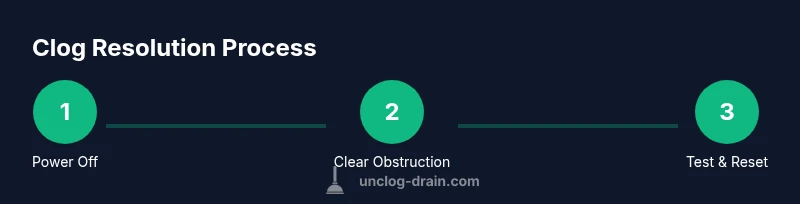
Switch off the circuit powering the disposal at the breaker or unplug the unit. Clear the area under the sink, place a bucket, and keep towels handy. This step reduces electrical and splash hazards before you touch any components.
Tip: Double-check power is off by trying to reset the unit after unplugging and cycling the breaker. - 2
Access the disposal and inspect
Look into the grinding chamber with a flashlight. If you see a loose item or obvious obstruction, remove it with tongs or pliers from the top (never put hands inside the chamber when powered).
Tip: If you must hinge the unit to access the chamber, support it to avoid strain on mounting hardware. - 3
Manual rotor rotation
Insert an Allen wrench into the bottom center hole of the disposal and gently rotate the rotor to free a jam. If you encounter resistance, reverse the motion and try again with light, steady pressure.
Tip: Always rotate in small increments and avoid forcing the rotor past the jam. - 4
Use a drain snake for deeper obstructions
Feed the snake into the drain until you feel resistance, then gently pull back debris as you crank. Remove any material and test for movement.
Tip: Keep the snake aligned with the center line to avoid damaging the blades. - 5
Reset and test
Reconnect power, press the reset button on the bottom or front of the unit, and run cold water while flipping the switch. Listen for a smooth hum and watch for steady rotation.
Tip: If the unit grinds but doesn’t discharge water, there may be a secondary blockage elsewhere in the drain. - 6
Clean-up and evaluate
Wipe down the area, check for leaks around the trap, and run the disposal with water for a full minute to confirm normal operation. If issues persist, schedule professional assessment.
Tip: Record any unusual sounds or behaviors to discuss with a pro.
Common Questions
Is it safe to unclog a garbage disposal by myself?
Yes, with the power off and proper tools, you can safely clear simple jams. Avoid putting hands inside the chamber when powered. If you sense motor trouble or burning odors, stop and call a professional.
Yes, you can safely attempt simple jams, but always unplug first and avoid touching the moving blades. If you smell burning or hear grinding, get professional help.
When should I call a professional for a clogged disposal?
Call a pro if the unit won’t reset, emits a burning smell, sounds like grinding with resistance, or leaks after attempting standard DIY fixes. A professional can diagnose electrical or bearing issues and determine replacement needs.
Call a pro if resets don’t work or you hear burning sounds; a professional can identify electrical or structural problems.
Can a drain snake damage the disposal?
A snake used correctly can clear obstructions without damaging the unit. Avoid forcing the tool or using it aggressively, which could bend or break components.
Used carefully, a drain snake can clear blockages without harm. Don’t push hard or twist forcefully.
Are chemical cleaners safe for disposals?
Most chemical cleaners are not recommended for garbage disposals because they can corrode metal parts and pipes and may void warranties. Follow manufacturer guidance and opt for mechanical or manual methods instead.
Chemicals aren’t usually safe for disposals; they can damage parts. Use mechanical methods instead.
What maintenance helps prevent future clogs?
Run cold water during and after grinding, avoid fibrous wastes, and clean the interior monthly with safe cleaners or ice and citrus peels to sharpen blades. Regular inspections help catch issues early.
Keep water running while grinding, avoid fibrous scraps, and clean monthly to prevent clogs.
What should I do if the disposal leaks after a fix?
If you notice a leak, shut off power, tighten drain connections, and inspect the seal. A persistent leak often means the flange or gasket needs replacement, handled best by a pro.
Turn off power, tighten connections, and check seals. If leaks persist, call a pro.
Watch Video
Key Points
- Power off before any intervention
- Identify whether jam or motor issue is present
- Use manual rotation or a snake cautiously
- Do not use harsh cleaners in the disposal
- Call a pro if you detect motor damage or leaks