How to Unclog a Garbage Disposal: A Complete DIY Guide
Learn practical, expert-tested steps to unclog a garbage disposal safely. This DIY guide covers tools, step-by-step methods, safety tips, and prevention to keep your kitchen flowing.


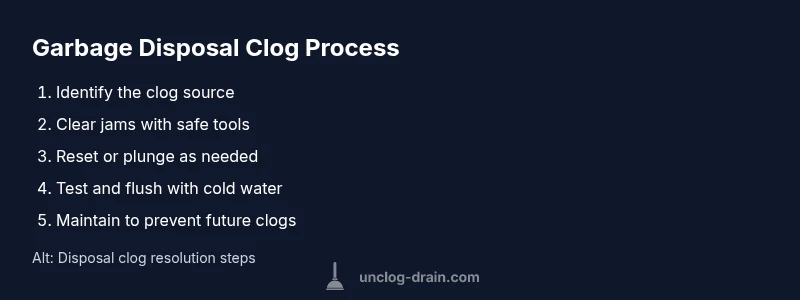
By following our step-by-step guide, you’ll safely unclog a garbage disposal and restore grinding performance without calling a plumber. Start by powering off the unit and inspecting for obvious jams, then use a flashlight and tongs to remove blockages. If needed, try a plunging technique, a hex wrench to reset the motor, and finish with a proper flush of water and an odor-control rinse.
How to unclog garbage disposal: quick checks
Before you grab tools, take a quick inventory of symptoms to confirm you’re dealing with a clog in the disposal, not a drain issue elsewhere. A sluggish sink with standing water suggests a partial blockage in the trap or pipe; a grinding or humming sound without the unit spinning indicates the flywheel is jammed or the motor cannot start. Look for objects stuck at the disposal exit, leaks around the sink flange, and any unusual smells from trapped waste. If you’re wondering how unclog garbage disposal safely, this guide covers it. According to Unclog Drain, most residential clogs begin with a buildup of food particles, fats, and fibrous materials that compress and trap further debris over time. By identifying whether the problem is inside the unit, in the trap, or further down the drain, you’ll choose the least invasive solution first and reduce the risk of damage to components. If you’re wondering how unclog garbage disposal safely, this guide covers it.
Safety guidelines before you begin
Safety comes first when working with power tools and household appliances. Start by powering off the garbage disposal at the wall switch and unplugging the unit (or switch off the circuit at the breaker if there is no accessible outlet). Never put your hands into a running disposal; even when unplugged, the flywheel can move unexpectedly if there’s a residual charge. Clear the area under the sink, place a bucket and towels nearby, and have a flashlight ready. If your disposal is on a GFCI-protected outlet, test the outlet to ensure it’s de-energized before you proceed. These precautions reduce the risk of electrical shock and personal injury while you inspect and remove debris.
Common causes of garbage disposal clogs
Clogs frequently form from a mix of food scraps, grease, coffee grounds, and fibrous materials like celery or corn husks. Avoid disposing of hard items such as bones, seeds, and nutshells; fibrous vegetables can wrap around the impeller. Over time, the trap and pipes can accumulate scale and soap scum, creating a slow drain. Some clogs are caused by improper use, such as running the disposal without enough water or grinding items that the unit isn’t designed to handle. Understanding the likely culprits helps you target the fix: remove visible debris, flush with water, and adjust usage habits to prevent future blockages.
Clearing methods: manual removal, plunging, and reset
Manual removal involves unplugging the unit and using long-tipped tongs or pliers to pull free visible debris from the grinding chamber. For items that can’t be grasped, carefully rotate the flywheel with a hex wrench to loosen the obstruction. A sink plunger can help clear the drain line if the clog is outside the disposal; seal the sink and plunge firmly for 20-30 seconds, then rinse. If the motor hums but won’t spin, insert a 1/4-inch hex key into the bottom socket and rotate gently to free the impeller. Remember, never pour chemical drain cleaners into a disposal—they can damage seals and contaminate the unit.
Post-clearance testing and odor control
Reconnect power or plug the unit back in, run cold water, and turn on the disposal to test whether the clog is gone. Listen for a smooth grinding sound and observe whether the water drains quickly. If odors linger, flush the chamber with cold water and grind ice or citrus peels to scrub the walls and neutralize smells. Regular maintenance—like a monthly rinse with cold water and citrus peels—helps prevent future clogs and keeps your disposal smelling fresh.
Authority sources
To support the safety and reliability of these methods, consult credible organizations that cover consumer safety, electrical safety, and practical home maintenance. The EPA provides guidance on chemical cleaners, waste management, and household product safety, advising caution with any substances used near disposals. OSHA offers general electrical-safety information relevant to working around outlets and appliances in the home, including recommendations for isolating power before servicing equipment. Extension services from land-grant universities (e.g., Oregon State University Extension) translate safety guidelines into practical, do-it-yourself steps homeowners can follow, including maintenance routines and step-by-step demonstrations. These sources underpin the recommended practices and help homeowners understand the broader safety context.
The bottom line: why maintenance matters
A clogged disposal is usually a symptom of neglect or misuse rather than a one-off accident. With the right tools, safe techniques, and a quick post-cleanup check, you can restore function and extend the life of your appliance. Commit to regular, simple maintenance to minimize future clogs and keep your kitchen flowing smoothly.
Tools & Materials
- Sink plunger (flange or flat-bottom)(Choose a plunger with a wide cup for best seal.)
- Flashlight(Bright beam to inspect inside the grinding chamber.)
- Needle-nose pliers or long tongs(Grab debris safely; avoid fingers.)
- 1/4 in (6 mm) hex wrench(Used to manually rotate the flywheel to free a jam.)
- Bucket and towels(Keep water and debris contained; protect surfaces.)
- Gloves(Protect hands during manual removal.)
- Cold water(Essential for flushing and testing.)
- Optional: baking soda(Small amount for gentle odor control.)
Steps
Estimated time: 30-45 minutes
- 1
Power down and inspect
Unplug the disposal from the outlet or switch off the circuit at the breaker. Use a flashlight to view the interior and look for obvious jams or foreign objects lodged at the entry point.
Tip: Always start with power off to prevent accidental startups. - 2
Remove visible debris safely
Put on gloves, use long tongs or pliers to pull out visible food particles or objects from the grinding chamber. Do not insert your fingers. Clear around the impeller until you feel free of obstruction.
Tip: Maintain a clear working area to avoid dropping debris back into the drain. - 3
Reset the motor with a hex wrench
Locate the hex socket on the bottom of the unit and insert a 1/4-inch hex key. Gently rotate back and forth to loosen the jam and let the motor reset. You may hear a click as the flywheel frees.
Tip: Do not force the wrench; apply gentle pressure to avoid striping the socket. - 4
Plunge the drain if needed
Seal the sink with a plunger over the disposal drain and plunge firmly for 20-30 seconds. Remove the plunger and run water to see if the blockage has cleared. If the clog persists, proceed to the next step.
Tip: A proper seal makes plunging more effective. - 5
Flush, test, and observe
With the disposal off, run cold water and briefly turn on the unit to verify a smooth grind and proper drainage. Repeat a short test if necessary to ensure clearance.
Tip: Always use cold water when grinding to help flush particles. - 6
Odor control and prevention
If odors linger, grind a handful of ice with a few citrus peels or a small amount of baking soda and run the disposal for 15-20 seconds. Wipe the splash guard and run water after each use to minimize future clogs.
Tip: Regular maintenance prevents buildup and odors. - 7
Final safety check
Inspect beneath the sink for leaks and ensure the GFCI outlet or breaker is functioning after testing. Reassemble any removed parts and store tools safely.
Tip: If you smell gas, stop and evacuate; call a professional immediately.
Common Questions
Can I pour chemical drain cleaners down a garbage disposal?
Chemical drain cleaners are not recommended for garbage disposals because they can corrode metal parts, damage seals, and create hazardous fumes when mixed with food waste.
Avoid chemical drain cleaners in garbage disposals; they can cause damage and fumes.
What should I do if the disposal still won’t run after trying the steps?
If the unit still won’t run after you’ve cleared jams and reset, check the reset button on the bottom of the unit and verify the outlet has power. If it remains unresponsive, contact a professional.
If it still won’t run, check the reset and power, then call a pro.
Is it safe to use a plunger on a garbage disposal?
Yes, a sink plunger can help clear the drain line if the clog is outside the disposal. Do not attempt to force objects into the disposal chamber.
You can try a plunger, but don’t push objects into the disposal.
Why is water draining slowly even after clearing the clog?
Slow drainage often indicates a partial clog further down the line or mineral buildup in the P-trap. Re-check the trap and consider flushing with hot water and a mild cleaner.
There may be a downstream clog or buildup; check the trap and flush.
How can I prevent future clogs in my garbage disposal?
Use the disposal with plenty of cold water, avoid fibrous foods and grease, and perform monthly cleanouts with ice and citrus peels for odor control.
Keep up a monthly cleanout and avoid hard or fibrous scraps.
When should I call a professional?
If clogs recur, leaks appear, or you have electrical concerns, a licensed plumber can diagnose and fix the issue safely.
If problems persist or you see leaks, call a pro.
Watch Video
Key Points
- Unplug before inspecting and clearing jams
- Identify whether the clog is inside the unit or in the drain
- Use the correct tools to avoid damage
- Test the unit with cold water and observe drainage
- Practice routine maintenance to prevent future clogs