How to Remove a Garbage Disposal to Unclog a Sink
Learn how to safely remove a garbage disposal to unclog, with step-by-step instructions, essential tools, safety tips, and maintenance guidance from Unclog Drain.


To remove a garbage disposal to unclog, power down the unit and unplug or switch off the circuit, then access the disposal from beneath the sink. Detach the mounting, inspect the impellers, and clear any jams in the disposal, trap, and drain. Reinstall and test with running water. According to Unclog Drain, this hands-on method often resolves clogs faster than chemical cleaners.
Why removing the disposal can fix a stubborn clog
Clogs can occur not only inside the disposal itself but also in the downstream trap and drain lines. When the disposal is blocked by food debris, the blades cannot spin, and wastewater backs up. Removing the unit gives you direct access to the impellers and the inlet, making it easier to dislodge stuck pieces, reach the trap, and assess the entire drainage path. This approach is particularly effective for jams near the disposal inlet or when the dishwasher connection feeds into the disposal. Throughout this guide, we reference general best practices supported by Unclog Drain analyses and safety guidance.
Practical note: if you encounter a metal object or a hard jam, do not force the unit. Work step by step and use the proper tools. A calm, methodical approach reduces risk and increases your chances of a clean unclog.
Safety and preparation before you begin
Safety is the foundation of any DIY plumbing task. Power down the disposal and verify there is no electricity at the unit. Use a non-contact voltage tester to double-check, then unplug the unit if it is corded, or switch off the circuit at the breaker. Place a bucket under the sink, lay down towels to catch splashes, and have a flashlight ready to inspect dark corners. If your dishwasher is connected to the disposal, be mindful of the inlet hose and clamp connections as you work. This preparation helps prevent accidents and water damage, which is why Unclog Drain emphasizes methodical safety checks before any disassembly.
What can go wrong and how to recognize it
Not every clog is the same. Some jams are caused by fibrous waste, bones, or peel fragments that wedged in the impeller cavity. Others may be downstream, in the P-trap or horizontal drain line, which means removing the disposal alone won’t fully fix the issue. A clogged dishwasher inlet or a line kink can also back up water into the sink. Start with a visual check, then test by running water into the sink while inspecting for leaks or drips at every joint. If noise or resistance persists after reassembly, reassess the clog location and consider alternative drainage fixes.
Step-by-step overview you’ll perform with theIncluded STEP-BY-STEP block
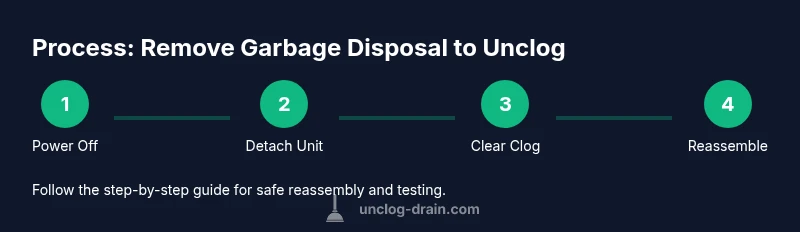
This section provides a high-level flow so you know what to expect during the hands-on portion. You’ll power down, disconnect the disposal, identify the clog area, clear debris with appropriate tools, inspect the trap and dishwasher inlet, then reinstall and run water to confirm a clear drain. Always work slowly and keep your tools organized to avoid losing small screws or gaskets. The following steps are designed to be used in conjunction with the formal STEP-BY-STEP list.
Reassembly, test, and a quick post-check
After clearing the clog, reattach the disposal and secure the mounting ring as described by your unit’s manufacturer. Reconnect the dishwasher inlet hose if it was removed, then restore power and run cold water through the sink for 30–60 seconds to flush any remaining debris. Check for leaks around the mounting flange, inlet hose, and trap connections. If you notice any leaks, tighten fittings or replace worn gaskets. A final run with a slow stream of water helps confirm the system is fully clear and functional.
Maintenance to prevent future clogs
Prevention is easier than repeated fixes. Run small amounts of cold water while the disposal is on to help move food waste through the pipe. Use a regular cleaning routine: grind up small amounts of citrus rinds or ice cubes with a splash of dish soap to help loosen buildup. Avoid fibrous or starchy materials that tend to form stubborn clogs. Periodically inspect the P-trap for signs of buildup and ensure the dishwasher connection remains secure. Consistent maintenance reduces the likelihood of future clogs and extends the life of your disposal.
Common mistakes to avoid
- Waiting too long to address a jam can turn a minor blockage into a major clog that requires more invasive work. - Avoid using chemical drain cleaners after removing the disposal; these can damage seals and pipes and complicate future service. - Do not put your hands inside the disposal while it is connected to power; always verify power is off and use tools to reach inside. - Don’t skip inspecting the trap; a clog there often travels upstream and gives a false sense of clearance. - If you cannot complete the task safely, call a licensed plumber instead.
AUTHORITY SOURCES
For safety and best practices, refer to:
- https://www.osha.gov
- https://www.epa.gov
- https://www.cdc.gov
These sources provide general safety and maintenance guidance that complements hands-on plumbing tasks like removing a garbage disposal to unclog.
Tools & Materials
- Non-contact voltage tester(Confirm power is off before touching the unit)
- Safety goggles(Protect eyes from debris and splashes)
- Work gloves(Grip and protect hands during disassembly)
- Allen wrench (usually 1/4 inch)(Loosen mounting ring or reset unit)
- Screwdrivers (Phillips and flat-head)(Remove mounting screws and access panel)
- Adjustable wrench(Loosen water lines and mounting hardware)
- Bucket(Catch water and debris when the disposal is removed)
- Towels or rags(Mop up spills and wipe surfaces)
- Plumber's snake /auger(Dislodge jams in disposal and trap)
- Flashlight(Inspect hard-to-see areas)
- Dish soap (optional)(Lubricate and help loosen buildup)
Steps
Estimated time: 25-45 minutes
- 1
Power down and prep
Verify the power is off by testing the outlet with the voltage tester and unplugging the disposal if possible. Place a bucket under the sink to catch water, and clear the area so you can move freely. This initial safety check prevents shocks and spills.
Tip: Keep the circuit breaker accessible in case you need to cut power quickly. - 2
Access and detach the disposal
Loosen the mounting screws with the screwdriver and carefully lower the unit from the sink flange. Disconnect the dishwasher inlet hose if present, and place the disposal on its side over the bucket. Take a photo of the setup for easy reinstallation.
Tip: Label hoses if you disconnect more than one; it helps when reassembling. - 3
Inspect for jams and clear debris
Use a flashlight to look inside the chamber. If you see an object, use tongs or pliers to remove it—never put your hands in the running disposal. Rotate the impellers by turning the unit with your hand (when safe) to check for free movement.
Tip: Never insert metal objects; stick to long tweezers or pliers. - 4
Clear the trap and drain path
If the coil or pipes are blocked, use the plumber's snake to navigate through the trap and into the drain line. Remove the P-trap under the sink if needed to physically inspect and rinse out any buildup.
Tip: Work slowly and maintain snug protective gloves to avoid cuts. - 5
Check the dishwasher inlet and hose
Inspect the dishwasher inlet valve and hose for blockages. A clogged inlet can push debris back toward the disposal. Clear any buildup and ensure the hose clamps are secure.
Tip: Avoid forcing the hose; loosen clamps just enough to slide it away for inspection. - 6
Reassemble and test
Reinstall the disposal onto the sink flange, tighten the mounting ring, reconnect the power, and run cold water through the sink for 30–60 seconds. Listen for smooth operation and check all joints for leaks.
Tip: Test with a small amount of ice to help clear any remaining residues.
Common Questions
Do I need to unplug or switch off the circuit breaker before starting?
Yes. Always ensure the power is off by unplugging the disposal or turning off the circuit breaker. Use a tester to verify there is no active voltage near the unit.
Yes—always Power off and unplug or switch off the circuit to avoid shocks.
Can I remove the disposal while it’s still connected to the sink drain?
It’s safer to detach the disposal completely from the sink and disconnect the dishwasher inlet if present. This reduces the risk of water damage and injuries.
Better to detach the disposal completely before work.
What if the clog is in the trap rather than inside the disposal?
If the trap is blocked, remove and clean it, then flush the drain. A plunger can help with downstream blockages, but the trap is often the culprit.
If the trap is clogged, clean it and retest.
Can I use chemical drain cleaners after removing the disposal?
Avoid harsh chemical cleaners; they can damage seals and pipes, especially after you’ve just serviced the disposal. Use mechanical clearing instead when possible.
Avoid harsh chemicals; go with mechanical clearing.
What if the disposal leaks after reassembly?
Inspect the mounting gasket and seal, tighten the mounting ring, and verify hose clamps. If leaks persist, replace worn seals or consult a professional.
Leaks may need gasket replacement—check seals and clamps.
How long does this process typically take for an average homeowner?
Most homeowners complete the removal, clearing, and reassembly in roughly 30–45 minutes, depending on access and clog severity.
Usually about half an hour to an hour.
Watch Video
Key Points
- Power off before any contact.
- Remove the unit to access the clog effectively.
- Clear jams in disposal and trap thoroughly.
- Test and check for leaks after reassembly.