Clogged Garbage Disposal Fix: A Practical DIY Guide
Learn to diagnose and fix a clogged garbage disposal safely with step-by-step instructions, essential tools, safety tips, and prevention ideas from Unclog Drain.


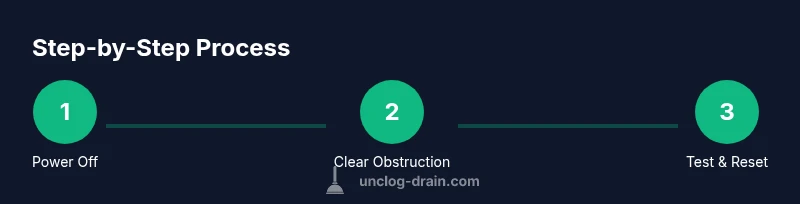
To fix a clogged garbage disposal, start by turning off power at the switch or breaker, then inspect for visible obstructions. If jammed, use a 1/4-inch hex key to rotate the motor counterclockwise to free the impeller. Remove the blockage with tongs, reset the disposal, and run cold water while testing. If the clog remains, seek professional help.
What a clogged garbage disposal fix entails
A clogged garbage disposal fix is a practical, safety-focused process that restores grinding action and prevents water backup. It typically involves stopping the unit, clearing jams, and testing performance. Understanding the root cause—whether a solid obstruction, buildup, or a foreign object—helps you choose the right approach and avoid causing damage to the motor or seals. In homes, a common culprit is fibrous waste, eggshells, or discarded peelings that accumulate at the impeller.
Safety first: power off and assess
Before any intervention, remove power to the disposal to prevent accidental activation. If your model is hard-wired, switch off the breaker. Wear sturdy gloves and use a flashlight to inspect the underside of the sink and the disposal inlet. Look for obvious obstructions such as utensils, bones, or thick food chunks. If you see a loose crank or unusual corrosion, stop and call a pro. Safety is the foundation of a successful clog repair.
Diagnose the clog: jam vs slow drain
Disposals can clog in different ways. A complete jam typically stops rotation and produces a humming sound, while a slow drain indicates partial blockage or buildup inside the grind chamber. If you hear buzzing without movement, do not force the unit—this can indicate a motor issue. For slow drains, you may need to disassemble the splash guard and inspect the chamber for buildup. Clear communication with your drain path helps you address the right problem and prevents repeated clogs.
Tools and materials you'll need
Having the right toolkit makes the job safer and faster. Essentials include: safety gloves, a 1/4-inch Allen wrench, needle-nose pliers or tongs, a flashlight, a bucket, a wooden dowel or stick for gentle dislodging, a screwdriver, and a towel to catch spills. Optional items that can help include a dedicated disposal wrench and a lightweight plunger for the sink. Keep these within reach before you start the process.
Step-by-step approach to clearing a jam
A methodical approach reduces risk and saves time. 1) Power off the unit and unplug or switch off the circuit. 2) Shine a light into the disposal and identify the obstruction. 3) Insert the Allen wrench into the hex socket at the bottom and rotate several times to free the impeller. 4) Use tongs to remove the blockage. 5) Reinsert the plug, restore power, and run cold water to flush debris. 6) If humming persists, stop and reassess for debris beyond the impeller. 7) Check for any leaks around the sink flange after the test run. 8) If water backs up, inspect the drain line for secondary clogs.
Resetting and testing after clearing
Many disposals have a reset button located on the bottom or side. After clearing a jam, press the reset button and restore power. Run cold water and slowly rotate the disposal with the tongue or a wooden dowel to ensure the blades move freely. Listen for a smooth hum rather than a grind or buzz. If the unit runs but drains slowly, you may still have a partial clog in the P-trap or drain line.
Common issues and how to handle leaks or smells
Leaks around the flange or under-sink area usually indicate a seal issue or improper installation. If you notice a rotten egg smell, this may signify trapped food and bacterial growth in the disposal or drain line. Address leaks by tightening mounting hardware carefully, replacing gaskets, or resealing the sink flange. Odors can be mitigated with a cold-water rinse and a brief cycle of ice cubes and citrus peels to dislodge residues.
Maintenance and prevention to avoid future clogs
Proactive maintenance reduces the likelihood of future jams. Run the disposal with cold water for 15-30 seconds after each use. Avoid grinding fibrous materials, coffee grounds, or hard shells. Regularly clean the splash guard and inspect for leaks. Consider a gentle weekly flush with a baking soda and vinegar solution followed by a cold-water rinse to maintain odor control and internal cleanliness.
Troubleshooting quick checks and when to call a pro
If the disposal hums without spinning after reset, avoid forcing the blades and re-check for obstructions. Persistent clogs, leaks, or electrical concerns should trigger a call to a licensed plumber or the manufacturer’s support line. Record model details, breaker status, and any unusual sounds to share with a professional for a faster diagnosis.
Tools & Materials
- Safety gloves(Protect hands from sharp objects and wastewater)
- Allen wrench (1/4 inch)(Used to rotate the disposal's motor to free jams)
- Needle-nose pliers or tongs(Remove objects safely without touching moving parts)
- Flashlight(Shine light into the disposal to spot blockages)
- Bucket or towel(Catch water and debris during inspection)
- Screwdriver (flathead and Phillips)(Remove screws or access panels if needed)
- Wooden dowel or stick(Gently rotate blades if a wrench is unavailable)
- Dish soap (optional)(Help lubricate and wash away residue)
Steps
Estimated time: 45-60 minutes
- 1
Power off and unplug
Switch off the disposal at the wall switch or unplug from under-sink outlet. For hard-wired units, switch off the corresponding circuit in the breaker box. This step protects you from accidental activation during inspection.
Tip: Always double-check power is off with the switch first, then at the breaker if you’re unsure. - 2
Inspect for obvious obstructions
Use a flashlight to look into the disposal inlet and the chamber. Remove any visible debris with tongs, never your hands. Avoid dislodging parts that could cause further damage.
Tip: If you can see a small object, remove it carefully before proceeding. - 3
Rotate the impeller with a hex key
Insert the 1/4-inch Allen wrench into the hex socket at the bottom of the unit and rotate back and forth several times to free a jammed impeller.
Tip: Rotate gently; forcing the blades can damage the motor. - 4
Clear the jam with pliers
If the jam is accessible, use pliers or tongs to pull the obstruction from the grind chamber. Do not use your fingers.
Tip: Keep the object close to the opening to minimize debris release. - 5
Reset the disposal
Locate the reset button on the bottom or side of the unit and press firmly. This restores internal protection after a jam.
Tip: Wait a moment after pressing reset before testing. - 6
Test with cold water
Restore power, run cold water, and briefly turn on the disposal. Listen for a smooth hum and verify no leaks appear around the flange.
Tip: Do not run hot water during this test to avoid liquefying fats. - 7
Check for secondary clogs
If water drains slowly, inspect the P-trap and drain line for additional blockages. Clear as needed with a plunger or snake.
Tip: Work from the trap outward to identify the blockage location. - 8
Reassemble and monitor
Reattach any removed components, ensure a tight seal at the sink flange, and monitor for leaks over 24 hours.
Tip: Keep a damp cloth handy in case of drips during testing.
Common Questions
Can I fix a clogged garbage disposal without removing it?
Yes, many clogs can be cleared from the top using a hex wrench to free the impeller and removing the obstruction with pliers. If you can access the jam from above and identify the blockage, this direct approach often suffices.
You can usually fix it without removing the disposal. Clear the jam from the top and use tools to remove the obstruction.
Is ice helpful to clear a jam?
Ice cubes can help dislodge soft buildup and sharpen the blades when run with cold water. It should not replace physically removing solid obstructions.
Ice can aid clearance, but you still need to remove solid debris safely.
What should I do if water backs up after resetting?
Stop using the sink and check the P-trap and drain lines for blockages. Backups often indicate a secondary clog further down the line or a trap issue.
If water backs up after reset, inspect the drain path for other clogs.
How long does a typical reset take?
Reset buttons engage instantly. If the unit doesn’t restart after a brief wait, recheck power connections and any tripped breakers.
The reset is immediate, but ensure power is restored first.
When should I call a professional?
Call a professional if you hear persistent buzzing without rotation, notice leaks that won’t seal, or you feel unsure about electrical components. A pro can safely diagnose and repair the unit.
If the jam won’t release or you see leaks, seek professional help.
Watch Video
Key Points
- Power off before inspection to ensure safety.
- Identify whether the clog is a jam or buildup for the right fix.
- Clear obstructions with proper tools; never use your hands.
- Reset and test, then check for leaks and odors.
- Practice preventive maintenance to avoid future clogs.