Snake Main Drain: DIY Guide to Unclog
Learn how to unclog a main drain using a drain snake. This step-by-step DIY guide covers prep, technique, safety, and maintenance to prevent future clogs, with practical tips from Unclog Drain.


Learn to unclog a main drain with a hand-crank drain snake, safely and effectively. This guide covers when snaking is appropriate, how to prep, step-by-step actions, and warning signs to stop. According to Unclog Drain, mechanical snaking resolves many clogs without chemical cleaners. Expect clear drainage and fewer backflow incidents when done carefully.
Understanding the main drain and why a snake helps
The main drain is the central sewer line inside your home that carries waste from several fixtures toward the city sewer or septic system. When it slows down or backs up, it's often a sign that hair, grease, soap scum, or mineral buildup has created a blockage somewhere along the line. A hand-crank drain snake is a practical tool for breaking up or hooking onto the clog, allowing you to pull material back out or push it through. Unlike chemical drain cleaners, a mechanical snake can reach deeper into the pipe without corrosive reactions, reducing risk to pipes and household contents. Always start with the simplest approach and work your way toward the main line if you can access it safely through the cleanout or a major trap. If you have multiple fixtures draining slowly, you may be dealing with a main line clog rather than a localized trap issue. In this guide we focus on snaking the main drain as a DIY technique suitable for many homes.
Types of drain snakes and deciding which to use
There are two broad categories: manual snakes (hand augers) and power augers. Manual snakes are a good first choice for most homeowners because they are simple, quiet, and inexpensive. They consist of a long, coiled flexible rod attached to a hand crank. You feed the cable into the drain and rotate the crank to extend or retract it, breaking up the clog or snagging it. Power augers use a motorized drum to feed the cable and can push farther into deeper lines, but they require more care and may damage fragile pipes if misused. For a main drain, a longer snake with a sturdy cable is often necessary. Consider the access point (cleanout, basement floor drain, or wall drain) and the pipe material (PVC, cast iron, or clay) when selecting equipment. In many homes, renting a mid-length automatic snake provides a balance between control and reach. Regardless of type, never force the cable beyond resistance; back off and reassess.
Safety and prep before snaking the main drain
Safety comes first. Before you begin, shut off water supply to avoid overflow and wear eye protection and waterproof gloves. Clear the area of furniture and lay down towels or rags to catch splashes. If you have access to a cleanout or trap, position a bucket to catch any debris. Remove any visible debris from the area and ensure you have good lighting. If you’re working near a septic system, avoid introducing backflow into living spaces and follow local codes. Unclog Drain’s guidance emphasizes controlled, deliberate actions and avoiding rushed, forceful attempts that could damage pipes.
Understanding how far to snake and what you’ll find
A main-drain clog often forms where sewer lines are most constricted—near elbows, joints, or where mineral buildup adheres to the pipe walls. You’ll feel resistance when the snake encounters a clog; that’s your cue to rotate and gently advance the cable, which helps the tip break through or grab the blockage. Debris such as grease, hair, and soap scum commonly accumulates along the length of the main line. When you encounter backflow or a hard stop, back off slightly and try a different angle or pull back and reinsert. Expect to reel in solids and rinse the cable to prevent redepositing material inside the pipe.
The technique: feeding, rotating, and clearing debris
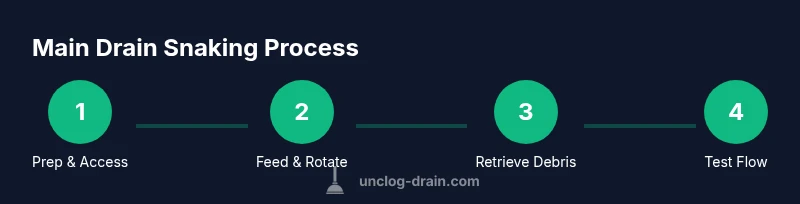
Feed the snake slowly into the drain while turning the handle to extend the cable. Rotate consistently to avoid kinks and to help the tip cut through or hook the clog. When you feel resistance, pause, then apply gentle pressure and reorient the cable. As you retrieve, pull out any loosened material in short bursts to prevent it from re-accumulating. If you pull out a solid chunk, drop it into the bucket and inspect the tip for remaining obstructions. After a successful pass, run water to gauge flow. Clean the cable before storing it.
Troubleshooting and when snaking fails
If the cable won’t advance or backflow persists, you may be dealing with a deeper block or a damaged pipe. Avoid forcing the snake through, as that can damage joints or push the clog further into the system. If you can access a cleanout, try again with a different angle or length. For persistent backups, consider hydro-jetting or camera inspection by a professional. Unclog Drain notes that many DIY attempts succeed when executed slowly and methodically, but there are limits when the clog involves multiple branches or structural issues.
Alternatives if snake can’t clear the clog
Chemical cleaners should be avoided in main lines due to potential pipe damage and backflow risk. Alternatives include a larger-diameter professional snake, hydro-jetting, or a camera inspection to locate the exact obstruction. If you suspect sewer-line problems, call a licensed plumber to prevent basement flooding or foundation damage. A professional may perform pressure washing, inspection, and targeted clearing without harming pipe walls.
Maintenance after snaking: prevention tips
To reduce future clogs, install drain strainers and remove hair and debris regularly from all fixtures that feed the main line. Run hot water or a mixture of baking soda and vinegar periodically (not as a primary cleaner) to slow buildup. Schedule routine inspections if your home has older pipes or frequent slow drains. Keeping a clean, dry area around floor drains and traps also helps you spot issues early. As a safety note, never mix chemical cleaners with mechanical tools; this can create dangerous reactions and hazardous fumes.
When to call a professional and what to expect
If you’ve attempted snaking the main drain and drainage remains slow or water backs up, it’s wise to call a licensed plumber. A professional can locate the obstruction, meters the pipe, and provide options such as camera inspection, targeted snaking, or hydro-jetting. Expect a diagnostic visit that includes a plan, cost estimates, and a discussion of your options. The goal is to restore flow safely without damaging the sewer line or fixtures.
Tools & Materials
- Manual drain snake (hand auger)(Choose one long enough to reach the main line from your access point; inspect for kinks and ensure the coil is clean.)
- Bucket to catch water and debris(Place under the access point or trap to keep the area clean.)
- Heavy-duty rubber gloves(Protects hands from debris and dirty water; consider waterproof gloves.)
- Safety goggles(Protect eyes from splashes and debris during rotation.)
- Flashlight(Bright, focused light helps you see inside the drain and guide the tip.)
- Rags or towels(Have absorbent material on hand for spills and wipe-downs.)
- Pliers or locking pliers(Use to grip the cable tip if it jams or to pull out stubborn pieces.)
- Pipe-safe lubricant (optional)(A light lubricant can help ease insertion through tight bends, used sparingly.)
Steps
Estimated time: 45-75 minutes
- 1
Prepare the work area
Clear the area, lay towels, and gather tools. Shut off the water to reduce spills and put on PPE so you’re ready to work safely.
Tip: Keep a bucket handy for dirty water; you’ll thank yourself later. - 2
Access the main drain
Identify a reachable access point (cleanout or trap). Position yourself to minimize splashes and ensure you can feed the snake straight into the pipe.
Tip: If there’s a trap, remove it carefully to expose the pipe entry. - 3
Insert the snake and locate the clog
Insert the end of the snake into the drain and start turning the handle to feed the cable. When you meet resistance, pause and try a slight reorientation.
Tip: Do not force the cable past strong resistance; back off and reassess. - 4
Break through and pull debris
Continue feeding and rotating to break up or hook the clog. Retrieve the cable slowly, clearing debris as it comes out into the bucket.
Tip: Pull in short bursts to avoid redistributing material back into the drain. - 5
Test drainage
Run water to check flow. If water clears, run the snake again to ensure the line is fully cleared. If drainage remains slow, you may need a deeper approach.
Tip: A brief flushing test helps verify the success before cleanup. - 6
Clean up and store
Wipe down tools, rinse the cable, and dry the area. Store the snake in a dry place to prevent rust and damage.
Tip: Label the tool and keep it away from children or pets.
Common Questions
Can a snake clear a main drain by itself?
A snake can clear a main drain if the clog is reachable and not deeper than the tool’s reach. For stubborn or deep blockages, a professional evaluation may be required. Always monitor for backflow and stop if it worsens.
A snake can clear many main-drain clogs, but if it doesn’t, seek professional help to prevent damage.
What is the best length for a main drain snake?
Use a snake long enough to reach the blockage from your access point without forcing through bends. If you encounter multiple bends or the clog is deep, consider renting a longer unit or calling a pro.
Choose a length that reaches beyond the clog without forcing through tight spots.
Is it safe to use a drain snake in a septic system?
Yes, a mechanical snake is generally safe for septic systems when used carefully and followed by thorough flushing. Avoid introducing large quantities of debris that could overload the septic tank.
You can use a snake with a septic system, but avoid overloading it with debris.
What if water backups after snaking?
Backups after snaking may indicate multiple blockages or a deeper problem. Stop and consult a licensed plumber if drainage does not improve after a second attempt.
If backups persist after another try, call a professional.
Should I rent or buy a drain snake?
Renting a snake is a good option for a one-off job or rare clogs. For frequent needs, investing in a durable manual snake can be cost-effective in the long run.
Rent if it’s a one-time job; buy if you expect regular use.
Watch Video
Key Points
- Assess access points and choose the right snake length.
- Feed slowly, rotate consistently, and avoid forced movement.
- Maintain PPE and a clean work area to prevent accidents.
- Follow up with a test flush to confirm clearance.
- Follow the Unclog Drain team’s recommendation to start with a manual snake for most main-drain clogs.