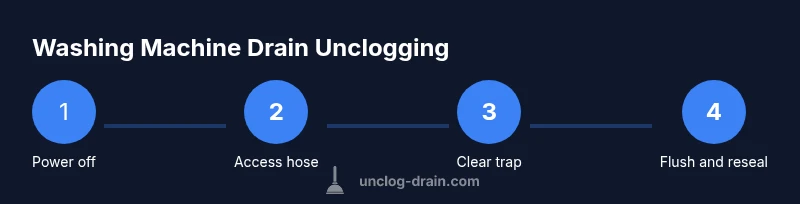
How to unclog drain on washing machine: Step-by-step guide
Learn how to unclog the drain on your washing machine safely with this step-by-step guide, including essential tools, safety tips, and prevention to stop future clogs.


You can unclog a washing machine drain by safely disconnecting power, clearing the P-trap, removing the debris from the drain hose, and using a drain snake or plunger to dislodge the blockage. Check for lint buildup in the filter, run a test cycle with water only, and if needed, flush with hot water and mild detergent. Always follow safety and manufacturer guidelines.
Why unclogging the washing machine drain matters
A clogged drain can cause water to back up into the tub or create standing water around the washer. Unclogging the drain helps prevent overflow during cycles, reduces mold growth, and protects clothing from detergents lingering in a stopped drain. According to Unclog Drain, routine maintenance of the washing machine’s drainage path can lower the risk of stubborn clogs and extend the life of the appliance. Most clogs form from lint, fibers, and detergent buildup that accumulate in the filter, drain hose, and standpipe. If ignored, this buildup can lead to slower draining, longer wash cycles, and unpleasant odors. You’ll save money by addressing clogs early rather than calling a plumber. In this guide, you’ll learn a practical, safe approach to unclog drain on washing machine that you can perform with common DIY tools.
Common causes of washing machine drainage clogs
Clogs in washing machine drains typically arise from a combination of lint, fibers, and detergent residue. Over time, fibers from clothes, human hair, and laundry additives accumulate in the filter and hose, forming a dense blockage. Detergent residue and fabric softeners can also build up in the standpipe and outlet, reducing flow. In some homes, poorly vented drain lines or a kinked standpipe can mimic the symptoms of a clog even when the actual blockage is elsewhere. Understanding these causes helps you target the right area during the unclogging process and prevents recurring issues.
Tools and safety considerations
Before you begin, assemble basic DIY tools and wear proper safety gear. Always unplug the machine to prevent electrical shock and water exposure. Use gloves to protect your hands from sharp edges and dirty drainage debris. A bucket or shallow pan catches residual water, while towels protect your floor. If you’re unsure about gas or water shutoffs, consult a professional. Safety first reduces the risk of injury and damage to your home.
What to do before you start
Clear the area around the washer to create a safe workspace. Move the machine slightly to access the back panel, drain hose, and standpipe. Disconnect power, and, if possible, shut off the water supply valves dedicated to the washer. Place a bucket under the hose connection to catch any escaping water. Having these prerequisites reduces spills and makes the unclogging process smoother.
How the drainage path works (high-level overview)
Washing machines drain through a flexible hose into a standpipe or drain. During operation, water travels from the drum through the pump and hose, exiting via the drain hose. A clog can form at the filter, hose, trap, or standpipe, reducing flow or stopping drainage entirely. Visualizing this path helps you diagnose where the blockage is located and apply the right remedy without unnecessary disassembly.
Aftercare and prevention tips
Once you’ve cleared the drain, run a short wash with only water to check for leaks and ensure smooth drainage. Clean filters and lint screens regularly to prevent future buildup. Periodically flush hoses with hot water and a mild detergent to dissolve soap scum. Consider using a mesh lint catcher or dedicated washing machine cleaner to maintain flow. Regular maintenance can significantly reduce the chance of recurring clogs.
Troubleshooting quick checks
If drainage remains slow after the initial steps, re-check the drain hose for kinks, ensure the standpipe is not blocked, and inspect the filter for hidden debris. A persistent clog may indicate a more distant obstruction or a main sewer issue. In such cases, consider professional evaluation to avoid accidental damage.
Tools & Materials
- Drain snake (hand auger)(3-6 ft flexible snake recommended for washing machine lines)
- Pliers or adjustable wrench(To loosen clamps and detach hoses safely)
- Bucket or shallow pan(Catch water when hoses are detached)
- Towels or rags(Protect floor and mop up spills)
- Rubber gloves(Keep hands clean and protected)
- Screwdriver (Phillips or flathead)(Access lint trap panel if present)
- Flashlight or headlamp(Improve visibility in tight spaces)
Steps
Estimated time: 30-60 minutes
- 1
Power off and unplug the washer
Unplug the machine from the wall outlet. If accessible, shut off the dedicated water supply valve to minimize leaks while you work.
Tip: Never work on an energized appliance; water and electricity create a serious risk. - 2
Move the washer to access back and hoses
Gently slide the unit away from the wall to gain clear access to the drain hose, standpipe, and back panel. This helps you inspect all potential blockage points without forcing connections.
Tip: Ask a helper to avoid straining your back or damaging flooring. - 3
Detach the drain hose from the standpipe and washer
Place a bucket under the connection, loosen clamps with pliers, and carefully remove the hose from both ends. Inspect the hose for kinks or cracks that could mimic clogs.
Tip: Keep track of gaskets and clamps so you can reseal properly. - 4
Inspect and clean the lint filter or trap
If your model has a lint filter or trap accessible from the bottom or front panel, remove it and clear debris. Rinse with water and reinsert.
Tip: Gloves help protect you from sharp edges and dirty buildup. - 5
Insert and run the drain snake into the standpipe
Feed the snake into the standpipe or drain outlet while turning the handle to break up the blockage. When you encounter resistance, rotate and pull back to pull debris free.
Tip: Go slowly; aggressive twisting can kink the line or push debris deeper. - 6
Flush the line with hot water and mild detergent
Reattach the hose temporarily or pour hot water into the standpipe to flush any loosened debris. Use a mild detergent if the line is particularly dirty.
Tip: Avoid boiling water if hoses or PVC may deform; hot water is usually sufficient. - 7
Reattach hose and reseal connections
Reconnect the drain hose to the washer and standpipe, tighten clamps securely, and ensure no twists or kinks remain.
Tip: Double-check clamps and seals to prevent leaks during the next cycle. - 8
Test with a short cycle and observe
Power up, run a short cycle with no clothes to verify drainage and watch for leaks. If water drains normally, you’ve likely cleared the blockage.
Tip: If leaks appear, stop the cycle and recheck connections before proceeding.
Common Questions
What are the most common causes of washing machine drain clogs?
Most clogs come from lint, fibers, and detergent buildup collecting in filters, hoses, and standpipes. Over time, this debris compresses into a blockage that impedes drainage.
Common causes are lint and detergent buildup in filters and hoses, which over time create a blockage. Clear debris and clean filters regularly to prevent it.
Can I use chemical drain cleaners for a washer drain?
Chemical drain cleaners are not recommended for washing machines. They can damage hoses, seals, and the drum, and may create dangerous fumes when mixed with detergents.
Avoid chemical cleaners in washers; they can harm hoses and seals and should be avoided.
Do I need to remove the washer from the wall to unclog the drain?
In many cases you only need access to the back and utility connections. Some machines require a bit of space to maneuver the drain hose, but full relocation isn't always necessary.
Often you don't need to move the whole machine; just gain access to hoses and the standpipe.
What if the clog returns after I finish?
If the clog recurs, inspect the standpipe and venting for additional blockages, and repeat the cleaning process. Consider a more thorough inspection of the drain line and possible main sewer issue.
If it comes back, recheck the line and vents; recurring clogs might need a plumber.
Is it safe to use a plunger on a washer drain?
A plunger can help with some clogs, but be careful to avoid forcing water back into the washer. Use gentle, steady pressure and never reuse a plunger that’s been in contact with chemical cleaners.
Yes, a plunger can help a minor clog if used gently and correctly.
How long should the whole unclogging process take?
Most homeowners complete the process in under an hour, depending on access to the drain and the severity of the clog. If you encounter stubborn resistance, pause and reassess before continuing.
Usually under an hour, but stubborn clogs may take longer.
Watch Video
Key Points
- Unplug and prepare safely before starting
- Identify whether the clog is in the filter, hose, or standpipe
- Use a drain snake to break up blockages carefully
- Flush with hot water and mild detergent to clear residue
- Regular maintenance prevents future clogs