Troubleshooting a Clogged Drain: Snake Not Working
A practical, urgent guide to diagnosing why a drain snake won’t fix a clog, with step-by-step checks, safety tips, and when to call a pro. Learn how to identify deeper blockages and how to decide between DIY fixes and professional help.


Most likely, the clog is beyond the reach of a standard drain snake or the snake isn’t the right size for your pipe. Start with a basic check (trap and cleanout), then try a longer or thicker auger, and avoid forcing the tool. If it still won’t budge, escalate to a professional.
Why a Drain Snake Not Working Might Mean Something Bigger
If you’ve searched for 'clogged drain snake not working', you’re not alone. A lot of DIY attempts fail not because the tool is broken, but because the underlying issue is more stubborn or the approach is mismatched to the blockage. The most common reasons are: the clog sits deeper in the line than a typical hand-cranked snake can reach; the blockage is solid grease or mineral buildup that the coil can’t grab; the pipe layout includes bends or a long horizontal run that makes the snake lose contact with the clog; or the snake being too small in diameter or too short for the drain’s diameter. Before you blame the tool, reassess the target: is the drain downstream from a trap? Is there more than one clogged section in series? Understanding where the blockage lies helps you choose the right tool, feed technique, and backup plan. In many cases, a failed snake is a signal to switch strategy rather than a reason to quit troubleshooting.
Common Mistakes When Using a Drain Snake
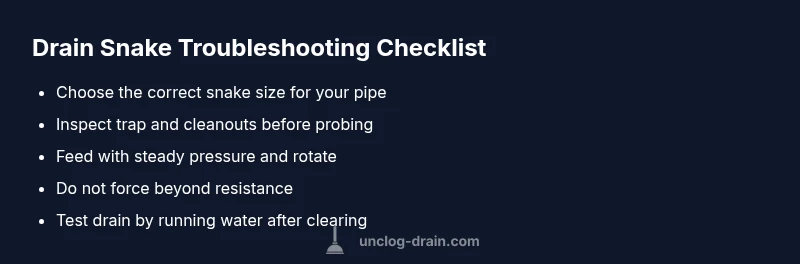
Even seasoned DIYers stumble here. The most frequent mistakes include: feeding the coil too quickly without turning, which can wrap and jam; failing to remove and clean the trap before probing; using the wrong tool size for your pipe (a thin snake in a wide drain won’t reach grease jams); neglecting to rotate the handle steadily, which reduces grip on the blockage; forcing the snake against a hard resistance instead of backing off and re-evaluating; assuming a single pass will clear a complex blockage. Another mistake is not flushing the line after use, so debris redeposits and re-clogs the system. Lastly, ignoring safety: never operate near electricity, and avoid using chemical cleaners in tandem with mechanical cleaning. Learning from these mistakes helps you pick the right technique and improve your odds of success.
How to Prepare Before You Try the Snake
Preparation reduces risk and improves outcomes. Start by putting on gloves and eye protection, and lay towels or a bucket to catch dirty water. Turn off the water supply to the affected fixture and place a bucket under the trap to catch any leakage. Clear the area around the drain to give yourself room to maneuver; remove the P-trap if you are comfortable doing so (and if you know how). Select a snake with the proper diameter for your pipe and the known blockage type; common kitchen and bathroom drains use 1/4 to 1/2 inch coils for hair and grease fuss, while larger main lines require bigger tools. Lubricate the first few inches of the coil with mild dish soap to help it slide, but avoid oil-based lubricants that can attract more debris. Finally, have backup tools ready: plunger, bucket, rags, and a secondary snake if possible. Proper setup reduces mess and protects your pipes.
Diagnostic Steps Without Calling a Pro
Go through a quick funnel: observe the drain behavior, test other fixtures, and inspect the trap. If multiple fixtures are impacted, the blockage could be in the main line. Check the trap for standing water, which can indicate a partial clog and invite backflow. If the snake stalls at a certain point, note the distance from the drain opening; this helps you infer blockage location. Also, consider the pipe material: older cast iron tends to erode and accumulate scale, while PVC resists some chemicals but can split if forced. Try a first pass with a longer length or a thicker coil to see if you gain traction. If there is a strong stench or sewage backups, stop and call a licensed plumber. The goal is to identify whether the issue is local or systemic, and whether you can safely proceed with DIY methods.
Understanding Blockages: Trap, Pipe, and Main Line
Blockages sit in different places and require different approaches. Hair and soap scum tend to accumulate in P-traps; mineral buildup clings to the pipe walls; grease creates a slick, stubborn layer that resists coils. A snake can clear hair in the trap, but grease or root intrusion further back may require larger equipment or professional inspection. The main sewer line is a particular challenge and cannot be treated with a hand-cranked snake; if you suspect backflow into the home, stop and call a pro immediately. When diagnosing, map the drainage path: from fixture to outlet, including any cleanouts. This helps you choose the right snake length and turning technique. If the snake refuses to advance, don’t force it; back away and reassess rather than risking pipe damage.
Safety and Maintenance While Troubleshooting
Safety first: never mix chemicals with mechanical tools, and always disconnect power to nearby appliances when working near an electrical outlet or disposal. Use goggles and gloves, and keep kids and pets away. Clean and sanitize tools after use to avoid spreading bacteria. Inspect the snake for kinks or bending that signal wear; replace a damaged coil rather than pushing it through the drain. Regular maintenance after clearing a clog prevents immediate reoccurrence: consider installing a hair catcher on bathroom drains, using hot water flushes weekly, and avoiding pouring fats or oils down the drain. A little prevention goes a long way in keeping your plumbing healthy.
Quick Fixes You Can Try Now
Before you commit to a full-scale snake job, try these quick, low-risk steps. First, use a plunger on the affected fixture to break up some of the initial resistance; then reattempt the snake with a gentle, steady feed while rotating. If the clog remains, remove the trap, rinse the sections, and reassemble with care. For greasy clogs, flush with hot water and a little dish soap to loosen the blockage. If you still have a slow drain after these steps, the clog is likely deeper or more stubborn, and you should move to the diagnostic flow described above or call a pro.
Steps
Estimated time: 60-90 minutes
- 1
Gather tools and safety gear
Collect the drain snake, plunger, bucket, towels, gloves, safety glasses, and flashlight. Turn off the water supply and place a bucket under the trap to catch spills. Safety first keeps you protected during the process.
Tip: Lay out everything before you start to minimize mess. - 2
Inspect the trap and area
Remove the P-trap if you’re comfortable and accessible. Clear away debris and drain cover, so you can see the entry point clearly. This step helps prevent debris from falling back into the pipe.
Tip: Take a photo of the trap’s connections to aid reassembly. - 3
Choose the right snake size
Select a coil diameter appropriate for your drain and known blockage; smaller coils are for hair, larger coils for grease or roots. Length matters for reaching deeper clogs. Ensure the tool is clean and in good condition.
Tip: Avoid using a too-small snake that won’t reach the clog. - 4
Insert and feed the snake
Insert the snake into the drain and begin feeding with steady clockwise turns. Maintain light, even pressure while rotating to keep contact with the blockage. Do not rush this step.
Tip: Keep the coil straight and avoid bending backwards. - 5
Encounter resistance?
If you meet resistance, stop feeding forward, rotate a few more turns, and gently push back while pulling the coil slightly to break up the clog. Do not force through hard material.
Tip: Small, controlled movements reduce risk of pipe damage. - 6
Withdraw, clean, and re-test
Slowly withdraw the snake, wipe the coil, and reassemble the trap if removed. Flush the line with hot water or a steady stream of water to test flow. If water still backs up, consider repeating with more length or trying a larger coil.
Tip: Check for any new leaks as you reassemble. - 7
Escalate if needed
If the clog remains after a thorough pass, the blockage may be beyond DIY correction. Plan for a professional inspection or camera scope to assess the main line.
Tip: Document symptoms and steps taken to share with the plumber. - 8
Final test and cleanup
Run water for several minutes to ensure full clearance. Clean and dry tools, store safely, and dispose of any waste properly.
Tip: Keep a maintenance routine to prevent future clogs.
Diagnosis: Drain remains clogged after attempting to use a drain snake, or the snake cannot advance past a certain point.
Possible Causes
- highBlockage is deeper in the main line or far from the fixture
- mediumSnake diameter or length is insufficient for the pipe or blockage type
- lowObstruction sits behind a trap or has turned into a knot within the coil
Fixes
- mediumFeed a longer or thicker snake, or switch to a power auger if accessible
- easyRemove and clean the trap, reattempt entry from the cleanout with correct size coil
- hardIf resistance persists and you suspect main-line blockage, call a licensed plumber for camera inspection
Common Questions
Why won't my drain snake go through the bend in the pipe?
A bend or P-trap can block the coil. Remove or extend beyond the bend, or switch to a larger coil. If resistance persists, avoid forcing and consult a pro.
If you can't get past the bend, stop forcing and inspect the trap; you may need a larger coil or professional help.
Can I use chemical cleaners with a drain snake?
Chemical cleaners should not be used in combination with a mechanical snake. They can create hazardous reactions or damage pipes and traps.
No; avoid mixing chemicals with the snake. It’s safer to use mechanical methods first.
How long should a DIY snake job take?
A typical attempt can take 30 to 60 minutes, depending on blockage location and tool compatibility. More complex clogs may require longer or a professional inspection.
Most DIY attempts take around half an hour to an hour, depending on the blockage.
When should I call a plumber for a clog?
If multiple fixtures are slow or backing up, there's sewage odor, or you suspect a main-line blockage, stop DIY and call a licensed plumber for a camera inspection.
Call a plumber if you suspect the main line or persistent recurring clogs.
Is removing the P-trap necessary for all clogs?
Not always, but removing the P-trap can help clear hair and debris that accumulate there. Reassemble tightly and test the drain afterward.
Sometimes removing the trap helps; reassemble carefully and test the drain.
What maintenance helps prevent future clogs?
Install hair catchers, flush hot water weekly, and avoid pouring fats or greases down the drain. Regular maintenance reduces the chance of recurring clogs.
Use hair catchers and regular water flushes to prevent clogs.
Watch Video
Key Points
- Identify if the clog is local or main-line.
- Use the proper snake size and length for your pipe.
- Don’t force the tool; adjust approach and consider escalation.
- Call a pro for stubborn or recurring clogs.