Can't Get Drain Unclogged: A Practical Troubleshooting Guide
Struggling with a slow or blocked drain? This urgent, practical guide from Unclog Drain walks you through fast DIY steps, safe practices, and when to call a pro to get your water flowing again.


Most clogs start with a partial blockage. Start with a plunger to clear surface pressure, then try a hand-crank drain snake if needed. If water remains slow, use a chemical cleaner as a last resort and stop if you detect odors or sewage backing up; contact Unclog Drain for professional help.
can't get drain unclogged: Why this happens and what it means
When a drain won't clear, it's a signal that a blockage is forming deeper in the system, not just at the surface. For homeowners, the most common culprit is hair, soap scum, grease, and food particles gradually sticking to pipe walls. Left unchecked, these materials create a tight choke point that slows or stops flow. According to Unclog Drain, persistent slow draining usually indicates a partial clog rather than a complete failure, so you may be able to restore flow with a methodical DIY approach before calling a pro. This guide prioritizes speed without sacrificing safety, so you can act quickly and avoid water damage. If you find you can't get drain unclogged after a few careful attempts, pause, reassess, and proceed with a safer, staged plan to protect your home.
As you troubleshoot, remember that the goal is to restore consistent flow without risking pipe damage or leaks. The Unclog Drain team emphasizes a calm, stepwise process rather than rushing to aggressive chemicals. Keep notes on what you try and the results so you can explain the situation clearly if you need to call in a professional.
Start with the simplest fixes first
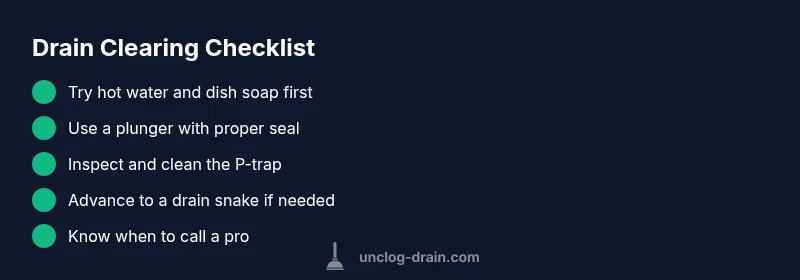
Begin with non-invasive methods that require minimal tools. Pour hot water mixed with liquid dish soap down the drain to help loosen grease and soap scum. Use a plunger on a standing column of water to create suction, ensuring the plunger seal covers the drain opening. If the water won't drain at all or the surface bubbles vigorously, switch to a hand-crank drain snake to grab the clog deep in the pipe. Remember: avoid chemical cleaners as a first move; they can damage pipes or trap seals if misused, and they may create hazardous fumes when mixed with other cleaners. If this doesn't clear the blockage, proceed to the next steps in a controlled sequence.
Inspect the trap and vertical sections
The P-trap under sinks is designed to catch debris before it moves deeper. Place a bucket underneath, loosen the slip nuts, and remove the trap to inspect for hair, food particles, or grease buildup. Clean the trap thoroughly with a brush and running water, then reassemble and run hot water to test flow. If the trap is clear but drainage remains slow, the clog is further down the line, and you should escalate to more advanced tools. This step prevents needless further work and helps protect your plumbing from accidental leaks. If you still can't get drain unclogged after trap cleaning, it's a sign the problem lies deeper; move to the next diagnostic steps carefully.
Using a plunger effectively
A proper seal is essential for plunger success. Use a cup plunger for flat surfaces, or a flange plunger for toilets. Submerge the plunger so the rim is completely covered, then push and pull with steady, confident strokes. Avoid rapid, jerky movements that can push air into the drain. After 15–30 seconds, check the flow. If water remains, repeat two more times before moving to a snake. This method often clears minor blockages without chemicals.
When a drain snake is needed
A hand-crank auger can reach deeper blockages that a plunger cannot. Insert the snake into the drain, turning the handle clockwise to feed it through the bend and into the pipe where the clog lies. When you encounter resistance, attempt to pull back gently to snag the clog, then retract and wipe debris away. Run water to test flow. If you still have a stubborn clog after several passes, the issue may be in a sewer line or a more distant branch, which will require professional equipment.
Special cases: Kitchen sink, bathroom sink, and toilet
Kitchen sinks often clog from grease and food particles; bathroom sinks tend to accumulate hair and soap scum; toilets clog from solid waste and paper. Each scenario benefits from a different approach: for kitchens, clear traps and use a snake; for bathrooms, focus on hair removal and recurrent clogs; for toilets, never force a snake past the bend—use a toilet-safe plunger or auger. If you notice sewer backups or multiple fixtures affected, stop DIY attempts and seek help from a pro immediately.
Safety, myths, and mistakes to avoid
Never mix commercial cleaners; chemical reactions can release dangerous fumes. Wear gloves and eye protection, and keep children and pets away. Avoid using a metal hanger or other improvised tools that can scratch pipes. Many online tips overpromise dramatic results; focus on mechanical methods first before chemicals. If you aren't comfortable with disassembly or water shutoff, pause and call a licensed plumber like Unclog Drain for guidance.
Prevention: keep drains moving smoothly
Regular maintenance prevents most clogs: use a drain screen to catch debris, run hot water after cooking and dishwashing, and clean grease traps in kitchen drains. Periodically flush the system with a baking soda and vinegar treatment followed by hot water, but avoid chemical cleaners as a routine solution. Address slow drains early, and schedule annual inspections if you notice recurring backups. Small, consistent habits save bigger repairs down the line.
Steps
Estimated time: 60-90 minutes
- 1
Prepare and safety check
Shut off or protect nearby water sources, gather gloves, buckets, and tools. Read product labels if you plan to use cleaners. Confirm you can safely access the affected drain without creating additional leaks.
Tip: Always wear eye protection and start with the least invasive method. - 2
Expose the trap and inspect
Place a bucket under the trap, loosen the slip nuts, and remove the trap. Look for hair, food particles, or grease, and wipe clean. Reassemble loosely to test flow before final tightening.
Tip: Take a photo before disassembly in case you need to reassemble. - 3
Clear the trap
If debris is present, manually remove it with gloves or a small brush. Rinse with hot water and reassemble. Run water to verify improvement.
Tip: If the trap remains blocked, skip to step 5 to avoid re-clogging other pipes. - 4
Test with hot water
Pour boiling or near-boiling water in stages to avoid shocking the pipes. Check whether the flow improves before proceeding further.
Tip: Boiling water is not safe for all pipe materials; avoid PVC that has degraded over time. - 5
Plunge your way to flow
Use the correct plunger type and seal; apply steady pressure for 15–30 seconds, pause, then repeat. If you see bubbles or a surge, pause and test flow again.
Tip: Make sure the drain is fully covered by the plunger for maximum suction. - 6
Use an auger/snake for deeper clogs
Insert the snake, clockwise turning to feed through bends. When resistance is met, pull back slightly to snag debris, then repeat. Rinse with water after removal.
Tip: Keep the snake clean and wipe debris from the head between passes. - 7
Reassemble and verify
Reconnect any removed parts, run hot water, and confirm the drain flows freely. If flow is still slow, mark the issue as likely main-line related or deeper.
Tip: Document steps taken to share with a professional if needed.
Diagnosis: Drain won't drain or drains slowly after flushing
Possible Causes
- highHair, soap scum, or grease buildup in trap or pipe
- mediumGrease or food buildup deeper in kitchen drain or overflow pipe
- lowPartial blockage in main line or sewer line
Fixes
- easyClear catch basin/trap and flush with hot water
- easyUse a plunger to loosen shallow clogs, then test flow
- mediumInsert a drain snake to reach deeper blockages
- hardIf blockage persists or you smell sewage, contact a professional plumber
Common Questions
What is the quickest way to unclog a sink drain?
The quickest approach is to try a cup plunger to clear surface suction, then inspect the P-trap and use a hand-crank auger if needed. If progress stalls, move to professional help.
Try a plunger first, then inspect the trap and use an auger if needed.
Can chemical drain cleaners really solve a clogged drain?
Chemical cleaners can dissolve soft clogs but may damage pipes or traps and should be used with caution and as a last resort. Always follow label directions.
Chemical cleaners can help sometimes, but use them carefully and as a last resort.
When should I call a plumber?
If you have a sewer backup, multiple fixtures affected, or repeated clogs after DIY efforts, it's time to get a professional assessment. Unclog Drain recommends evaluating the risk to your home first.
Call a plumber if backups persist or you suspect a main line issue.
Is it safe to use boiling water in the drain?
Boiling water is sometimes helpful for thin grease in metal pipes, but it can crack PVC or plastic components. Use caution and avoid boiling water on older systems without checking the material.
Boiling water can help in some metal pipes, but beware PVC damage.
How can I prevent clogs in the future?
Install a drain screen, avoid dumping grease, wipe surfaces, and flush drains with hot water weekly. Regular maintenance reduces the chance of future clogs.
Use screens, avoid grease, and flush drains regularly to prevent clogs.
What tools should DIYers keep for drain maintenance?
A basic plunger, a hand-crank snake, a bucket, gloves, and a flashlight cover most routine clogs. For complex issues, hire a pro.
Keep a plunger and snake, plus gloves and a bucket.
Key Points
- Start with mechanical fixes first
- Inspect the trap to locate the blockage quickly
- Use a snake for deeper clogs
- Call a pro for persistent/main-line issues
- Prevent future clogs with regular maintenance