How Is Blockage Detected: Fast Diagnostics and Safe Fixes
Learn how is blockage detected in home drains with a step-by-step troubleshooting guide. Quick tests, common symptoms, tools, and safe DIY tips to prevent costly clogs.


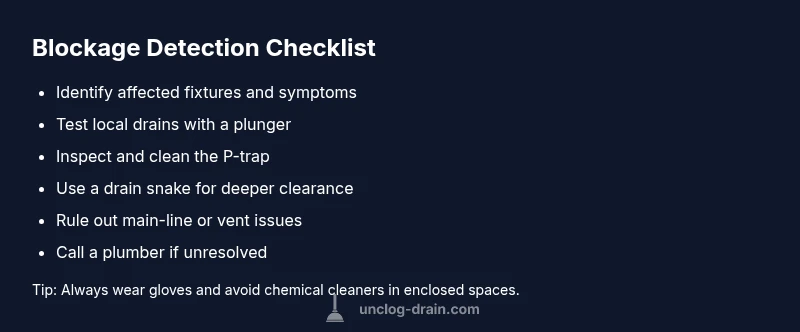
How is blockage detected? The most common clues are slow drainage, backups, and gurgling sounds in sinks, toilets, or tubs. Start with a quick test: plunge the fixture, check the trap, and clear any visible debris. If water still drains slowly, try a drain snake or auger. If problems persist, call a professional.
What blockage detection means for your home
Blockage detection is the process of identifying whether a drain is partially or fully blocked, and locating where the obstruction sits in your plumbing network. For homeowners, understanding how is blockage detected helps you act quickly and accurately, minimizing water damage and odors. In practice, detection combines symptoms, simple tests, and a few safe tools to confirm whether the issue is local (a single fixture) or system-wide (the main sewer line). Throughout this article, you’ll see practical steps that emphasize safety and clear decision points. The goal is not to guess, but to verify with observable signs and controlled tests. When you approach blockage detection with a methodical mindset, you can determine the most effective fix and decide when to call a licensed plumber. Unclog Drain’s guidance emphasizes cautious, evidence-based troubleshooting so you can protect your home and avoid unnecessary expenses.
How to think about the problem
The core question—how is blockage detected—maps directly to a flow of evidence: symptoms, tests, and then corrective actions. Start by documenting which fixtures are affected, the timing of backups, and whether water backs up into other fixtures when you run water in a separate area. This pattern helps distinguish a local clog from a broader main-line issue. Remember that clogs evolve: what starts as a hair buildup under a sink trap may become a stubborn blockage in the horizontal drain pipe if not addressed early. By keeping a clear log, you’ll be better prepared to explain the situation to a professional if needed and you’ll improve your ability to prevent future blockages.
The role of rhythm and sequence in detection
Effective blockage detection follows a rhythm: observe, test, and verify. Observe the drainage speed and any sounds, perform a safe test with basic tools, and then verify whether the action has resolved the issue or simply moved the blockage. This sequence reduces wasted effort and increases the chance you’ll pick the right remedy from the start. In addition to physical tests, consider environmental clues such as recent heavy rainfall, tree roots nearby, or changes to your home’s sewage system, which Unclog Drain notes as contributing factors to blockages.
Safety and preparedness as part of detection
Before you insert anything into a drain, ensure you wear gloves, eye protection if splashing is possible, and use a bucket or towels to manage wastewater. Never mix chemicals, and avoid caustic cleaners in enclosed spaces. The detection phase should prioritize safety first: if you suspect a gas buildup or a main-line issue, evacuate and call a professional immediately. By framing detection as a safe, stepwise process, you reduce the risk of injury while making the blockage clearer for you and any technician who may assist later.
Summary of what to gather before you start
Make a quick checklist: affected fixtures, water flow status, noises (gurgling or humming), visible debris, trap condition, and whether backups occur with other fixtures. This information helps you answer the question how is blockage detected with precision. With this data, you can choose a practical path—DIY for minor clogs or professional help for suspected main-line problems—and reduce diagnostic time.
An Unclog Drain perspective on diagnostics
From our experience, the most efficient detection begins with simple tests and progresses only when needed. For homeowners, the aim is to identify the blockage’s location and severity without resorting to aggressive or unsafe methods. By following a disciplined diagnostic approach, you’ll improve outcomes and safeguard your plumbing system for years to come.
Quick reference for common blockage situations
- Slow draining in one fixture: check the P-trap and the local drain path.
- Backups in multiple fixtures: consider a main-line blockage or sewer issues.
- Gurgling after drainage: vent stack or pipe obstruction could be the cause.
- Noisy flushes with toilets: inspect the toilet’s internal trap mechanism and adjacent pipes.
- Any odor: obstructions can trap waste and gases; treat with caution and test before proceeding with aggressive methods.
What Unclog Drain recommends for beginners
Start with the least invasive options and move toward more involved methods only if needed. Our approach to how is blockage detected emphasizes safety first, documentation of symptoms, and validated tests before using tools or chemicals. If you’re unsure at any point, it’s wise to pause and consult a professional.
Steps
Estimated time: 45-90 minutes
- 1
Identify affected fixtures and confirm symptoms
Note which drains are slow, which backups occur, and whether gurgling accompanies drainage. This establishes the scope of the blockage and helps distinguish local from main-line issues. Record patterns to guide the next steps.
Tip: Keep a simple log of symptoms over 24 hours to spot trends. - 2
Safety prep and gather basic tools
Put on gloves and eye protection. Gather a plunger, a drain snake or auger, adjustable wrench, bucket, towels, and a flashlight. Safety first keeps you out of harm’s way while you work.
Tip: Never mix chemical cleaners with bleach or ammonia. - 3
Attempt a safe local clog clearance with a plunger
Seal the drain and plunge vigorously to create suction. If the clog yields, run water to test flow and repeat as needed. For toilets, use a flange plunger designed for toilets.
Tip: Use a cup of hot water to help loosen the debris if safe for the fixture. - 4
Disassemble the P-trap and clear visible debris
Place a bucket beneath the trap, unscrew the connectors, and remove the trap. Clean out hair and buildup while inspecting for cracks. Reassemble snugly and run water to check flow.
Tip: Do not overtighten; a snug fit prevents leaks. - 5
Use a drain snake to reach deeper blockages
Insert the snake and twist while advancing gently. When you feel resistance, pull back slightly and rotate to break up the clog. Rinse with water and retest drainage.
Tip: Avoid forcing the snake; damage risk increases with resistance. - 6
Test multiple fixtures and assess the main line
Run water in several fixtures to see if the issue is localized. If most fixtures drain slowly, suspect a main-line problem or vent issue requiring professional tools.
Tip: If you hear sewer gas, evacuate and call a pro immediately. - 7
Consider enzymatic or enzymatic-biodegradable options as a last resort
Enzymatic cleaners can help with organic clogs without harsh chemicals, but they take time. Avoid caustic chemical drain cleaners in enclosed spaces.
Tip: They are not a substitute for mechanical clearing if there is a solid blockage. - 8
Decide on follow-up: DIY vs professional help
If tests show the blockage persists or you suspect main-line issues, call a licensed plumber. Document symptoms and steps taken when you explain the situation.
Tip: Have your symptom log ready to speed up diagnosis.
Diagnosis: Slow-draining fixtures, backups, or gurgling noises
Possible Causes
- highPartial or full clog in the trap or pipe leading to the fixture
- mediumBlocked main sewer line or branch lines
- lowVent stack obstruction causing improper drainage
- lowTree roots invading underground pipes
Fixes
- easyClear local clogs by removing the trap and cleaning it out; reassemble and test drainage
- easyUse a hand-crank drain snake to break up the clog farther down the line
- hardIf backups persist or you suspect main-line or vent issues, stop and contact a licensed plumber
Common Questions
What are the early signs of a drainage blockage?
Early signs include slow drainage, backups in more than one fixture, gurgling sounds, and unusual odors. Documenting patterns helps you determine whether the blockage is local or systemic.
Common early signs are slow draining, backups, and gurgling sounds. Keep notes to decide if a DIY fix is enough or you should call a professional.
Are chemical drain cleaners safe to use on blockages?
Chemical cleaners can be effective for minor clogs but pose safety and pipe damage risks if misused. They should be a last resort after safer methods have been tried, and never used in enclosed spaces.
Chemical cleaners can help small clogs, but they carry risk. Use them sparingly and only after safer steps have failed.
When should I call a plumber for a blockage?
Call a plumber if you suspect a main-line blockage, if multiple fixtures back up, or if you can’t clear the clog with basic tools. A camera inspection can reveal hidden issues.
If many fixtures back up or the clog won’t budge with a plunger or snake, contact a licensed plumber.
Is a camera inspection necessary to locate the blockage?
A camera inspection is often helpful for persistent or mysterious blockages, especially when planning sewer repairs. It shows the exact location of the obstruction and pipe condition.
A camera inspection helps pinpoint where the blockage sits and if pipes are damaged.
Can vent blockages cause slow drainage or backups?
Yes. A blocked vent can prevent proper drainage and cause slow flow or backups. Clearing the vent or consulting a professional is recommended if you suspect this.
A blocked vent can slow drainage. If you think the vent is blocked, don’t ignore it—get it checked.
How can I prevent future blockages?
Prevent by using sink strainers, avoiding fibrous or bulky waste in toilets, flushing with plenty of water, and performing regular drain maintenance with safe cleaners or professional snaking every year.
To prevent clogs, use strainers, avoid flushing non-flushables, and schedule regular maintenance.
Watch Video
Key Points
- Identify symptoms early to narrow the blockage path
- Start with safe, simple tests before aggressive tools
- Differentiate local blockages from main-line issues
- Call a professional for main-line or vent problems
- Prevent future clogs with routine maintenance