What to Use to Unclog Sink: A DIY Guide
Learn safe, effective tools and step-by-step methods to unclog a sink—from plunger and snake to hot water, baking soda, and vinegar. Discover when to DIY or call a pro with Unclog Drain.


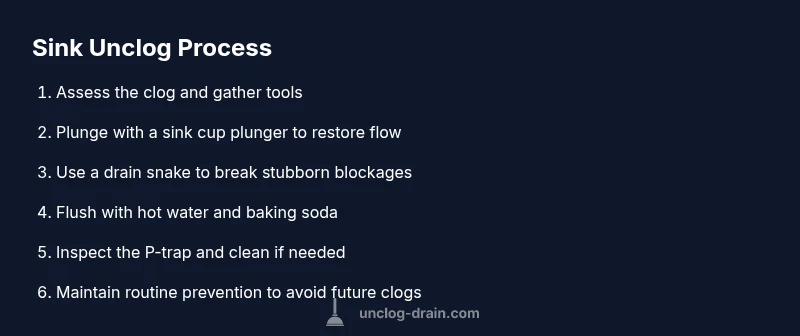
To unclog a sink safely, start with basic tools and a methodical plan. Use a cup plunger to restore drainage, then move to a hand auger (drain snake) if the blockage resists. A hot water flush followed by baking soda and vinegar can break organic clogs, but avoid chemical cleaners in combination. If the clog remains, inspect the P-trap or call a professional.
What you need to know before unclogging a sink
Clogs happen for many reasons — hair and soap buildup in bathroom sinks, grease and food scraps in kitchen sinks, and mineral deposits in old pipes. If you’re wondering what to use to unclog a sink, start with low-risk, non-corrosive methods. According to Unclog Drain, mechanical methods should come first, reserving chemical cleaners for only truly stubborn cases. Before you begin, put on gloves, clear the area, and place a bucket under the P-trap to catch any water or debris. Check whether you have an overflow in the basin; if so, block it with a damp cloth to maintain suction during plunging. Also inspect whether a simple screen or hair catcher is slowing drainage; removing it can restore flow. By understanding the clog type and the pipe layout, you can choose the right tool and avoid unnecessary damage. In many homes, a blocked bathroom sink is just a hair-clog at the trap or a partial obstruction in the drain line. If the water drains slowly but not completely blocked, you may fix it with a few inexpensive tools rather than a full teardown. The Unclog Drain Team emphasizes safety: never mix chemical cleaners with other products, and never pour them into a hot drain.
Safe, effective tools for sink unclogs
A practical toolkit makes every DIY job faster and safer. Essential items include a cup plunger designed for sinks, a manual drain snake or hand auger, a sturdy bucket, and rubber gloves for protection. Keep towels handy for cleanup and a flashlight to inspect the drain and trap area. Optional tools that can help on tougher clogs include adjustable pliers, a small pipe wrench, and a flexible snake with various coils. For the smartest results, choose tools sized for your sink’s diameter and pipe material. The Unclog Drain Team recommends starting with mechanical methods before chemical cleaners to reduce risk of damage and exposure. If you have old plastic pipes, a softer approach with a drain snake is often enough and safer than aggressive tools. Always work in a well-lit area and keep water off when disassembling traps. If you’re unsure about pipe material or trap design, consult a professional.
Mechanical methods first: Plungers, Snake, and Hot Water
Plungers are your first line of defense for many clogs. Use a cup plunger and ensure a good seal over the drain opening; add enough water to cover the plunger cup and pump firmly for 15–30 seconds. If the blockage persists, switch to a hand auger or drain snake. Insert the snake into the drain, rotate clockwise, and push forward with gentle resistance; pull back to clean debris. For best results, flush the drain with hot water after working the snake to clear any remaining particles. Heat helps dissolve and loosen organic matter, but avoid boiling water on older PVC pipes as it can weaken joints. If you don’t have a snake, you can try a combination of baking soda and hot water, followed by vinegar, then rinse with hot water. Diagrams or videos can help you visualize the steps; refer to our linked guide images for technique confirmation.
Chemical cleaners: when to use and when to avoid
Chemical drain cleaners can be effective for certain clogs, but they pose safety risks and can damage pipes if misused. Use chemical cleaners only as a last resort and never mix products, especially not with bleach or ammonia. For metal or old pipes, chemical cleaners can cause corrosion and produce harmful fumes in enclosed spaces. The recommended approach is to try mechanical methods first, then consider enzymatic or non-caustic cleaners if the clog is organic and the pipes are in good condition. Always ventilate the area, wear eye protection, and follow the product instructions exactly. If you have a septic system, avoid harsh chemicals that can upset the bacterial balance. If you must use a cleaner, choose a safer, biodegradable option and test it in a small section of the pipe first.
When to take the trap apart (P-trap) and check for blockages
If plunging and snaking do not clear the clog, you may need to inspect the P-trap. Place a bucket underneath, loosen the slip nuts with a suitable wrench, and carefully remove the trap. Clean out any hair, soap scum, or debris with a stiff brush, then reassemble, ensuring the gasket seats properly to prevent leaks. Refit the trap by hand first, then tighten with a wrench—avoid over-tightening which can crack fittings. Run warm water and check for leaks. If debris is stubborn, you can use a long flexible brush to reach inside the trap’s bend. If the trap is corroded or damaged, it’s time to replace it.
Maintenance tips to prevent future clogs
Preventing clogs is easier than clearing them. Use a drain screen to catch hair and food particles, wipe fat or grease from dishes before washing, and avoid pouring oily substances down the drain. Regularly flush sinks with hot water to melt soap scum and rinse away buildup. Baking soda and hot water can act as a preventative flush every couple of weeks, followed by vinegar for a fizzing clean. If you have long hair or a family of multiple users, consider a routine maintenance checklist and a periodic trap inspection. The Unclog Drain Team notes that small, consistent habits reduce the risk of major blockages and extend the life of your pipes.
Troubleshooting quick-glance checklist
- Is there standing water filled above the trap? If yes, try plunging or snaking.
- Have you checked the P-trap for clogs and cleaned it?
- Are you seeing leaks around joints after reassembly? Tighten fittings or replace gaskets.
- Did you use a chemical cleaner recently? Rinse thoroughly and avoid mixing cleaners in the future.
- Has a professional inspected the drain line recently? Regular preventive maintenance helps catch issues early.
Tools & Materials
- Cup plunger (sink plunger)(Ensure a good seal and choose a plunger designed for sinks.)
- Hand auger / drain snake(12-18 inch length is typical for sinks)
- Bucket(To catch water and debris during trap work)
- Rubber gloves(Protect hands; keep nails clean)
- Towels or rags(Clean spills and dry the area)
- Adjustable wrench or pliers(Helpful for removing slip nuts on the P-trap)
- Old toothbrush or stiff brush(Scrub debris from the trap and pipe interior)
- Dish soap (optional)(Lubricates and helps loosen greasy clogs when flushed)
- Baking soda(Works with hot water to break up organic matter)
- White vinegar(Used with baking soda for fizzing action)
- Kettle or pot for hot water(Pour slowly to avoid splashing burn hazards)
Steps
Estimated time: 30-60 minutes
- 1
Prep the area
Clear the area under the sink, place a bucket, and put on gloves. Remove the sink strainer to inspect for obvious debris at the top. If there is an overflow, block it with a damp towel to maintain suction during plunging.
Tip: Having a dry, well-lit workspace reduces mess and speeds up the process. - 2
Test with a plunger
Fill the sink with enough water to cover the plunger cup. Position the plunger over the drain, seal, and push/pull firmly for 15–30 seconds. If drainage improves, repeat a few times until it clears.
Tip: If you have a double basin, seal the other drain with a wet cloth to maintain suction. - 3
Try a drain snake
Insert the snake into the drain and rotate clockwise while pushing gently. When you feel resistance, back off slightly and reel in debris. Repeat until you sense a clearing. Run hot water to flush.
Tip: Take breaks if you feel resistance; forcing the snake can damage pipes. - 4
Flush with hot water
Boil water and carefully pour in stages down the drain. This helps dissolve soap scum and certain organic clogs. Avoid boiling water on PVC pipes if you hear creaking or see cracks.
Tip: A controlled pour reduces splashing and scald risk. - 5
Inspect and clean the P-trap
Place a bucket underneath, loosen slip nuts, and remove the trap. Remove debris with a brush, rinse, and reassemble snugly. Check for leaks after running water.
Tip: Make sure all gasket surfaces are clean before tightening. - 6
preventive care and recheck
Reinstall strainer, run water, and monitor for slow drainage. If still clogged, consider enzymatic cleaners or seek professional help for deeper line issues. Document any recurring issues for future reference.
Tip: Establish a quick maintenance ritual to prevent future clogs.
Common Questions
What is the best tool to unclog a sink?
For most sinks, a cup plunger followed by a hand auger is a reliable first approach. If the clog persists, inspect the P-trap and consider a professional inspection for deeper lines.
The best tool is usually a cup plunger first, then a hand auger if needed. If the clog stays, check the trap or call a pro.
Can I use chemical cleaners to unclog a sink?
Chemical cleaners can work for certain clogs but pose safety risks and can damage pipes. Use them sparingly, never mix with other cleaners, and consider mechanical methods first.
Chemical cleaners can help, but they can be risky. Use them only after trying mechanical methods and never mix cleaners.
When should I call a plumber?
If clogs recur, involve multiple fixtures, or you hear gurgling sounds after attempts, it may indicate a deeper blockage in the main line or a broken pipe. A licensed plumber should assess the system.
Call a plumber if the clog keeps returning or you hear gurgling sounds. It could mean a bigger issue.
How can I prevent clogs in the future?
Use sink screens, avoid pouring grease down the drain, and flush with hot water regularly. Household maintenance and timely trap cleaning can prevent many clogs from forming.
Screen your drain, avoid grease, and flush regularly to prevent clogs.
Is it safe to unclog a clogged kitchen sink given grease buildup?
Grease can solidify and trap other debris, making clogs stubborn. Mechanical methods and hot water flushes typically work best; avoid harsh chemicals in kitchens to protect piping and dishwasher connections.
Grease buildup can block drains; use mechanical methods and hot water, avoid harsh chemicals near the kitchen.
Will a drain snake damage plastic pipes?
If used correctly, a hand auger should not damage plastic pipes. Avoid forcing the snake and use gentle rotation. If you meet substantial resistance, stop and consult a professional.
A snake used carefully shouldn’t damage plastic pipes, but don’t force it. If in doubt, call a pro.
Watch Video
Key Points
- Start with mechanical methods before chemicals
- Keep the P-trap in good condition and inspect for blockages
- Regular maintenance prevents future clogs