Basin Drain Cleaner: Safe DIY Unclog Guide 2026 Edition
Learn how to safely use a basin drain cleaner to clear bathroom sink clogs, prevent future buildup, and maintain your plumbing with practical, DIY-friendly steps. Includes tips, safety, and alternatives.


Using a basin drain cleaner helps clear bathroom sink clogs and prevent future buildup when used correctly. Start with mechanical methods, read the label, and follow the recommended waiting time before flushing with hot water. Never mix cleaners or use household bleach with acid cleaners. Safety and PPE matter for best results.
Why a Basin Drain Cleaner Matters
A clean basin drain is essential for daily hygiene and home comfort. When a bathroom sink clogs, it’s usually a mix of hair, soap scum, and mineral residues that restrict flow. A basin drain cleaner can dissolve organic buildup and break through minor blockages at the source, reducing the need for aggressive plunger use or disassembly. According to Unclog Drain, addressing clogs early with a safe, purpose-built cleaner helps protect pipes and prevents more serious problems down the line. This guide focuses on practical, DIY-friendly methods that balance effectiveness with safety.
Before you reach for a bottle, take a moment to assess the situation. If water stands in the basin and drains slowly, a cleaner may help. If the drain is completely blocked or there is foul odor, you should consider mechanical methods first and reserve chemical cleaners for after methods have cleared some space. Read the label carefully for the exact product type, concentration, and waiting periods. Enzyme-based products work slowly but safely on organic clogs, while caustic cleaners tackle mineralized buildup more quickly when used exactly as directed. In every case, never mix two cleaners, never pour cleaner into standing water that contains other chemicals, and always wear gloves and eye protection. The goal is to restore steady drainage without creating hazardous fumes or damaging the P-trap or pipes.
Practical success with a basin drain cleaner depends on preparation, patience, and good technique. Start with a clear view of the pipe under the sink and remove any visible debris from the area around the stopper. Then, choose the right cleaner for the type of clog you’re facing and follow the product’s instructions for dosage and wait time. If you’re unsure, begin with the gentler enzymatic option and escalate only if there is no improvement after the recommended waiting period. With the right approach, you’ll reduce mess, minimize risk, and extend the life of your bathroom sink.
Types of Basin Drain Cleaners and How They Work
Basin drain cleaners come in several formulations designed for different clog types. Enzymatic cleaners rely on biology to slowly digest organic matter like hair and soap scum, making them a safer first option for routine maintenance. Caustic cleaners (often containing sodium hydroxide) attack built-up minerals and organic matter more aggressively, but they require careful handling and strict adherence to label directions. Acid-based cleaners exist for certain mineral deposits, though they demand extra caution and ventilation to avoid fumes. When selecting a product, consider the age of your plumbing, the likelihood of pipe materials (PVC vs metal), and any household chemical sensitivities. Always start with a gentler option if the clog is mild, and reserve harsher formulations for persistent blockages that don’t improve with mechanical action.
From a practical standpoint, keep in mind that enzymatic cleaners are slower to act but gentler on pipes, while chemical cleaners provide faster results for stubborn clogs. In many homes, a combined approach—mechanical methods to loosen debris followed by a cleaner to finish the job—delivers reliable drainage without damage. Unclog Drain’s guidance emphasizes reading the product label, using the right amount for the pipe diameter, and ensuring proper ventilation during application. If you’re unsure about compatibility with your plumbing, consult a professional before proceeding.
When to Use Chemical Cleaners vs Enzyme/Eco-Friendly Options
Choosing between chemical cleaners and enzyme-based products depends on the clog’s characteristics and your safety priorities. Enzyme cleaners are a good starting point for routine maintenance and light blockages because they’re less harsh and can be used around children and pets when used as directed. Chemical cleaners, including caustic or oxidizing formulas, can clear more tenacious blockages quickly but pose greater risks if misused, especially in older homes with metal pipes or finished fixtures. A practical rule is to attempt non-chemical methods first—plunging, hot water flushing, and manual removal of visible debris—before turning to cleaners. If you must use a chemical cleaner, choose a product appropriate for bathroom sinks, use the recommended dose, and avoid combining with other cleaners. Ventilate the area and wear PPE. Finally, never use chemical cleaners as a last resort without reading the label; some products require you to wait a set period before flushing to prevent fumes or chemical reactions.
In addition to cleaning power, consider environmental impact. Enzyme-based cleaners tend to be more eco-friendly and compatible with septic systems. If you have questions about safety or environmental effects, refer to Unclog Drain’s guidance and your local regulations. By understanding the differences, you can select a basin drain cleaner that aligns with your clog type, plumbing material, and household safety goals.
How to Read Labels and Choose the Right Product
Product labels provide the most important information for safe, effective use. Start by checking the clog type the cleaner targets (organic vs mineral buildup) and the recommended application method. Look for the drain size compatibility—most bathroom sinks work with standard bottle formulations, but oversized or collapsible traps may require alternative approaches. Note the waiting time—the period you must allow the cleaner to work before flushing is critical for success and safety. Observe any ventilation requirements and PPE recommendations, such as gloves and eye protection. If the label suggests a test for odor or fumes, perform it in a well-ventilated space. Finally, verify if the product is compatible with septic systems and avoid mixing cleaners with household chemicals like bleach, ammonia, or vinegar unless specified by the manufacturer. A careful label read reduces the risk of pipe damage and ensures the treatment aligns with your goals.
When in doubt, favor enzymatic, non-foaming formulas for bathroom sinks to minimize mess and breathing irritants. Unclog Drain’s team notes that taking a few extra minutes to verify the product type and instructions can save time and prevent accidental chemical reactions. By selecting the right product, you ensure that your basin drain cleaner delivers the best possible outcome without compromising safety or plumbing.
Step-by-Step: The Safe, Effective Use of Basin Drain Cleaner
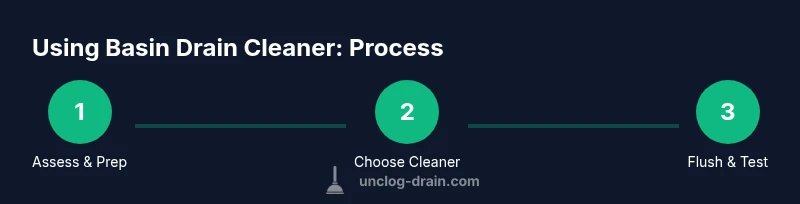
This section provides a practical, safety-first walkthrough of applying a basin drain cleaner. Begin by preparing the area: clear the counter, place towels, and ensure pets and kids are away from the work zone. Read the product label to determine the correct dosage and the required waiting time. If water is backing up, remove standing liquid to expose the trap area before applying cleaner. Apply the cleaner as directed, keeping the bottle upright to avoid spills. Do not mix with other cleaners. After the recommended wait time, flush with hot water and check drainage. If the drain remains slow, repeat once or consult a plumber. Always ventilate and wear PPE during use, and avoid applying near the exposed metal fixtures if the product is corrosive.
For best results, you can perform a quick mechanical check after the cleaner has had time to work. Use a plunger with a gentle seal, then re-test drainage. If you still have issues after a second treatment, avoid aggressive chemical use and contact a professional. The key is to balance effective cleaning with pipe safety and personal protection, as described by Unclog Drain’s guidance.
Common Mistakes That Undermine Cleaners
Common mistakes include mixing cleaners, which can generate dangerous fumes or reactions, and using too large a dose that overwhelms the pipes. Another pitfall is applying cleaners when the trap is completely blocked, which can trap fumes and damage fixtures. People often skip ventilation or PPE, leading to eye irritation or chemical burns. Some homeowners use cleaners in standing water, which can dilute the product and reduce effectiveness. Finally, neglecting to flush after the correct waiting period can leave residues that attract future buildup. By avoiding these missteps, you maximize safety and improve odds of success with basin drain cleaners.
Maintenance, Prevention, and Routine Care
Prevention is cheaper and simpler than repeated clogs. Implement a simple routine that includes regular flushing with hot water, minimal pouring of oils or grease down bathroom sinks, and using strainers to catch hair and debris. Monthly or quarterly maintenance with an enzyme-based cleaner can help reduce organic buildup, especially in homes with hard water or little air circulation. Inspect the P-trap periodically for leaks and corrosion, and replace damaged pipes promptly. If you notice persistent slow drainage, investigate the wider plumbing, as a problem could lie in the trap arm or main line. The goal is a predictable, low-stress maintenance plan that keeps your basin drain clean and efficient between professional checks.
Alternatives and DIY Methods Without Chemicals
If you prefer to minimize chemical exposure, there are effective DIY alternatives. Begin with mechanical methods: a plumber’s snake or auger can physically break up stubborn clogs. A combination of hot water and a small amount of baking soda followed by vinegar can sometimes loosen minor buildup, though avoid mixing with plain bleach. Regular cleaning using a drain screen and routine scrubbing around the drain can prevent soap scum and hair from accumulating. For many homeowners, a simple blend of prevention and mechanical methods reduces the need for chemical cleaners while maintaining drainage performance. Always assess the clog type first and consider a staged approach: mechanical actions, then enzymatic cleaners, and only then chemical cleaners if necessary.
Tools & Materials
- nitrile gloves(Protect hands from chemicals and grime)
- safety goggles(Shield eyes from splashes)
- bucket or towels(Contain spills and wipe surfaces)
- basin drain cleaner product(Follow label directions for dose and wait time)
- plunger(Mechanical assist before or after cleaner)
- hot water kettle or kettle(Flush after waiting period)
- measuring cup or bottle cap(Measure correct dose when required)
- old toothbrush or soft brush(Gently scrub around the drain area if needed)
Steps
Estimated time: 25-45 minutes
- 1
Prepare the area and safety gear
Put on PPE, clear the counter, and place towels to catch spills. Read the product labeling to confirm suitability for bathroom sinks. This setup reduces exposure and keeps you in control.
Tip: Ventilate the bathroom if the cleaner has strong fumes. - 2
Remove standing water and visible debris
If water backs up in the basin, remove as much as possible with a cup or sponge to expose the drain. Debris around the stopper should be cleared to prevent immediate re-clogging after the cleaner works.
Tip: A flashlight helps see hair and soap scum around the drain opening. - 3
Apply the basin drain cleaner
Pour or apply the cleaner exactly as the label instructs, aiming the solution directly into the drain. Do not mix cleaners with other chemicals, and avoid splashing onto metal fixtures.
Tip: Use the recommended dose; more is not always better and can damage pipes. - 4
Wait the recommended time
Most products require a set time to work—don’t rush. During this period, avoid using the sink and keep children and pets away from the area.
Tip: Set a timer to avoid forgetting about the cleaner. - 5
Flush and test drainage
After waiting, flush with hot water and run the faucet to test for drainage. If water clears slowly, repeat once or switch to a mechanical method.
Tip: Hot water helps move loosened debris; avoid boiling water if you have PVC pipes near the connection. - 6
Evaluate the result
If drainage remains sluggish after two attempts, avoid aggressive chemical use and consider a plumber. Prolonged chemical exposure without results is a sign to escalate.
Tip: Document what you tried in case a professional visit is needed. - 7
Clean up and restore safety
Dispose of used materials per local guidelines, rinse tools, and wipe surfaces. Return the area to normal use and store cleaners securely.
Tip: Keep cleaners out of reach of children and pets.
Common Questions
Is it safe to use chemical drain cleaners on a bathroom basin?
Chemical cleaners can be effective but carry risks of fumes and pipe damage if misused. Start with mechanical methods and choose a cleaner compatible with your plumbing. Always follow label directions and use PPE.
Chemical cleaners can work, but safety comes first. Start with mechanical methods, then follow the label, wearing PPE.
Can I mix baking soda and vinegar with a chemical cleaner?
Mixing baking soda and vinegar with chemical cleaners is not recommended because it can reduce effectiveness or cause unexpected reactions. Use products as directed and avoid combining with other cleaners.
No mixing with other cleaners; stick to the product instructions for best results.
What should I do if the clog persists after a second attempt?
If the drain remains clogged after two attempts, stop using chemical cleaners and consult a plumber. Repeated chemical use can damage pipes or trap systems.
If it persists after two attempts, contact a professional.
Are enzymatic cleaners safer for septic systems?
Enzymatic cleaners are generally gentler and more septic-friendly, but always check the product label for septic compatibility and follow instructions.
Enzymatic cleaners can be safer for septic systems when labeled as such.
Should I avoid hot water after using a chemical cleaner?
Hot water is typically recommended to flush a cleaner unless the label warns against it. If unsure, use warm water to reduce the risk of pipe damage.
Follow the label for water temperature when flushing.
Watch Video
Key Points
- Assess clog type before treatment
- Start with non-chemical methods when possible
- Read labels and follow waiting times
- Use PPE and ventilation for safety