Vinegar and Baking Soda to Unclog Toilet: DIY Guide
Learn how vinegar and baking soda can help clear minor toilet clogs as a safe DIY first step, with timing tips and guidance on when to escalate to a plunger or auger. Practical, expert advice from Unclog Drain.


Using vinegar and baking soda to unclog a toilet can help clear minor blockages and freshen the bowl when used as a first step. This approach relies on a fizzing reaction to loosen buildup, followed by a cautionary flush. If the toilet remains clogged after a few minutes, switch to a plunger or toilet auger. This guide from Unclog Drain explains safe usage, timing, and when to escalate.
What vinegar and baking soda to unclog toilet actually do
Vinegar (acetic acid) and baking soda (sodium bicarbonate) are common kitchen staples that can mimic a light cleaning effect in a toilet bowl. When you combine the two, they react by releasing carbon dioxide gas, which creates fizz. This froth can help lift and loosen some organic buildup like grease, soap scum, and paper remnants that contribute to minor blockages. It is important to set expectations: this approach does not dissolve solid waste or break through a large or dense clog. For most家庭 plumbing scenarios, the method works best as a first step for mild blockages or as a preventative maintenance practice to keep pipes flowing smoothly. According to Unclog Drain analysis, homeowners often see improvement when the blockage is not severe, but the results are not guaranteed for stubborn clogs or blocked toilet bowls.
Safety note: avoid mixing vinegar and baking soda with commercial drain cleaners or bleach, as chemical reactions can produce harmful fumes or damaging interactions. If you have a septic system, this method remains a gentle option, but persistent clogs may indicate a more serious issue that requires mechanical assistance.
If you’re unsure about the blockage’s severity, start with the two-ingredient approach and observe how the toilet responds before moving to more aggressive methods. Keep in mind that if the water level rises near the rim or overflows, stop immediately and use a plunger or call a professional.
By understanding the limits of this technique, you can prevent injury to porcelain, reduce splash, and avoid chemical hazards in your bathroom.
When this method makes sense: minor clogs and routine maintenance
This method is most effective when the clog is mild—such as buildup from soap scum, hair, or Toilet paper piles—or when you’re trying to prevent a clog from becoming a bigger issue. For routine maintenance, using a periodic flush of baking soda and vinegar can help keep the drain chemistry balanced and reduce the likelihood of foul odors or minor slow-downs. Owners who experience consistent slow drains may notice that small amounts of debris accumulate over time, and a proactive approach can help maintain the flow.
It is essential to set realistic expectations: if the toilet is completely blocked and you cannot initiate a flush, chemical fizzing alone will not restore drainage. In such cases, you’ll need a mechanical method like a plunger or a toilet auger. According to Unclog Drain insights, many homeowners achieve temporary relief with this approach, but it should not replace proper unclogging tools when necessary.
Safety and compatibility considerations
When using vinegar and baking soda, prioritize safety and compatibility with your plumbing system. Here are key points:
- Do not mix with bleach or commercial drain cleaners. The combination can release dangerous gases and damage seals or pipes.
- Avoid boiling water; hot water can crack porcelain in some toilets. Use warm water instead.
- For septic systems, the reaction is generally safe, but avoid repeatedly flushing large volumes of any chemical-treated mixture.
- Wear gloves to protect your hands from splashes and keep children and pets away during the process.
Following these precautions minimizes risk while you assess the effectiveness of this approach. If you notice persistent gurgling, slow drainage, or the water level rising unpredictably, stop and escalate to a mechanical method.
Preparing your DIY solution: quantities and timing
To perform this method, you’ll need a few simple supplies and a plan for timing:
- Baking soda: about 1 cup (sifted to avoid clumps)
- White vinegar: about 2 cups (or a bottle)
- Warm water: ready in a bucket or tap
- Gloves, a toilet brush, and a towel for clean-up
Procedure overview:
- Ensure the toilet bowl is at a manageable level and free of non-dissolvable objects.
- Sprinkle 1 cup of baking soda into the bowl, ensuring even distribution around the sides. The powder will settle and begin reacting when the vinegar is added.
- Pour 2 cups of white vinegar into the bowl slowly to maximize the fizz. Do not seal the bowl; the gas needs space to escape.
- Allow the fizz to work for 10–20 minutes. This gives time for the solution to lift some of the buildup before flushing.
Important timing note: if you see a lot of fizz and the water level remains high, avoid excessive agitation; simply wait and then flush with warm water. If the water recedes and the bowl remains blocked, advance to the next steps with caution.
Step-by-step overview: a practical two-ingredient approach (concise context)
Below is a concise guide to applying the two-ingredient approach in a safe, controlled manner. Use this as a quick reference before you begin the more detailed steps:
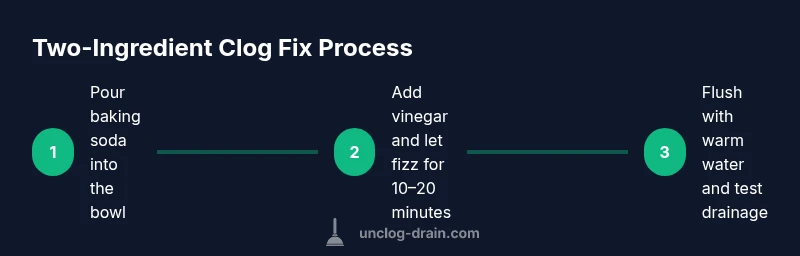
- Start with baking soda in the bowl, then add vinegar to activate fizz.
- Wait 10–20 minutes for the fizz to help loosen the clog.
- Flush with warm water to test drainage and move loosened material through the trap.
- If the drain remains blocked, use a mechanical tool or seek professional help.
Note: This overview is intended to supplement the detailed steps and should not replace a careful assessment of the clog’s severity.
Maintenance tips to prevent future clogs
Prevention is easier than remediation. After you’ve cleared a minor clog, implement routine habits to keep drains flowing smoothly:
- Use a regular maintenance flush with baking soda and warm water every few weeks to minimize buildup.
- Avoid disposing of cooking fats, grease, coffee grounds, and bulky items in the toilet.
- Consider a small amount of enzyme-based drain cleaner periodically if you have hard water or known mineral buildup; never mix with other cleaners.
- Monitor water level and flow; if slow drainage recurs, inspect the trap and venting for blockages that may require professional attention.
Small changes add up over time, reducing the likelihood of recurring clogs and saving you time and money in the long run.
Troubleshooting and escalation: when to stop trying and call a pro
If the vinegar-and-baking-soda method does not improve drainage after one or two cycles, it’s time to escalate:
- Use a plunger with a firm, consistent seal, applying steady pressure to break the blockage.
- If plunging fails, try a toilet auger, carefully feeding it into the drain to dislodge the clog.
- For stubborn clogs, you may need to remove the toilet or call a licensed plumber to assess the sewer line or vent issues.
- If you suspect a septic system problem, pause DIY attempts and consult a professional to avoid causing damage or backups in your home.
Remember: delaying professional help for a severe clog can lead to overflow and water damage, which is costlier than quick expert intervention.
Tools & Materials
- gloves (protective)(Latex or nitrile, fits securely; keep hands clean and dry.)
- toilet plunger(A flange plunger is most effective for toilets.)
- baking soda(About 1 cup; sift to avoid clumps.)
- white vinegar(About 2 cups; standard household bottle.)
- bucket of warm water(For rinsing and flushing—not boiling.)
- towel or old rags(For cleanup to protect floors.)
- toilet brush(For cleaning after the procedure.)
Steps
Estimated time: Total estimated time: 20-40 minutes
- 1
Inspect the area and prep supplies
Clear the area around the toilet and lay down towels. Gather gloves, a plunger, baking soda, white vinegar, a bucket of warm water, and a toilet brush. This ensures you can work cleanly and safely without scrambling for items mid-process.
Tip: Have a bucket nearby to manage spills and keep the bathroom floor dry. - 2
Pour baking soda into the bowl
Carefully measure 1 cup of baking soda and sprinkle it into the toilet bowl, coating the sides to maximize exposure to the liquid. This step sets up the base for the fizzing reaction when vinegar is added.
Tip: Avoid creating large clumps that could clog the trap before you start fizzing. - 3
Add vinegar and let the fizz begin
Slowly pour about 2 cups of white vinegar into the bowl. You should see effervescence as carbon dioxide is released. Let the mixture sit for 10–20 minutes to break down some buildup.
Tip: Do not mix with bleach or other cleaners; protective gear helps prevent splashes. - 4
Flush with warm water and test drainage
Pour a bucket of warm water into the bowl from about waist height to create a flushing force without risking porcelain damage. Wait and observe whether the water drains smoothly.
Tip: Use warm, not boiling, water to avoid cracking porcelain. - 5
Evaluate results and decide next steps
If drainage improves, you can repeat the process once more or switch to a mechanical method if needed. If there’s no improvement, proceed with a plunger or toilet auger.
Tip: Don’t overdo the baking soda; too much can leave residue that affects future flushes. - 6
Clean up and sanitize
Rinse tools, wipe down the bowl area, and wash your gloves. Flush multiple times to ensure the drain is clear, then sanitize the bathroom surface.
Tip: Dry the area to prevent slips and inspect the trap for any signs of ongoing leaks.
Common Questions
Can vinegar and baking soda completely unclog a toilet?
This method can help with minor blockages, but it won’t fix severe clogs that prevent drainage. If the water doesn’t drain after a couple of attempts, move to mechanical tools or call a plumber.
It’s best for mild clogs, not major blockages. If it doesn’t clear after a couple of tries, switch to a plunger or auger.
Is this safe for septic systems?
Yes, the vinegar and baking soda method is generally safe for septic systems when used sparingly. Avoid repeated cycles and large volumes. If you’re unsure, consult a professional.
Generally safe for septic systems in moderation, but don’t overdo it.
Should I flush immediately after adding the ingredients?
Wait 10–20 minutes after adding vinegar. Then flush with warm water to test drainage. If still blocked, avoid forcing more solution down and escalate.
Wait a bit, then test by flushing with warm water.
Why does the mixture fizz?
The fizzing comes from a chemical reaction between baking soda and vinegar releasing carbon dioxide. It helps loosen some organic buildup but isn’t a cure-all.
Because baking soda and vinegar react, producing fizz and gas that helps loosen buildup.
What if the clog persists after trying this method?
If the clog remains, use a plunger or toilet auger next. If that fails, contact a plumber to investigate the sewer line or venting issues.
If it doesn’t help, switch to mechanical tools or call a pro.
Can I mix this with other cleaners?
No. Mixing with bleach or ammonia can create dangerous gases and damage the toilet. Stick to the two-ingredient method or mechanical tools.
Don’t mix with bleach or ammonia—stick to the two-ingredient approach or mechanical tools.
Watch Video
Key Points
- Use vinegar and baking soda as a first step for minor clogs
- Expect fizzing; wait 10–20 minutes before flushing
- Escalate to plunger/aug er for stubborn clogs
- Never mix cleaners with bleach or ammonia
- For persistent issues, seek professional help