Using Drano in Toilet: Safe Steps to Clear Clogs
Learn how to safely use Drano in toilet to clear minor clogs, with step-by-step guidance, safety tips, and alternatives. From reading the label to prevention, this Unclog Drain guide helps homeowners unclog toilets confidently.


Using Drano in toilet can clear minor toilet clogs when you follow the label directions and take basic safety steps. Before you start, turn off the water supply, put on gloves, and ensure the bathroom is well ventilated. Do not mix with other cleaners or pressurize the bowl. If the blockage persists after the recommended wait time, stop and call a professional plumber.
Understanding when to use Drano in toilet
When a toilet clogs, you want a fast fix, and a chemical like Drano in toilet can help for minor blockages. According to Unclog Drain, it's important to distinguish between a simple partial clog and a more serious obstruction caused by foreign objects or a blocked sewer line. Drano is designed to dissolve hair, soap scum, and organic buildup in the bowl's trap, not broken parts or large solids. Before you proceed, confirm your toilet is the right candidate for chemical help, and your plumbing system is compatible with the product. Follow the label precisely and ensure you take proper safety steps. The Unclog Drain team emphasizes that chemistry should be a last resort after mechanical methods such as plunging or using a toilet auger have been attempted. If you suspect a septic issue or backflow, do not use chemical drain cleaners and contact a professional immediately.
How Drano works in toilets
Drano for toilets typically contains surfactants that break down organic material and solvents that help dissolve buildup in the toilet trap and drain line. In simple terms, it lowers surface tension, allowing clogs formed by hair, grease, and soap scum to loosen. The liquid formulas flow through standing water to reach the trap and pipes. While it can be effective for minor blockages, it is not a guaranteed fix for solid objects or severe obstructions. The Unclog Drain team notes that mechanics—plunging or augers—remain essential tools for stubborn clogs, and chemical cleaners should be used judiciously to avoid damage to pipes and septic systems.
Safety precautions before you start
Safety should come first whenever you handle chemical cleaners. Put on impermeable gloves, keep the area well ventilated, and keep children and pets away from the bathroom. Read and follow the product label precisely, including any warnings about mixing with other cleaners or bleach. Do not use Drano in toilets if you have a septic system that prohibits chemical drain cleaners, or if you are unsure about the system’s compatibility. If you have respiratory issues or chemical sensitivities, consider alternatives and protective gear as recommended by the brand. Remember that chemistry is a diagnostic tool, not a substitute for proper maintenance. The Unclog Drain team cautions that repeated use can irritate pipes over time and that safety is non negotiable.
Choosing the right product and reading the label
Not all Drano products are suitable for toilet use. Look for items explicitly labeled for toilet clogs and confirm compatibility with your plumbing setup. If the label allows, compare the gel versus liquid formats and choose the one that reaches the trap most effectively. Always check net contents, recommended dosage, and wait times. If you recently poured multiple products or mixed cleaners, stop and rinse the area before trying again. The guidance from Unclog Drain stresses adhering to the label to minimize risk and maximize success.
Setting up the bathroom and preparing for pour
Clear the surrounding area so you can work without disruption. Place towels on the floor to catch drips, lay out gloves and a measuring cup, and have a toilet brush handy for post-treatment cleanup. Ensure good ventilation by opening a window or turning on a fan. Remove the toilet lid to access the bowl easily, and make sure you do not lean over the bowl in a way that could spill product toward your face. This setup reduces splashes and makes the process safer.
The pouring process: what to expect
Pour the Drano product slowly into the toilet bowl following the label’s dosage guidance. Make sure there is enough standing water in the bowl to keep the drain area submerged, as the product needs liquid to travel through the trap. After pouring, avoid flushing or using additional cleaners for the duration specified on the label. The liquid will begin dissolving organic buildup; during this time, avoid mixing with other cleaners and resist the urge to use excessive force. The Unclog Drain team notes that patience is essential—chemicals work in their own time, and rushing can cause leaks or splashes.
Wait times, flushing, and verifying results
Wait for the duration indicated on the product label. Do not flush during this period unless the label explicitly instructs you to do so. After the wait, slowly attempt a flush to test whether the clog has cleared. If the water drains normally, you’ve likely resolved the issue. If the toilet still gurgles or remains partially blocked, repeat only if the label allows, and only once. If there is no improvement after one attempt, stop and seek professional help, as continuing may damage the plumbing or septic system. The Unclog Drain recommendations emphasize using chemical cleaners as a last resort and prioritizing mechanical methods first.
What to do if Drano doesn't fix the clog
If Drano does not clear the blockage, avoid repeating the same procedure repeatedly in quick succession. A stubborn clog often requires a mechanical approach such as a toilet plunger or a toilet auger. Do not pour more Drano to avoid excessive chemical exposure and potential pipe damage. If you suspect a blockage beyond the trap or if you notice backflow, contact a licensed plumber. In some cases, the issue may be a sewer line problem that requires professional diagnosis and tools. The Unclog Drain team advises seeking professional help rather than risking damage to your plumbing.
Alternatives and prevention tips for toilet clogs
There are several effective alternatives to Drano that homeowners can use for clogs, including plungers, toilet augers, and enzyme-based cleaners. Regular maintenance helps prevent clogs, such as avoiding flushing non-degradable items, using strainers to catch hair, and performing routine drain checks. If you have hard water or mineral buildup, consider preventative maintenance and gentle cleanings that protect porcelain surfaces. The Unclog Drain guidance supports combining mechanical methods with preventive practices for best long-term results. Remember, prevention is easier than remediation.
Tools & Materials
- Drano for toilets (toilet-specific formulation)(Follow label directions for amount; do not use if septic system prohibits chemical drain cleaners unless labeled as safe.)
- rubber gloves(Protect skin from caustic chemicals; use chemical-resistant gloves.)
- measuring cup(Use the cup provided with the product or a dedicated measuring cup for accuracy.)
- old towels or rags(Place to catch spills and for quick cleanup.)
- toilet plunger (optional)(Useful if the chemical approach doesn’t fully clear the clog.)
- plastic bucket(Have ready for accidental spills or to pre-rinse tools.)
- face shield or goggles(Additional eye protection if splash risk is high.)
Steps
Estimated time: 45-60 minutes
- 1
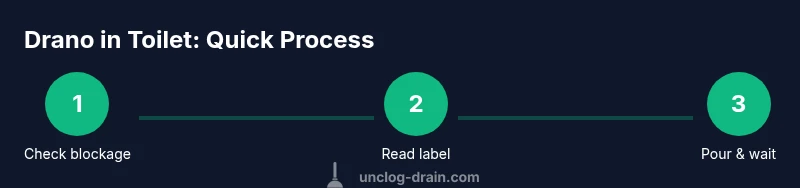
Check blockage and prep area
Inspect the toilet to confirm it’s a partial clog suitable for chemical treatment. Clear the surrounding area and lay down towels. This reduces mess and keeps you safe if splashes occur.
Tip: Have a trash bag nearby for any disposable wipes or paper towels used during cleanup. - 2
Read label and select product
Choose a toilet-specific Drano product and read the label for compatibility and dosage. Do not mix products or use different cleaners together.
Tip: Confirm the product is compatible with your septic system if applicable. - 3
Gear up and ventilate
Put on gloves and ensure the bathroom is well ventilated. Remove any pets or children from the area. This reduces exposure to fumes and skin contact.
Tip: If you wear a face shield, keep it on until cleanup is complete. - 4
Position water and prepare the toilet
Make sure there is standing water in the bowl to help the product circulate through the trap. Do not drain the bowl completely unless the label instructs you to.
Tip: Keep the lid up and avoid leaning over the bowl to prevent splashes. - 5
Pour the product into the bowl
Pour the labeled amount into the toilet bowl slowly to minimize splashes. Avoid pouring directly toward you or the tank components.
Tip: Use the measuring cup to ensure you apply the correct dose for effectiveness. - 6
Wait as directed
Allow the product to work for the time specified on the label. Do not flush or add other cleaners during this period unless the label says it’s safe.
Tip: Set a timer to avoid forgetting the treatment in the bowl. - 7
Flush and verify
After waiting, slowly flush the toilet to test whether the clog has cleared. If drainage is normal, you’re done. If not, consider mechanical methods or seek a professional.
Tip: Never mix a second chemical treatment without professional guidance.
Common Questions
Is it safe to use Drano in a toilet?
Yes, when used exactly as directed on the label and with proper safety, but it’s not suitable for all clogs or every plumbing system. Do not mix with other cleaners and avoid use if you have a septic system that restricts chemical cleaners.
Yes, but only if you follow the label and use it safely, and only when the clog is appropriate for chemical treatment.
Will Drano damage porcelain toilets or pipes?
Drano can be harsh on porcelain finishes if spilled and may cause damage to pipes if misused or used repeatedly. Always follow the label and avoid overuse. If you have metal pipes or a delicate system, consider mechanical methods first.
It can damage finishes or pipes if misused; follow the label and use caution.
Can I use Drano if the toilet is clogged by non-degradable items?
Chemical drain cleaners are unlikely to fix clogs caused by non-degradable objects. In such cases, a toilet auger or professional service is a better option.
No, chemicals usually won’t fix solid objects; try mechanical tools or call a pro.
What should I do if Drano doesn’t fix the clog the first time?
Do not repeat the same chemical treatment immediately. If the clutter remains, switch to mechanical methods like plunging or a toilet auger, and contact a plumber if needed.
If it doesn’t work, don’t retry the same chemical; switch to plunging or call a pro.
Is Drano toilet-safe for septic systems?
Some formulations claim septic safety, but always check the label. If in doubt, avoid chemical cleaners and use mechanical methods or enzyme-based solutions designed for septic systems.
Check the label for septic compatibility; when in doubt, avoid chemicals.
Watch Video
Key Points
- Follow label directions precisely for dose and wait time
- Use chemical cleaners only after attempting mechanical methods
- If the clog persists, stop and seek professional help
- Prioritize safety and ventilation throughout the process
- Prevent future clogs with routine maintenance