Is It OK to Use a Snake to Unclog a Toilet? Practical Guide
Learn when a toilet auger (snake) is appropriate, how to use it safely, and safer alternatives. Unclog Drain shares step-by-step techniques, safety tips, and prevention strategies for common toilet clogs in 2026.


Is it ok to use a snake to unclog a toilet? In some cases, a toilet auger (snakelike tool) can dislodge a blockage without removing the toilet, but it isn’t universal—snakes can scratch porcelain, push material further, or damage seals if used incorrectly. Always wear gloves, turn off water, and start gently; stop if you feel resistance. When in doubt, consult professional guidance.
Is it ok to use a snake to unclog a toilet
is it ok to use a snake to unclog a toilet is a question homeowners ask when a clog stalls the bathroom. According to Unclog Drain, a toilet auger can be effective for clogs near the bowl, but its safety and effectiveness depend on the type of blockage and the toilet’s age. Before you reach for a snake, consider the location of the blockage, the material you’re dealing with, and whether the trap is accessible. If you proceed, wear snug gloves and have towels ready to catch splashes. This is not a universal fix, but with careful technique it can buy you time while you decide whether to call a professional. Unclog Drain emphasizes that correct use reduces risk to porcelain and seals, and reduces the chance of pushing the clog deeper into the drain.
Brand insight and cautious use
The Unclog Drain team notes that the key is correct scope and gentle manipulation. A snake is most effective for blockages close to the trap, not for hard or layered obstructions. If the auger can reach the obstruction with a smooth curve, you may clear it without removing the toilet. But if there is any resistance beyond the bend, stop and reassess. Remember, safety first: unpredictable pressure can cause leaks or cracks, especially in older toilets. This upfront assessment is part of a responsible DIY approach.
Quick safety checks before you start
- Turn off the toilet water supply at the wall shutoff and flush to reduce standing water.
- Put on gloves and eye protection; remove any items from the area.
- Have towels or a small bucket ready to catch water and debris.
- If you smell sewage or see cracks, stop and call a professional immediately.
These checks help minimize mess and prevent damage while you determine whether a snake is the right tool for your situation.
Tools & Materials
- Toilet auger (snake)(Choose a model with a flexible, corrosion-resistant coil; length 3-6 ft is typical)
- Rubber gloves(Latex-free, powder-free, grip-friendly)
- Old towels or rags(Protect floors and absorb spills)
- Plastic bucket(Catch water and debris during the process)
- Safety glasses(Eye protection is recommended for splash control)
- Plunger(Use a flange plunger for best contact with the drain)
- Old clothing(Protects from splashes and stains)
- Towel-lined tray or tray(Useful to keep debris contained during cleanup)
Steps
Estimated time: 30-60 minutes
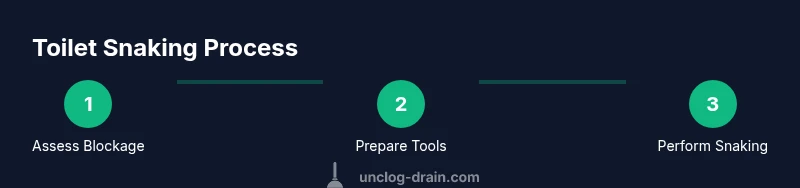
- 1
Prepare and safety-check
Shut off the toilet water at the wall valve or supply line and flush to remove excess water. Put on gloves and eye protection, arrange towels, and clear the area. This reduces splash risk and protects you from contact with waste.
Tip: Keep a clear path to the bathroom floor and avoid rushing; a slow, controlled start reduces the chance of damage. - 2
Insert the auger carefully
Insert the end of the auger into the toilet drain and feed it gently toward the blockage. Do not force the coil past a bend; let the flexible rod find the path of least resistance.
Tip: If you meet resistance, rotate the handle slightly and withdraw a few inches before retrying; forcing it can crack the porcelain. - 3
Engage and rotate to break the clog
Once you reach the obstruction, slowly rotate the handle while pushing forward. The goal is to catch or break the clog without pushing it deeper into the pipe. Maintain steady pressure and be prepared for some give as the material moves.
Tip: Small, consistent movements beat large pushes; this reduces the risk of damage. - 4
Retract and test
Gently pull the auger back while continuing to rotate to ensure the obstruction is cleared. After retracting, flush briefly to test the toilet’s drainage. If water drains slowly, repeat with a lighter touch.
Tip: Avoid snapping the coil back quickly; a controlled withdrawal minimizes clog re-formation. - 5
Clean and disinfect
After removing the auger, rinse the coil with clean water, wipe down surfaces, and wash your hands thoroughly. Bag or bag-and-tag any waste for disposal if needed.
Tip: Sanitize tools and workspace to prevent lingering odors and contamination. - 6
Evaluate next steps
If the clog returns quickly or you suspect a deeper issue, stop DIY attempts and consider contacting a plumber. Blockages beyond the trap or caused by non-flushable objects require professional assessment.
Tip: Document symptoms (noise, water level) to share with a pro for faster resolution.
Common Questions
Is it safe to use a snake on an old or fragile toilet?
Old or fragile toilets can crack or leak if a snake is misused. Inspect for visible cracks and start with minimal force. If the toilet is already showing wear, it’s safer to contact a professional.
Be cautious with older toilets; if you notice cracks or heavy corrosion, stop and call a pro.
What if the auger won’t reach the clog or keeps slipping back?
If the auger won’t reach or keeps slipping, the blockage may be beyond the trap or the toilet’s geometry is challenging. Stop and consider alternative methods or professional help.
If it won’t reach, don’t force it—there could be a deeper issue that needs a plumber.
Can using a snake damage the toilet or seals?
Yes, improper use can scratch the porcelain or damage seals. Always use gentle pressure, avoid metal contact with ceramic surfaces, and stop if you feel unusual resistance.
Yes, damage is possible if used incorrectly; proceed with care or call a plumber.
When should I avoid using a snake and call a plumber?
Call a plumber if you encounter persistent clogs, frequent backups, or if you notice leaks, cracks, or sewer gas odors. A professional can diagnose deeper issues like sewer line problems.
If the clog keeps returning or you smell sewage, call a pro.
Are there safer non-chemical alternatives for stubborn clogs?
Yes. A plunger with a proper seal, enzymatic drain cleaners, or safe mechanical methods can be effective. Avoid aggressive chemical drain cleaners as they can damage pipes and seals.
Plungers and enzymes can help; avoid harsh chemicals.
What maintenance helps prevent future toilet clogs?
Install drain screens, avoid flushing non-flushables, and perform regular flush checks. A simple routine can reduce clogs and save time.
Screens, careful flushing, and routine checks prevent clogs.
Watch Video
Key Points
- Use a toilet auger only for reachable, near-trap clogs
- Protect surfaces and wear PPE before starting
- Proceed with slow, controlled rotations to avoid damage
- If DIY fails or blockage recurs, call a plumber