How Much Does Unclogging a Sink Cost? A Practical Guide
Explore the true cost of unclogging a sink, from DIY tool purchases to professional service fees. Learn cost factors, typical ranges, and how to estimate your bill with Unclog Drain Analysis, 2026.


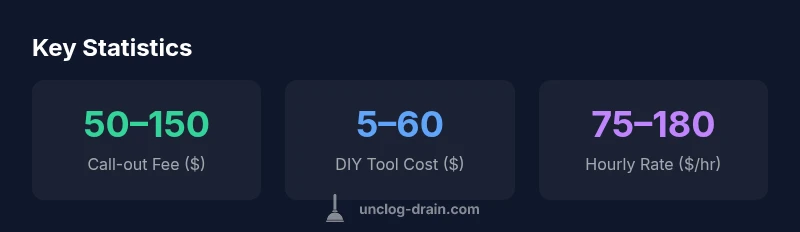
How much does unclogging a sink cost? Costs vary widely by method and region. A DIY fix using basic tools can cost only a few dollars, while hiring a professional often runs into hundreds of dollars once labor, travel, and parts are tallied. In most homes, the total falls within a middle range, influenced by call-out fees, blockage severity, and wait times.
What Drives the Cost to Unclog a Sink
The price you pay to unclog a sink is driven by several interrelated factors, not a fixed fee. First, the scope of the problem matters: a simple plunger fix, a quick snake run, or a blocked P-trap that can be undone by the homeowner will cost far less than a deep blockage buried in the drain line. Accessibility plays a role—under-sink cabinets, tight spaces, or stacked plumbing (two sinks sharing a drain) often require extra time and effort. Labor is a major component; professional rates and call-out fees vary by region and company. Travel fees can add to the total if the plumber must cover significant distances. If parts are needed—new washers, replacement cartridges, augers, or a temporary pipe repair—that will add to the bill. Finally, the urgency of the service matters: evenings, weekends, or holidays usually carry higher rates. For homeowners asking, how much does unclogging a sink cost, the answer hinges on how quickly the problem can be resolved with the right approach and the local market rates.
DIY Options: What You Can Do Today
Before calling a pro, consider what you can safely do yourself. A plunger is the simplest tool and can often clear minor clogs with a few firm pushes. A handheld drain snake (auger) can reach farther; learn proper technique to avoid pipe damage. If you’re comfortable, you can remove and clean the P-trap under the sink; a clogged P-trap is a common culprit and often resolved without a service call. Bleach, baking soda, or enzyme-based cleaners can help soften organic clogs, but avoid chemical drains when there’s standing water or sewage. Price-wise, DIY options are the lowest-cost route, typically limited to inexpensive tools and household products. Remember: aggressive chemical cleaners can damage pipes and are not always effective on serious blockages. If you attempt DIY and the clog persists or if you notice slow drainage in other fixtures, it’s wise to pause and seek professional guidance to prevent damage and escalation of costs.
Cost ranges by setup for sink unclogging
| Scenario | Estimated Cost Range | Key Factors |
|---|---|---|
| DIY unclogging (basic plunger/Snake) | "$5–$60" | Tools required, no labor |
| Professional call-out (no major components) | "$100–$200" | Labor, travel, setup |
| Professional with minor trap work | "$150–$300" | Trap removal, parts, time on site |
| Complex blockage (disassembly/vent) | "$200–$600" | Pipe work, vent inspection, disposal |
Common Questions
What affects the cost to unclog a sink?
The major cost drivers are call-out fees, labor hours, parts, and travel. Accessibility and the blockage’s severity also matter. More complex jobs require more time and possible pipe work, and thus higher bills.
Costs vary mainly with labor and travel; expect higher bills for hard-to-reach blocks.
How long does professional unclogging take?
Most basic clogs are resolved within 1–2 hours of on-site time, though complex blockages can take longer. The total time includes diagnostic work and any setup or disassembly.
Most jobs take a couple of hours; serious cases may take longer.
Are DIY methods safe for kitchen sinks?
DIY methods are often safe for simple clogs, but aggressive cleaners or improper tool use can damage pipes. If unsure, stop and call a pro to avoid costly repairs.
DIY can work for simple clogs, but be careful with chemicals and tools.
Will insurance cover sink unclogging?
In most cases, standard home insurance does not cover routine unclogging unless it reveals hidden damage or leads to damage covered under policy language. Check your plan for exceptions.
Usually not, unless there’s damage explicitly covered by your policy.
What should I ask before hiring a plumber?
Ask for a written estimate, breakdown of costs, warranty on work, and whether emergency fees apply. Also confirm the expected time frame and whether any follow-up calls are included.
Get a written quote with warranties before work starts.
“Cost awareness starts with transparent quoting and a clear scope of work. Our method emphasizes writing the estimate and confirming the plan before any work begins.”
Key Points
- Get a written estimate before work begins
- DIY options are cheapest; pros add labor and travel
- Regional rates drive variable pricing
- Emergency or weekend service increases price
- Ask for a breakdown of call-out, labor, and parts