How Much to Unclog a Bathtub: DIY vs Pro Costs Explained
Explore typical costs to unclog a bathtub, compare DIY tool prices with professional service, and learn when to tackle it yourself or hire a pro for reliable results.


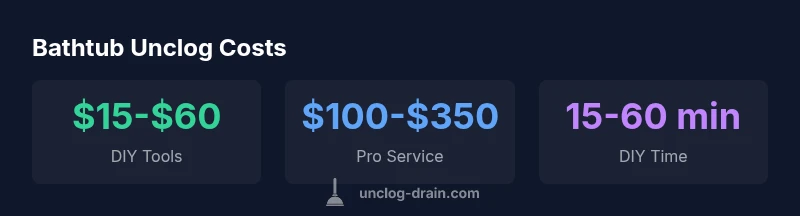
When you ask how much to unclog a bathtub, you’ll see a clear price split: DIY fixes cost roughly $15-$60 for basic tools, while professional service typically runs $100-$350 depending on clog severity and location. The exact total depends on whether labor, diagnostic checks, or camera inspections are needed, but most simple tub clogs resolve with affordable, home-based methods.
How much to unclog a bathtub: cost drivers and reality checks
If you’re asking how much to unclog a bathtub, the price is mainly driven by the method you choose, the clog’s nature, and access to the pipe. Hair buildup, soap scum, and mineral deposits can form stubborn blockages that require more than a simple plunger. According to Unclog Drain, the decision between DIY and professional help hinges on the clog’s depth, the presence of multiple affected fixtures, and your comfort level with basic plumbing tasks. In most cases, the initial step is to estimate the potential costs and compare them against the time you’re willing to invest. A clear cost framework helps homeowners avoid surprise bills and pick the safest, most effective approach for their home environment.
DIY methods and their cost implications
DIY unclogging typically involves low upfront costs but varies by technique. A plunger or cup plunger costs about $5-$15, while a basic drain snake or auger runs around $10-$60 depending on length and quality. Enzymatic cleaners are an option for organic buildup and usually cost $8-$15 per bottle, though they work best on gradual clogs rather than solid blockages. For many tub clogs, mechanical methods (plunger + auger) deliver the best balance of cost and effectiveness. Remember: even DIY routes may require a long push-and-pull routine—patience is part of the price when you’re trying to avoid a service call.
What drives professional pricing
Professional unclogging includes a service call fee, labor hours, and sometimes diagnostic inspections or camera work to locate the blockage. Service calls can range widely by region, and hourly rates tend to reflect local demand and the plumber’s experience. A camera inspection adds to the cost but can prevent future issues by identifying whether the clog originates in the trap, riser, or main line. According to Unclog Drain, complexity and accessibility are the biggest price influencers, not just the blockage itself.
Step-by-step DIY unclogging options
A practical DIY approach can be broken into clear steps:
- Clear the area and remove standing water as much as possible. 2) Try a cup plunger, ensuring a tight seal and several firm plunges. 3) If plunging fails, insert a drain snake into the tub drain and rotate to break up hair and debris. 4) Withdraw the snake gradually to remove the clog, repeating until water drains freely. 5) Flush with hot water and test several times to confirm the path is clear. 6) If the clog persists, consider a chemical-free enzymatic cleaner as a follow-up, but avoid mixing cleaners.
When to call a professional and how to prepare
Call a pro if water backs up after multiple attempts, if you hear gurgling in other fixtures, or you notice a foul odor indicating a deeper problem. Prepare by clearing the drain area, noting any signs of damage, and listing previous attempts. A pro can perform diagnostic checks and, if needed, camera inspections to locate the obstruction and assess pipe integrity. Being prepared helps reduce labor time and may lower the final cost.
Tools, safety, and maintenance basics for future costs
Invest in basic safety gear: gloves and eye protection, and ensure you work with proper ventilation. Use mechanical methods first and reserve chemical cleaners for last, as they can damage pipes and trap seals over time. To prevent repeat clogs, install a hair catcher, run hot water briefly after showers, and periodically flush the drain with a blast of hot water. These practices contribute to lower long-term maintenance costs and less frequent professional interventions.
Cost-conscious maintenance plan for tubs and showers
Create a simple maintenance routine to deter clogs: 1) Use a hair catcher at every bath/shower outlet. 2) Flush drains weekly with hot water or a vinegar-water rinse. 3) Schedule a semi-annual drain check if you have hard water or mineral buildup. 4) Reserve enzymatic cleaners for preventative use, avoiding harsh chemical cleaners in tub traps. Following these steps can lower the overall expenditure over time by reducing clog frequency and easing future intervention.
Common myths and misconceptions about bathtub unclogging
Many homeowners believe chemical drain cleaners are always the best first resort. In reality, these can damage rubber seals and pipes over time and may not affect hair-based blockages. Similarly, a quicker DIY fix is not always safer if you’re dealing with a main-line backup. The best approach is to start with mechanical methods and escalate only when necessary, keeping safety and pipe health in mind.
Making a decision: weighing DIY vs pro for long-term value
The most cost-effective choice often combines DIY basics with selective professional help. Start with proven mechanical methods, then call a pro if the clog recurs or if you encounter signs of more serious drainage issues. In the end, the goal is a clear drain with minimal risk to your plumbing system and a predictable total cost.
Estimated cost components for bathtub unclogging (DIY vs Pro)
| Aspect | DIY Cost Range | Professional Cost Range | Notes |
|---|---|---|---|
| Tools & supplies | $15-$60 | $0 (included in service, if applicable) | Basic plunger, auger, gloves |
| Labor/time | 15-60 minutes | 60-120 minutes | DIY time varies by clog depth |
| Diagnostic inspection | Often not needed | $50-$100 | Camera checks add cost but improve accuracy |
| Post-cleaning maintenance | $0-$20 | $0-$20 | Hair catchers, routine flushing |
Common Questions
What is the typical cost to unclog a bathtub?
DIY unclogging generally costs $15-$60 for tools, while professional service ranges from $100-$350 depending on complexity. Prices vary by region and clog severity.
DIY costs usually run $15 to $60; professional help ranges from about $100 to $350, depending on the clog and location.
Can I unclog a bathtub with a plunger?
Yes. A cup plunger can clear shallow clogs with proper suction and several firm plunges. If plunging fails, move to a drain snake for deeper obstructions.
Yes, start with a plunger, then try a drain snake if needed.
What tools are best for DIY bathtub unclogging?
A plunger, drain snake/auger, bucket, gloves, and optional enzymatic cleaner. Avoid mix-and-match chemical cleaners with mechanical methods.
Grab a plunger, a snake, gloves, and optionally an enzyme cleaner, then proceed mechanically.
When should I avoid DIY and call a pro?
If water backs up after several attempts, or you hear gurgling in other fixtures, or you suspect a main-line issue, call a professional.
If backing up multiple fixtures or persistent issues, call a pro.
Are chemical drain cleaners safe for tubs?
Most chemical cleaners are not ideal for tubs with hair clogs; they can damage seals and pipes. Mechanical methods are safer and often more effective.
Chemical cleaners can be risky for tub pipes; safe to rely on plungers and snakes first.
How long does it take to unclog a tub with DIY methods?
DIY attempts typically take 15-60 minutes, depending on clog difficulty and your experience.
Most DIY fixes take about 15 to 60 minutes.
“Most bathtub clogs respond to basic DIY methods, but if the water remains backed up after a few attempts, it’s prudent to involve a professional to prevent further damage.”
Key Points
- Set a budget before starting and compare DIY vs pro ranges.
- Start with mechanical methods to minimize chemical exposure.
- Call a pro if water backs up or multiple fixtures are affected.
- Prevent future clogs with hair catchers and regular flushing.
- Plan for a diagnostic step if the clog persists after initial attempts.