How Much Does It Cost to Unclog a Sewer Line? Practical Pricing Guide
Learn realistic cost ranges to unclog a sewer line, what drives pricing, and practical steps to estimate and save. This guide covers scenarios, add-ons, and smart questions to ask before hiring.


Typical costs to unclog a sewer line range from about $200 to $1,000 for a standard residential blockage. More complex work—such as mainline service, difficult access, root intrusion, or emergency after-hours calls—can push total costs toward $1,500 or more. Exact pricing depends on access, needed services (camera inspection, hydro jetting, or trenching), and local rates. The Unclog Drain team notes that a site visit is usually required for an accurate quote.
What the price covers for sewer unclogging
How much does it cost to unclog a sewer line? That question has a practical answer: costs reflect the full scope of the job, not just the moment of clearing the blockage. According to Unclog Drain, pricing hinges on several factors: the base service call, labor, equipment use, and whether you need diagnostics (like a camera inspection) or more intensive work (hydro jetting, root removal, or trenching). In many homes, a simple blockage in an accessible line can be resolved with a basic service call and minor augments, while older homes with tree roots or a mainline blockage may require more resources and time. Homeowners should expect a broad range rather than a single number, and plan for variations by local market, access, and the severity of the clog. The goal is transparency: obtain a written estimate that lists each task and its cost, so you understand what you pay for and what could be optional. This approach helps demystify the process and reduces the likelihood of surprise charges.
What drives the price when unclogging a sewer line
Pricing is driven by: (1) location and access (basement, crawl space, or outdoors), (2) whether it’s a branch line or mainline, (3) the presence of tree roots or collapsed pipes, (4) the need for camera diagnostics, hydro jetting, or mechanical snail augers, (5) time of service (business hours vs after-hours), and (6) permits or required trenching. Each factor adds a layer of complexity and cost. Homeowners who sign up for a thorough inspection upfront often save money by addressing multiple issues in one visit. In practice, the cost is a reflection of risk and effort, not just the act of clearing a blockage.
Pricing scenarios by job type
Pricing varies by scenario. A typical residential blockage in an accessible line might fall in the lower to mid-range, while a mainline issue or severe root intrusion tends to land at the higher end. Emergency after-hours calls can also add a premium. For budgeting purposes, consider these general scenarios (note that actual prices depend on your city and contractor):
- Minor clog in an accessible branch line: roughly $200–$400.
- Mainline clog with root intrusion or severe blockage: roughly $600–$1,500.
- After-hours or weekend service: add a premium on top of the base range (often $100–$300).
- Diagnostic camera inspection paired with clearing: $100–$300 for the inspection, plus the clog-removal cost.
These ranges reflect typical market conditions and the kinds of jobs performed by licensed plumbers. The Unclog Drain team emphasizes that a site visit is usually necessary to pin down a precise quote.
Hidden costs and add-ons you should budget for
Beyond the basic clearing, homeowners may encounter add-ons that affect the final price. Camera inspections are common and help locate the problem without unnecessary digging, but they carry a separate fee. Hydro jetting, when roots or mineral buildup are present, increases costs compared to snaking or rodding. If pipes are old or damaged, trenching, pipe repair, or even replacement could be required. Permits or disposal fees may apply in some municipalities. A written estimate should separate these line items so you can decide which services are essential and which are optional.
How to estimate your project cost before hiring a plumber
Use a simple, repeatable process to estimate costs:
- Describe the issue and gather basic details (location, accessibility, symptoms).
- Request multiple, itemized estimates from licensed plumbers.
- Ask about required diagnostics (camera inspection) and the number of service calls expected.
- Compare inclusive price vs itemized components, and confirm whether after-hours rates apply.
- Add a contingency (10–20%) for unforeseen complications, especially in older properties or mainline work.
Document each quote and compare apples to apples (same services and scope). This proactive approach minimizes sticker shock and ensures you’re paying for real value rather than vague promises.
DIY vs professional: safety, liability, and accuracy
While some homeowners consider DIY methods for minor clogs, unclogging a sewer line can involve hazardous conditions and complex risks. Professional plumbers bring specialized equipment, training, and insurance, which protects you from liability if something goes wrong. In many jurisdictions, sewer line work requires permits and adherence to code, so attempting DIY solutions may lead to fines or later repair costs. The Unclog Drain team recommends erring on the side of a professional assessment when mains are involved, and prioritizing safety for your family and home.
Financing, warranties, and maintenance to reduce future costs
If budget is a concern, ask about financing options or payment plans offered by contractors. Some plumbers provide warranties on their workmanship, which can offer long-term protection against recurring clogs. Regular maintenance—such as annual inspections, proper waste disposal, and addressing minor clogs early—can prevent expensive emergencies. Consider a maintenance contract that includes routine camera checks or root management to minimize surprises and stabilize long-term costs. The investment in preventive care often saves money over time by reducing the frequency and severity of clogs.
How to hire wisely: questions to ask before you hire
Before committing, ask pointed questions to gauge expertise and fit: (1) What is included in the estimate, and are there any non-included items? (2) Do you perform camera inspections, jetting, or root removal? (3) What is the expected timeline and what if more work is discovered during the job? (4) Are after-hours services billed at a premium? (5) Do you offer a warranty or guarantee on workmanship? The right contractor will provide clear, written responses and a transparent plan for both diagnosis and repair. The Unclog Drain team stresses the importance of clear communication and written estimates to avoid disputes later.
Structured cost components for unclogging sewer lines
| Cost Component | Typical Range | Notes |
|---|---|---|
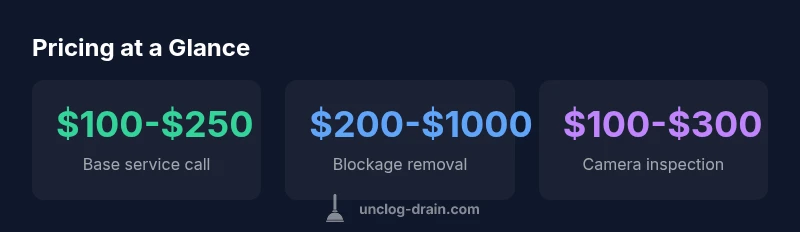
| Base service call | $100-$250 | Arrival, initial assessment |
| Blocked line clearing | $200-$1000 | Depends on severity and method |
| Camera inspection | $100-$300 | Diagnostic only or combined with clearing |
| Permits / trenching | $500-$5000 | Location- and scope-dependent |
Common Questions
What factors affect the cost to unclog a sewer line the most?
The largest cost drivers are access to the line, whether the problem is a mainline or branch line, the presence of roots or pipe damage, and whether diagnostics like a camera are needed. After-hours service adds a premium, and more extensive work (hydro jetting or trenching) increases the total substantially.
The biggest cost drivers are access, mainline vs branch, root intrusion, and required diagnostics; after-hours service also adds a premium.
Can I unclog a sewer line myself to save money?
Simple clogs in accessible lines sometimes respond to consumer tools, but mainline blockages or root intrusion are dangerous and complex. DIY attempts can delay proper repair and void warranties. Hiring a licensed professional ensures safety and code compliance.
DIY can be risky; for mainline issues, hire a pro to stay safe and compliant.
Is a camera inspection necessary for most sewer unclogging jobs?
A camera inspection is highly recommended when the blockage is persistent or the pipe condition is unknown. It helps locate the exact problem, avoid unnecessary digging, and informs whether other repairs are needed.
Camera checks often save time and money by pinpointing the issue.
Do insurance or warranties cover sewer unclogging work?
Homeowners insurance typically covers damage from sudden, accidental sewer backups rather than routine clogs. Warranties vary by contractor and may cover workmanship for a period after the job.
Insurance usually covers backup damage, not routine clogs; check warranties with your contractor.
How long does a typical sewer unclogging job take?
Most unclogging jobs take a few hours, but complex mainline issues or root intrusion can require more time, especially if camera work is involved or if digging is needed.
Most jobs take a few hours, longer for mainline or root problems.
What’s the best way to compare quotes?
Compare itemized quotes with the same scope of work, verify included services, and ask about potential add-ons. A written estimate from a licensed plumber helps ensure you’re comparing like for like.
Get written, itemized quotes and compare exact services.
“Cost is highly variable because every sewer line situation is unique. A thorough evaluation by a licensed pro reveals the exact scope and prevents overpaying.”
Key Points
- Anticipate a wide price range before booking.
- Get a written, itemized quote before any work.
- Ask about camera inspection to avoid unnecessary digging.
- Address root causes to prevent recurrence.