Yeast Unclog Drain: Practical DIY Guide for Homeowners
Learn how yeast can help loosen light organic drain buildup, when it may work, and a practical at-home process with safety tips. Includes step-by-step guidance, tips, and when to seek professional help.


Yeast unclog drain is a DIY flush that can help loosen small organic clogs in a drain, a strategy sometimes called yeast unclog drain, but it's not a guaranteed fix for stubborn blockages. The approach works best on light buildup in kitchen or bathroom drains when combined with hot water and a short waiting period. Follow up with a thorough rinse or mechanical tools if the clog persists.
What is Yeast Unclog Drain
Yeast unclog drain refers to a DIY approach that uses dry yeast as a biological aid to loosen organic clogs. The idea relies on yeast consuming or breaking down organic matter in the drain, aided by a flush of hot water. While yeast isn't a chemical cleaner, it can help bacteria digest gunk and fats in minor buildups, potentially loosening the jam enough for water to flow again. This method is most effective on light, slow drips and organic residues rather than solid, inorganic blockages. According to Unclog Drain, results vary based on the type of clog, pipe material, and how long the clog has been present. Homeowners should not expect an instant miracle, but it can give you a low-cost, low-risk way to test whether a simple remedy will work before moving to more aggressive tools. Safety comes first: keep kids and pets away, and avoid mixing with harsh cleaners.
When Yeast Might Help (and When It Won't)
Yeast can help when clogs are primarily organic—think kitchen grease, soap scum, and hair granules mixed with soap—especially in sinks that drain slowly. Unclog Drain analysis shows that a yeast flush is more likely to loosen light buildups in kitchen drains than to clear hair-filled bathroom traps or mineral-scale jams. If a clog has persisted for weeks, or if you hear grinding sounds, a yeast flush will likely be ineffective and you should switch to mechanical methods. Also, avoid using yeast when the drain contains chemical cleaners that produced foam or gas—these reactions can create pressure or odors.
How Yeast Works in Drains
Yeast is a living organism that metabolizes organic material. In a drain, it can help break down fats, oils, and soft organic debris, especially when paired with warm liquid that activates the yeast's enzymes. The process creates enzymes and byproducts that can loosen sticky buildup, allowing water to pass more freely. This is not a solvent; results depend on clog type, pipe material, and how long the clog has been present. For best results, keep expectations modest and treat this as a gentle, preventative measure rather than a guaranteed cure.
Safe Prep and Risks
Before you begin, assemble basic safety gear and clear the area. Do not use boiling water in PVC pipes that may deform or crack in older homes. Never mix yeast with bleach, ammonia, or other strong cleaners, as chemical reactions can release harmful fumes. Yeast flushes are relatively safe, but they should be used only on drains with organic buildup and with patience. If you notice leaking, unusual noises, or the drain backs up, stop and switch to mechanical methods or call a plumber.
Practical Scenarios and Examples
Example A: A kitchen sink that drains slowly due to grease and soap scum. A yeast flush followed by a hot-water rinse can loosen the layer and restore flow, especially if you repeat once. Example B: A bathroom sink clogged by hair and soap; the effect is smaller, and a comb-and-plunger approach may be more reliable. In both cases, the method costs little and avoids harsh chemicals, making it a good first step before more drastic options.
Authority sources
For further reading on drain maintenance and safe home remedies, see:
- EPA Safer Choice: https://www.epa.gov/saferchoice
- University Extension (Minnesota): https://extension.umn.edu
- University Extension (Illinois): https://extension.illinois.edu
Tools & Materials
- dry yeast (active dry or instant)(1 packet (about 1/4 ounce))
- hot water (near-boiling)(1–2 liters; use caution to avoid burns)
- baking soda(Optional for odor neutralization; not required)
- vinegar(Optional for scent; do not mix with bleach)
- rubber gloves(Protect hands during handling and splashes)
- drain plunger or plumber's snake(Use if clogs persist after yeast flush)
- towel or bucket(Catch splashes and collect water)
- measuring cup or funnel(Helps pour yeast into drain without spills)
Steps
Estimated time: 45-60 minutes
- 1
Prepare the area and safety gear
Put on gloves and safety glasses if you have them. Clear the sink and surrounding countertop; remove any debris that could splash back during the flush. Have towels ready and lay a bucket beneath the drain to catch spills.
Tip: Wear gloves to avoid contact with dirty water and splash risks. - 2
Add yeast to the drain
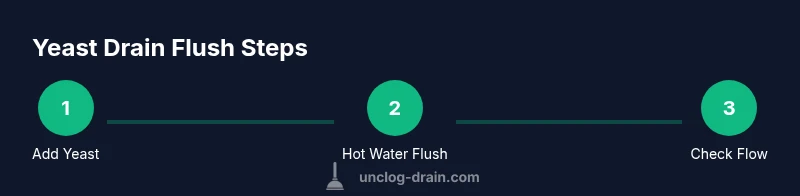
Pour one packet of dry yeast directly into the drain. If you can, use a small funnel or spoon to minimize spills and ensure the yeast reaches the trap area.
Tip: A funnel helps prevent clumps and keeps the area cleaner. - 3
Pour hot water to activate yeast
Slowly pour 1–2 liters of near-boiling water into the drain to activate the yeast and start dissolving the organic buildup. Stand back a bit to avoid splashes.
Tip: Let the water sit for a few minutes if you notice a gentle fizzing. - 4
Wait for yeast to work
Allow 15–30 minutes for the yeast to act on the organic debris. Avoid using the sink during this period to give the yeast time to digest the buildup.
Tip: Ventilate the area to keep any odors from lingering. - 5
Flush with hot water and inspect flow
Pour another round of hot water and observe drainage. If water clears and drains more quickly, you may repeat once more if needed. If not, consider moving to mechanical methods.
Tip: Do not force the drain with excessive water pressure. - 6
Decide on next steps
If the clog remains, switch to mechanical tools like a plunger or auger, or call a plumber for a persistent blockage. Avoid grinding forces that could damage pipes.
Tip: Limit yeast flush attempts to two; persistent clogs warrant other methods.
Common Questions
Does yeast unclog drain actually work?
Yeast can help with light organic buildups, but it isn’t a guaranteed fix for stubborn blockages. Treat it as a first, low-risk test before moving to stronger methods.
Yeast can help in light cases, but it isn’t guaranteed to fix a clog. It’s best used as a first, low-risk test before trying more drastic methods.
Is it safe for PVC pipes to use yeast?
For most homes, a yeast flush is safe when you use near-boiling but not boiling water and avoid harsh cleaners. Older PVC can be sensitive to very high temperatures.
Generally safe with hot water, but avoid boiling temperatures on older PVC and never mix with harsh cleaners.
What if the drain smells after treatment?
Flush with plenty of hot water, consider a mild baking soda rinse to neutralize odors, and ensure good ventilation while you test for results.
If it smells, rinse with hot water and ventilate the area. Baking soda can help with odors.
How many times should I try yeast flush?
Limit to two attempts. If there’s no improvement after two flushes, switch to mechanical methods or seek professional help.
If it doesn’t improve after two tries, move on to other methods.
Can I mix yeast with vinegar or baking soda?
Avoid mixing yeast with strong acids or cleaners; some combinations can fizz unpredictably or produce odors. Use these ingredients separately if desired.
Don’t mix yeast with vinegar or baking soda in the same flush; use them separately if needed.
When should I call a plumber?
Call a plumber if water backs up, the clog persists after two yeast flush attempts, or you have multiple fixtures affected.
Call a plumber if the clog won’t clear after a couple of tries or if other drains are affected.
Watch Video
Key Points
- Test yeast flush for light organic clogs.
- Expect gradual improvement; not a guaranteed cure.
- Pair with hot water for best results.
- If persistent, switch to mechanical methods or professional help.