Vinegar and Baking Soda to Unclog a Sink: Step-by-Step Guide
Learn a safe, DIY method using vinegar and baking soda to unclog sinks. This guide covers step-by-step instructions, safety tips, and preventive maintenance for long-lasting drainage.


By using baking soda and vinegar, you can tackle many common kitchen or bathroom sink clogs without harsh chemical cleaners. You’ll need baking soda, white vinegar, hot water, a kettle or pot, a bucket, and a plunger or brush for prep. This method works best on light, organic blockages with some standing water; avoid if the drain is completely blocked or you suspect a damaged pipe.
How the vinegar and baking soda method works
This approach relies on two pantry staples to address many household clogs. Baking soda acts as a mild abrasive and helps loosen organic buildup, while vinegar creates fizz that can carry debris through the drain and into the trap. When these ingredients meet, they release carbon dioxide, which can generate a gentle pressure that helps shift fragments of soap scum, grease, and hair. This is most effective for light clogs and sinks with some standing water, not for a fully blocked line. According to Unclog Drain, the reaction is safe for standard metal and PVC pipes when used in moderate amounts and followed by a thorough rinse with hot water. The goal is to nudge the clog while avoiding harsh chemical cleaners that can damage seals or septic systems. For best results, plan your sequence: pour baking soda first, let the mixture sit briefly, then add vinegar and quickly seal the drain to trap fizz. Finally, flush with hot water to clear the loosened material.
When this method is appropriate and when to choose alternatives
This vinegar-and-baking-soda method shines for partial clogs caused by organic residues—think soap scum, hair, and soap film—that have accumulated in the drain over time. If you can see standing water but the drain still drains slowly, you have a good candidate. Do not attempt this if the sink is completely blocked, if sewage backs up, or if you recently used a commercial chemical drain cleaner. In those cases, a plunger, a plumber's auger, or professional service may be safer and more effective. For households with septic systems, small, infrequent applications of baking soda and vinegar are generally considered safe, but they should not replace routine maintenance or water-based remedies. Always ensure adequate ventilation and wear gloves to protect skin and eyes from splashes. If you have an older pipe with brittle joints, consider preparing for a potential leak and have towels ready.
Safety considerations and myths
Handling household cleaners requires respect. Never mix vinegar with bleach or ammonia; the resulting fumes can be harmful. While baking soda and vinegar are milder than many commercial cleaners, avoid using this method on pipes that run directly into the septic system if you are unsure about waste management. Unclog Drain notes that the fizz action is gentle and should not be treated as a miracle cure for all clogs. If you notice a crack, leak, or persistent odors, stop and call a licensed plumber. Always test water temperature and avoid scalding water that could damage PVC joints. Keep children and pets away from the work area during the fizz stage.
Tools and workspace preparation
Set aside a dedicated workspace under the sink. Clear the trap area and place a towel, bucket, and flashlight within reach. Gather essential items: baking soda, white vinegar, hot water, a kettle or pot for boiling, a bucket to catch spills, and a plunger or brush for agitation. Optional items include rubber gloves, a measuring cup, and a small wrench if you need to loosen the trap. A clean, uncluttered area reduces the chance of accidentally mixing cleaners and makes the process safer and more efficient.
Step-by-step overview (what you’ll do and why)
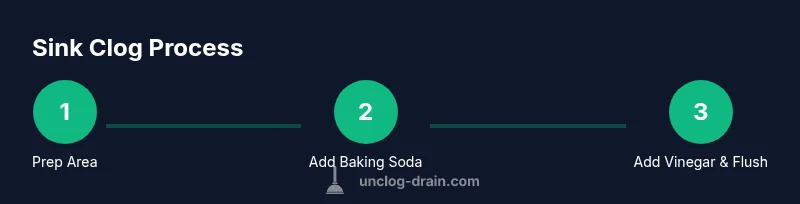
This section outlines the sequence that makes the fizz work and minimizes mess. First, prep the area and ensure you have a clear, dry surface around the sink. Next, measure out baking soda so you know exactly how much to pour. Then, pour the baking soda into the drain to cover the opening. Immediately follow with hot water to help dissolve residue. Finally, add the vinegar and briefly cap the drain to keep the fizz concentrated. The aim is to create a gentle reaction that lifts organic debris without forcing water backward through the trap.
Step-by-step: flush, test, and recover
After the fizz has had time to work (about 5–15 minutes for most home setups), slowly pour hot water down the drain to flush loosened material into the trap. Re-test by running water and observing whether the flow improves. If the sink still drains slowly, you can repeat the fizz cycle once, but avoid repeated cycles that could stress pipes or seals. If you’ve used a plunger, give the drain a final plunge to ensure the trap seals stay intact.
Troubleshooting and alternatives if the clog persists
If the drain remains stubborn, mechanical methods are more reliable. A plumber’s snake or an auger can physically break through blockages that fizz cannot. For stubborn kitchen sinks with grease, a combination of heat (carefully), enzymatic cleaners, and mechanical removal may be successful. Avoid mixing chemical cleaners with vinegar, as the reactions can produce hazardous gases. If you smell gas or see sewage, stop and contact a professional immediately. Do not force the system; repeated attempts can push the clog further into the plumbing.
Maintenance and prevention
Preventing clogs is easier than removing them. Run hot water after meals to wash away grease, wipe down the drain to minimize soap buildup, and use a drain screen to catch hair. Monthly, consider a light cleaning routine with baking soda and hot water to keep the trap clean. For sinks connected to older pipes, avoid pouring grease or heavy foods down the drain. Regular inspection of the P-trap under the sink helps catch leaks early and keeps drainage flowing smoothly.
Authoritative safety and guidelines
For safety best practices, refer to authoritative sources on plumbing and chemical handling. The Occupational Safety and Health Administration (OSHA) and the U.S. Environmental Protection Agency (EPA) provide general guidance on chemical safety, ventilation, and safe use of household cleaners. Always consult local codes and consider professional advice if you are unsure about your piping or septic system. These resources help ensure your DIY maintenance stays effective and safe for you and your home.
Tools & Materials
- baking soda(about 1/2 cup to 1 cup depending on drain size)
- white vinegar(about 1 cup)
- hot water(near-boiling; not boiling for PVC pipes)
- kettle or pot for boiling water(to heat water)
- bucket(to catch spills)
- plunger or brush(for agitation if needed)
- gloves(skin protection)
- flashlight(to inspect under sink)
Steps
Estimated time: 25-45 minutes
- 1
Prepare the area
Clear the sink area, remove dishes, and place towels and a bucket within reach. Check the trap area for visible debris and ensure you have enough workspace to maneuver without splashing.
Tip: Have all tools within arm’s reach before you start. - 2
Boil water and set up
Boil water or heat enough hot water to be available for flushing later. While heating, organize your baking soda and vinegar so you can pour quickly in the correct sequence.
Tip: Hot water helps dissolve residue but avoid scalding pipes (PVC can be sensitive). - 3
Pour baking soda
Pour about 1/2 cup to 1 cup of baking soda directly into the drain opening, ensuring the powder lines the path toward the trap.
Tip: Pour slowly to prevent clumping and ensure even distribution. - 4
Add vinegar
Pour about 1 cup of white vinegar into the drain. The mixture will fizz and bubble as it reacts with the baking soda.
Tip: Quickly cover the drain to trap fizz if your cap is off, then uncover after 1–2 minutes. - 5
Let fizz work
Allow the fizz to work for 5–15 minutes. This dwell time gives the reaction a chance to loosen organic buildup.
Tip: Keep pets and children away from the area while fizzing. - 6
Flush with hot water
Carefully pour hot water down the drain to flush loosened material through the P-trap and out of the line.
Tip: Use a steady pour to avoid splashing.” - 7
Test the drain
Run tap water to test whether the stream clears more quickly and steadily. If it still drains slowly, you may repeat the fizz cycle once or switch to a mechanical method.
Tip: Don’t overdo repeats; repeated cycles can stress seals.
Common Questions
Is this method safe for PVC pipes?
Yes, when used in moderation and followed by thorough rinsing with hot water. Avoid boiling water and excessive quantities.
Yes, it’s generally safe for PVC if you use moderate amounts and avoid boiling water.
Will this harm septic systems?
Generally safe in moderation, but should not replace routine maintenance. If in doubt, consult a professional.
Generally safe for septic systems if used sparingly; don’t rely on it as a long-term fix.
How long should I wait after adding vinegar?
Allow 5–15 minutes for the fizz to work before flushing with hot water.
Wait five to fifteen minutes for the fizz to loosen the clog, then rinse.
What if the clog remains after trying this method?
Try a mechanical method like a plunger or snake, or call a plumber. Avoid mixing cleaners.
If it stays stuck, use a manual tool or get a pro involved.
Can I use this for a bathroom sink?
Yes, the approach works for many bathroom sink clogs; adjust quantities as needed.
Yes, it often helps bathroom sinks too; tailor amounts to pipe size.
Watch Video
Key Points
- Start with safer, non-chemical methods
- Pour baking soda before vinegar for predictable fizz
- Wait 5–15 minutes before flushing
- If the clog persists, use mechanical methods or call a plumber
- Regular maintenance prevents future clogs