How to Unclog Refrigerator Water Line: A Practical DIY Guide
Learn to unclog a refrigerator water line safely with simple tools and practical methods from Unclog Drain. This step-by-step guide covers flushing, probing, and prevention to keep water flowing in your kitchen.


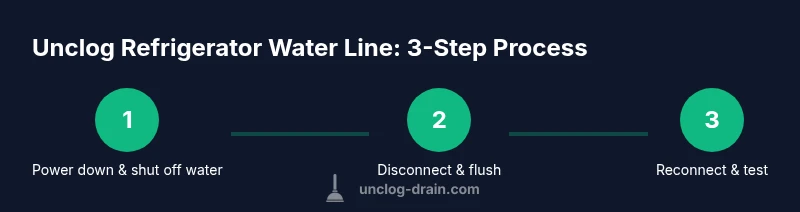
Goal: unclog refrigerator water line and restore water flow. You’ll identify the supply line under the fridge, shut off the water, disconnect the line, and flush it with hot water or a mild cleaning solution. Clear mineral buildup with a flexible snake or brush before reconnecting. If needed, inspect the filter and valve. Ensure the main shutoff is closed, have a bucket handy, and test for leaks after reattachment. 20–40 minutes DIY.
What causes fridge water line clogs
Clogs in refrigerator water lines are usually caused by mineral buildup, sediment from the supply line, algae in poorly treated water, or a kinked hose. Over time, tiny deposits accumulate at the valve and line, restricting flow. According to Unclog Drain, the most common DIY culprit is mineral scale from hard water that adheres to the plastic tubing. The Unclog Drain team found that many clogs can be cleared with a targeted flush and careful brushing, avoiding the need for expensive service.
Safety and preparation before you start
Before you touch any plumbing, unplug the refrigerator and shut off the dedicated water supply valve. Drain the line into a bucket to catch spills, and lay towels to protect floors. Gather your tools and materials so you aren’t scrambling mid-task. Working with water and electrical components requires caution—if you notice any exposed wires or leaks, stop and reassess. A quick visual check of the valve and line will help you decide if you can proceed safely.
Clearing methods: flush, snake, and clean
There isn’t one magic trick for every fridge, but two reliable DIY methods often solve the issue. Start with a hot-water flush: remove the line, run hot water through it in short bursts, and look for flow restoration. If the line remains blocked, insert a flexible drain snake or a small bottle brush into the tube and gently twist to dislodge buildup. For mineral-scale deposits, a mild cleaning solution or white vinegar can help, but avoid harsh chemicals that could damage the line. After clearing, rinse the line with clean water to remove any residue and keep the pathway clear.
Reassembly and leak testing
Reconnect the supply line securely, ensuring a snug, leak-free connection. Turn the water back on slowly and inspect all joints for leaks; wipe any drips and wait a few minutes to observe. Plug in the fridge again and run a test by dispensing water or ice to confirm steady flow. If you see dripping or a drop in pressure, tighten the fittings a bit more or replace worn washers. Do not overtighten, which can damage fittings.
Maintenance tips to prevent future clogs
Regularly flush the line every 6–12 months, especially in areas with hard water. Replace disposable inline filters according to manufacturer guidelines and check the shutoff valve for leaks. Keep the area behind the fridge clean and dust-free to maintain air flow around the compressor and prevent overheating that can affect water lines. If you notice recurring clogs, consider installing a simple inline water filter or increasing water line diameter if permitted by the fridge model.
Tools & Materials
- Bucket(To catch drips when disconnecting the line)
- Towel or rag(Drying and grip)
- Adjustable wrench or pliers(Loosen compression nuts and fittings)
- Screwdriver (flathead or Phillips)(Access valve screws or clamps)
- Flexible drain snake (auger) or stiff wire(Clear internal blockage)
- Bottle brush or old toothbrush(Scrub the line interior)
- Hot water(Flush line in short bursts)
- Mild cleaning solution or white vinegar(Optional for mineral buildup)
- Replacement line fittings or tubing(Only if damaged)
Steps
Estimated time: 20-40 minutes
- 1
Power down and shut off water
Power down the refrigerator and shut off the dedicated water valve to prevent leaks. Place a towel under the connection and have a bucket ready. This step minimizes spills and protects electrical components.
Tip: Always disconnect the power before touching plumbing. - 2
Disconnect the supply line
Carefully loosen fittings with a wrench, detach the line from the valve and fridge inlet. Keep the line steady to prevent twisting the valve and ensure you can reattach smoothly.
Tip: Support the line with one hand while loosening fittings. - 3
Flush with hot water
Run hot water through the line in short bursts to push out any loose debris. Do this into a bucket to observe the discharge and confirm flow restoration.
Tip: Use hot water in quick bursts to prevent cooling and clog reformation. - 4
Clear buildup with snake or brush
Insert the snake into the line, twist gently, and pull out debris. If using a brush, scrub the interior walls to loosen scale.
Tip: Avoid applying excessive force to protect delicate plastic tubing. - 5
Reconnect and test for leaks
Reconnect fittings snugly, turn water on slowly, and inspect joints for leaks. Run water or ice to confirm steady flow and no drips.
Tip: If leaks persist, replace washers or consult a pro.
Common Questions
What causes fridge water line to clog?
Most clogs come from mineral buildup, sediment, or algae in hard water. A kinked line can also restrict flow. Inspect the line and valve to determine the culprit.
Common causes are mineral buildup and a kinked line. Check the line and valve to identify the blockage.
Can mineral buildup be prevented?
Yes. Using filtered water, flushing lines periodically, and replacing inline filters helps reduce mineral deposits.
Yes. Filtered water and periodic flushing help prevent buildup.
Is it safe to use a snake on a fridge water line?
A small, flexible drain snake can be effective if used gently on plastic tubing. Avoid forcing the snake, which can damage the line.
A small snake can help if used gently; don’t force it.
Should I replace the water filter after a clog?
If your fridge has a built-in water filter, check and replace it according to the manufacturer’s schedule; a clogged filter can limit flow.
Check the filter schedule and replace if needed to restore flow.
When should I call a plumber?
If you see persistent leaks, damaged tubing, gas smells near appliances, or you cannot access shutoff safely, contact a professional plumber.
If leaks persist or you can’t safely shut off the supply, call a pro.
Watch Video
Key Points
- Identify likely causes of fridge line clogs
- Start with a hot-water flush and gentle mechanical clearing
- Use a snake or brush for stubborn blockages
- Reconnect securely and test for leaks
- Prevent future clogs with regular maintenance