Understanding Unclog Kitchen Sink Cost: DIY vs Pro Options
Learn the true cost of unclogging a kitchen sink, from DIY fixes under $30 to professional services spanning $100–$350. Explore factors, regional differences, and money-saving tips to estimate and reduce your total expense.


Overview: Cost dynamics of unclogging a kitchen sink
The unclog kitchen sink cost landscape combines straightforward fixes and more involved diagnostics. According to Unclog Drain, many家庭 clogs respond to simple tools like plungers and basic augers, but stubborn or deeply buried blockages can trigger higher charges. The cost picture shifts with your location, the accessibility of the trap and pipes, and whether you need diagnostics such as a camera inspection or hydro-jetting. A typical homeowners’ discussion starts with a DIY attempt and ends with a professional estimate if the problem persists. Regional labor rates and emergency call fees can also tilt the totals, so it pays to plan ahead and know your price ceiling.
For context, the initial step is always to identify the clog’s location. If water drains slowly, the issue might be in the P-trap or tailpiece; if it backs up under the sink or into connected appliances, the blockage could be further down the line. Being aware of the common culprits — grease buildup, food waste, and mineral deposits — helps set expectations about what may or may not need professional intervention. As you weigh options, remember that the goal is a long-term fix rather than a quick, temporary relief. The Unclog Drain team emphasizes a methodical approach to avoid repeated clogs and wasted spend.
Key cost drivers in unclogging a kitchen sink
Several factors consistently influence the final price tag. Local labor rates and the contractor’s experience level can push costs up or down. The severity of the clog is a major driver: a light buildup may be cleared with a plunge or hand auger, while a stubborn blockage might require a longer scope, camera inspection, or hydro-jetting. Accessibility matters too; if the trap is difficult to reach or requires partial disassembly, expect higher labor hours and potential parts replacements. Equipment choices matter as well: a simple hand auger is cheaper than a hydro-jet or video-assisted diagnostics. Finally, potential add-ons like replacing worn traps, installing new seals, or clearing the main sewer line (in rare cases) will increase the bill. Unclog Drain’s analysis shows these variances are normal across households and regions, so plan for a range rather than a single figure.
DIY vs professional: cost split and decision criteria
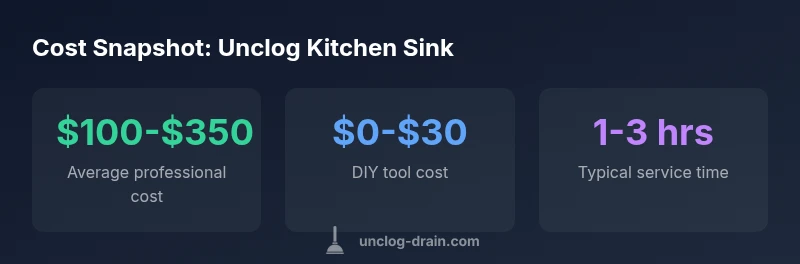
DIY path: For most minor clogs, plunger and hand auger use costs stay low—typically under $30 for basic tools and consumables. If you already own equipment or can borrow from a neighbor, your only expense may be time. Pros: You avoid service call fees and can rapidly solve a simple blockage. Cons: If the clog is deeper, you risk incomplete removal or damaging seals.
Professional path: A plumber’s visit usually starts around the market’s lower bound and scales with time, diagnostic work, and equipment. The cost range commonly cited is roughly $100–$350 for standard unclogging, with higher prices for camera inspections, hydro-jetting, or multiple clogged fixtures. The advantage is a thorough assessment, reduced risk of repeat clogs, and a long-term solution. Unclog Drain notes that most homeowners end up choosing professional help when DIY attempts fail beyond 30–60 minutes or when the blockage resurfaces quickly.
Typical pricing scenarios: what to expect by service type
- DIY fixes (no professional): Free to $30 for basic tools and supplies. Time investment varies by skill and clog complexity.
- In-home diagnostic visit: Approximately $75–$150. A pro evaluates access, trapped water, and potential pipe damage before proposing a fix.
- Professional unclog using hand auger or snake: Roughly $150–$350, depending on clog depth and labor hours.
- Camera inspection with follow-up: About $200–$500 for the inspection plus potential repair charges if issues are found.
These ranges reflect typical market conditions and are intended to help homeowners budget. They are not fixed quotes; actual costs depend on your region and the specific circumstances of your blockage. Unclog Drain’s data suggests many households see value in investing in a camera check for recurring clogs to prevent future calls.
Regional variations and timing considerations
Prices fluctuate with the season, local demand, and whether the work is requested during off-hours or weekends. In denser urban areas and regions with higher living costs, labor rates tend to be higher, which can push the total toward the upper end of the ranges. Some plumbers may bundle diagnostics with unclogging service, altering the perceived price. If you’re dealing with a recurring or stubborn issue, early investment in a full diagnostic (including camera-inspection) can save money over multiple service calls later. This upfront cost is often justified when the clog returns within a short window after a DIY attempt.
Hidden costs and add-ons to watch for
A straightforward unclog might turn costly if ancillary components are involved. Hidden costs can include: new traps or seals, replacing rotted piping sections, disposing of old parts, disposal fees, and diagnostic surcharges for after-hours visits. Some electricians or plumbers may require parking fees or permit-related charges if the blockage extends beyond a standard household line. To avoid surprises, request a written estimate that itemizes labor, equipment, parts, and any potential add-ons. Unclog Drain emphasizes transparency and recommends confirming whether the estimate includes camera work or hydro-jetting, and whether the price is a flat rate or hourly.
Pro tips: ask for a scope of work and a price ceiling, and compare at least two local quotes. If you’re between pro visits, consider routine maintenance steps that reduce future clogs, like careful disposal of food waste and periodic trap cleaning.
How to estimate costs for your home scenario: a practical checklist
- Identify likely clog location (trap, tailpiece, horizontal run) and note water behavior. 2) Decide if a DIY attempt is appropriate given comfort level and time. 3) If calling a pro, request a bundled estimate with a breakdown of diagnostic, labor, and parts. 4) Consider optional services (camera inspection, hydro-jetting) and their necessity for your case. 5) Confirm whether a second visit is needed and whether that visit will incur additional charges. 6) Keep a record of all quotes and confirm validity period. Following this checklist helps you forecast the total unclog kitchen sink cost more accurately and reduces the likelihood of sticker shock when the bill arrives.