How to Unclog a Sink with a Zip Tie: Step-by-Step DIY Guide
Learn a safe, practical method to unclog a sink using a zip tie as a makeshift drain snake. This guide explains when to use it, essential tools, step-by-step actions, safety tips, and preventive maintenance to keep drains flowing.


Using a zip tie as a DIY drain snake lets you snag hair and debris from a sink trap, restoring flow without professional tools. It's most effective for light, hair-based clogs in bathroom or kitchen sinks. Gather a flexible zip tie, needle-nose pliers, a bucket, towels, and gloves, then follow safety steps.
What sink unclog ziptie means in practice
According to Unclog Drain, the phrase sink unclog ziptie describes a quick DIY approach where a flexible nylon zip tie is used as a makeshift drain snake to reach past hair and soap scum in the trap. This method is not a one-size-fits-all fix, but it can restore flow when the blockage is close to the drain opening and primarily composed of hair or soap scum. The tactic leverages the flexible tip of a nylon zip tie to probe the bend of the drain and snag tangled material. For many households, this approach offers a fast, low-cost option before moving to more aggressive tools. Always assess the clog type and pipe condition before you begin, and remember that zip ties are disposable after use. If you see standing water returning after a brief flush, stop and switch to a safer, more thorough method. The key to success is patience, grime awareness, and proper disposal of the used tie.
When this method is most appropriate and its limits
This zip-tie method shines when the clog is light to moderate and resides near the trap or drain opening. Hair buildup in bathroom sinks is a common scenario where zip ties can be effective, especially when a standard plunger cannot reach the obstruction. In kitchen sinks, grease or soap scum can also collect at the trap, where a slim zip tie can reach. However, the technique has clear limits: it may not dislodge solidified gunk deeper in the pipe, it can push material further if forced, and it can damage soft plastic traps if misused. Do not use metal zip ties for this task, as metal can shear, break, or leave sharp fragments. If the water drains slowly despite two careful attempts, or if you notice a sharp odor, halt the DIY approach and consider a plumber or a more robust tool.
Safety first: protecting people and pipes
Before you start, protect your hands with disposable gloves, wear eye protection if splashes are likely, and keep a towel nearby to catch drips. Work in a well-lit area and ensure children or pets are clear of the workspace. Avoid forceful twisting that could crack plastic traps or push debris further into the line. If your home uses older lead-based joints or questionable plumbing, extra caution is warranted. Do not mix chemical drain cleaners with a zip-tie attempt, as fumes or reactions can be hazardous and can complicate the clog removal process. After finishing, sanitize the zip tie's tip or dispose of it safely to prevent accidental injury. Proper hygiene rituals post-cleanup reduce the chance of bacterial growth and odor.
Zip-tie selection and prep for drain work
Choose a nylon zip tie that is long enough to reach past the strainer and into the pipe without bending excessively. A tie in the 8–12 inch range provides a good balance of reach and control for most sinks. Ensure the tie is flexible enough to bend into the trap without snapping. Remove any packaging, inspect for cracks, and cut the tie if needed to ensure a clean end. Keep a clean workspace by laying a towel under the drain and placing a bucket to catch any water. If the sink is very shallow or the trap is tight, a needle-nose pliers can help guide the zip tie without forcing it. After use, discard the tie properly to avoid leaving plastic debris in the drain.
Understanding sink plumbing: traps, access ports, and how a zip-tie interacts
Most sinks have a P-trap below the sink that collects debris. The trap is usually accessible from beneath the cabinet via a small access point or by removing the trap's cap or a cleanout plug. The zip tie works best when you can maneuver it inside the trap or the immediate drain line to grab hair or residue. Do not attempt to push debris deeper into the pipe, and avoid disturbing metal joints unless you are confident in your plumbing skills. If you cannot gain access to the trap safely, stop and call a professional. Visualize the path water travels: from the sink strainer to the trap to the wall pipe, noting where you can safely intervene with your zip tie.
Complementary methods and when to escalate
If the zip-tie approach frees the clog, test drainage by running warm water for 30–60 seconds. If water still stagnates, combine the zip-tie method with a plunger designed for sinks or move to a manual snake/auger. For stubborn clogs, consider removing the P-trap to inspect and manually clear the interior along with washing the trap in soapy water. Chemical cleaners can contaminate the trap and cause a slippery surface; use them only as a last resort and never in combination with a metal tool. For persistent or recurrent clogs, it is wise to consult a licensed plumber to assess pipe condition, venting, or sewer line issues.
Aftercare and prevention to keep drains flowing
Once the drain runs freely, flush with hot water for a couple of minutes to dissolve minor soap residues. Install or clean a coarse drain screen to capture hair and debris, preventing future clogs. Periodically inspect the P-trap for buildup and clean it as part of routine maintenance. Consider a maintenance schedule, such as a monthly hot-water flush or a quarterly use of a non-corrosive, enzyme-based cleaner, depending on your household usage. Small preventive steps, like running water during heavy-use times and promptly dealing with food scraps in the kitchen, can greatly reduce the frequency of clogs. By integrating simple care routines, you can extend the life of your pipes and minimize professional interventions.
Tools & Materials
- Flexible nylon zip tie (8-12 inches)(Choose a slender, bendable tie with a clean end; avoid metal ties.)
- Needle-nose pliers(For guiding the zip tie and gripping debris, if necessary.)
- Disposable gloves(Protect hands from bacteria and contaminants; use thicker gloves if available.)
- Bucket or large bowl(To catch water and loosened debris during the procedure.)
- Old towels or rags(Place under and around the work area to catch spills.)
- Flashlight or headlamp(Helpful for inspecting inside the drain at low light.)
Steps
Estimated time: 20-40 minutes
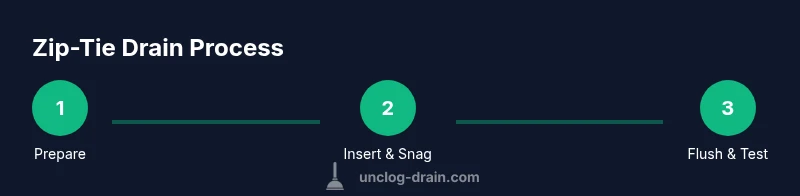
- 1
Prepare and protect
Put on gloves and set up a catch basin with a bucket beneath the sink trap. Clear the area and lay down towels to keep the workflow clean. This reduces splashback and makes debris collection easier.
Tip: Have a towel ready to wipe your hands and the zip tie tip between steps. - 2
Insert zip-tie gently
With the zip tie end pointed toward the drain, insert it into the drain area and push slowly until you feel resistance from the clog. Do not force the tie; misalignment can push debris deeper or damage the pipe.
Tip: If you can’t reach the blockage, reposition your tie slightly and try again with steady pressure. - 3
Engage and snag
Twist and maneuver the tie to hook hair or gunk, then pull back slowly to bring debris toward the trap. Avoid rapid jerks; use controlled movements to prevent tearing the tie or snagging on a trap edge.
Tip: Use the pliers to guide the end if it won’t retract smoothly. - 4
Withdraw and inspect
Carefully remove the zip tie and inspect the debris captured on the tie. If the tangled material is substantial, deposit it in the bucket and wipe the tie clean for a quick reattempt or replacement.
Tip: Snap a quick photo of the debris for reference if you’ll need professional help later. - 5
Flush and test
Run hot water down the drain for 30–60 seconds to clear residual material. Observe whether the water drains freely or slows again; if it drains slowly, repeat once or move to alternative methods.
Tip: If you hear gurgling or see backflow, stop and drain the P-trap to inspect for deeper clogs. - 6
Consider next steps
If the water still backs up after the zip-tie attempt, consider using a sink plunger or a dedicated drain snake, or contact a plumber for a professional assessment. Do not persist with aggressive force, as it risks pipe damage.
Tip: Document the outcome and plan for preventive maintenance to reduce future clogs.
Common Questions
Is using a zip tie safe for all sink clogs?
Zip ties can work for light, hair-based clogs near the drain, but they may not clear deeper or solid blockages. Do not force the tie, and stop if you encounter resistance or if water remains stagnant after a couple of attempts.
Zip ties can help with lighter clogs near the drain, but if the blockage is deeper, stop and consider other methods or a professional plumber.
Can I use a metal zip tie for this?
No. Metal zip ties can scratch or damage plastic traps, bend, or break, leaving metal fragments that may worsen the clog.
Metal zip ties can damage pipes; stick to nylon and handle gently.
When should I call a plumber instead of DIY?
If clogs persist after a couple of careful DIY attempts, if you hear bubbling or notice sewer odors, or if you cannot access the trap safely, it’s time to call a licensed plumber.
If the clog won’t clear after a couple tries or if you smell sewer gas, get a pro.
Why do I get an odor after unclogging?
Odors often stem from decaying organic matter trapped in the drain. After clearing, flush with hot water and consider a light enzymatic cleaner to reduce buildup.
Odors mean buildup; flush with hot water and consider enzyme cleaners after you remove the clog.
Should I remove the P-trap during this process?
Removing the P-trap provides the clearest path to clean the interior; proceed only if you’re comfortable and follow a reliable guide to avoid leaks.
P-trap removal gives better access if you’re comfortable, otherwise skip and proceed with care.
Can I reuse a zip tie after unclogging?
No. After use, the zip tie may carry bacteria or debris and should be discarded. Use a fresh tie for any future attempts.
Discard used zip ties; reuse isn’t recommended for hygiene and safety.
Watch Video
Key Points
- Identify the clog near the drain before starting.
- Use a nylon zip tie safely; avoid forcing it into the pipe.
- Protect yourself and clean up thoroughly after finishing.
- Test drainage with hot water to verify success.
- Prevent future clogs with screens and routine maintenance.