Unclog Peg Tube: Safe Home Care Guide for Managing Clogs
A caregiver-focused guide to recognizing, responding to, and preventing peg tube clogs at home, with safety reminders to contact clinicians when needed.


Goal: safely assess and respond to a suspected PEG tube clog at home while avoiding harm. This quick guide emphasizes not forcing feeds or flushing, identifying warning signs that require professional care, and documenting symptoms for your clinician. Follow recommended caregiver steps to maintain tube patency and reduce infection risk until medical help is available.
Why PEG Tube Clogs Happen and Why It Matters
A PEG (percutaneous endoscopic gastrostomy) tube is a valuable medical device that delivers nutrition directly to the stomach. Clogs can occur for several reasons, including thickened formula, insufficient hydration, or kinks and pinches along the tube path. While some clogs are minor, others can block feeding entirely and may lead to complications like local skin irritation or infection around the stoma. According to Unclog Drain, proper maintenance and prompt recognition of potential clogging can reduce complications and keep the feeding regimen on track. This section explains how clogs develop in everyday home care and why timely attention matters for patient safety and comfort. By understanding the warning signs, caregivers can act quickly and calmly, avoiding risky attempts to force a flow through a blocked tube.
imageSuggestionForAltTextConnectionKa
"Why PEG Tube Clogs Happen" describes common mechanisms and risks.
Tools & Materials
- Latex or nitrile gloves(Protection for caregiver during inspection and handling of the tube area)
- Clean cloth or gauze(For dry wipe, inspection, and gentle cleaning around the stoma)
- Notebook and pen(Record observations, feeding times, and any actions taken)
- Phone or clinician contact information(Have it handy for quick calls to healthcare providers)
Steps
Estimated time: Variable; depends on professional evaluation and clinic scheduling
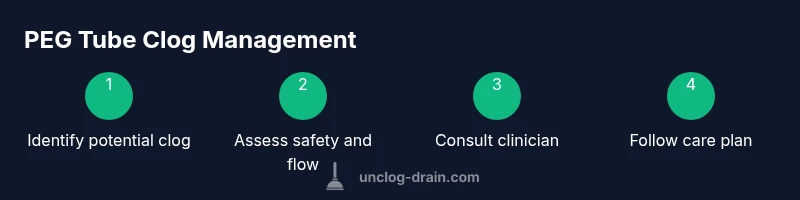
- 1
Assess the situation
Check whether feeds are paused, observe any alarms or occlusion indicators on feeding pump, and look for signs of a blockage such as reduced flow or unusual resistance. Do not insert objects or attempt to force the tube. Document your findings so you can share them with a clinician.
Tip: Keep notes handy with time stamps and exact symptoms to relay to your healthcare provider. - 2
Avoid flushing or pushing anything through the tube
Never try to flush a suspected clog with kitchen solutions, home remedies, or forceful pushing. Inserting fluids without explicit medical instruction can worsen blockage or cause unintended damage to the tube or stomach. If you have a clinician’s instruction, follow it precisely.
Tip: If you’re uncertain, contact the clinician before taking any flushing steps. - 3
Contact the healthcare team
Reach out to the prescribing clinician, gastroenterologist, or home health service to report the suspected clog. Provide the observations you documented and any feeding schedule changes. Await professional guidance before attempting any remediation.
Tip: Have questions ready for the clinician, including whether you should pause feeds and for how long. - 4
Prepare for a professional assessment
If advised to come in, gather your care plan, next feeding schedule, recent formula type, and any signs of infection around the stoma. This helps the clinician evaluate whether imaging, endoscopy, or tube replacement is needed.
Tip: Bring a caregiver companion if possible to help communicate symptoms and history. - 5
Follow medical guidance and monitor after care
After professional intervention, adhere to the new care plan exactly as prescribed and monitor for recurring signs of blockage or infection. Maintain routine hygiene to protect the stoma and skin.
Tip: Recheck feeds and ensure the pump is set to the clinician’s recommended rate to prevent future issues.
Common Questions
Can I unclog a PEG tube at home?
No. PEG tube clogs require clinician assessment. Do not flush or force feeds. Contact your healthcare provider for specific guidance.
PEG tube clogs require medical assessment. Do not attempt to flush; contact your clinician for guidance.
What signs indicate a clogged PEG tube beyond reduced flow?
Watch for persistent resistance during feeds, unusual odors, leakage near the stoma, or changes in pump alarms. These warrant clinician review.
Watch for blockage signs like lingering resistance and alarms; report to your clinician.
When should I seek urgent care for a PEG tube issue?
If you notice severe pain, fever, vomiting, large amounts of leakage, or sudden inability to feed, seek urgent medical help.
If there’s severe pain or fever, call emergency services or your doctor right away.
What causes PEG tube clogs?
Clogs often result from thick formulas, insufficient hydration, or tube kinks. Regular care and proper formula preparation help reduce risk.
Clogs come from thick formula, dehydration, or kinks. Prevention is key.
How can I prevent PEG tube clogs in daily care?
Follow your clinician’s feeding schedule, ensure proper hydration per instructions, and keep the area clean and free from debris.
Stick to prescribed feeds and keep the area clean to prevent clogs.
What might a clinician do to clear a PEG tube?
A clinician may flush, perform imaging to locate the blockage, or replace the tube if needed; these are procedures done in a clinical setting.
Clinicians may flush, image, or replace the tube if clogged.
Watch Video
Key Points
- Identify signs of potential clog early
- Do not force feeds through a blocked tube
- Contact healthcare providers promptly for guidance
- Maintain hygiene to reduce infection risk around the stoma
- Follow clinician instructions to restore patency safely