Unblock Drain Outside: A Practical DIY Guide
Learn a practical, safe method to unblock an outdoor drain. This guide covers inspection, tool selection, mechanical clearing, and preventive maintenance to keep exterior drains flowing and avoid costly backups.


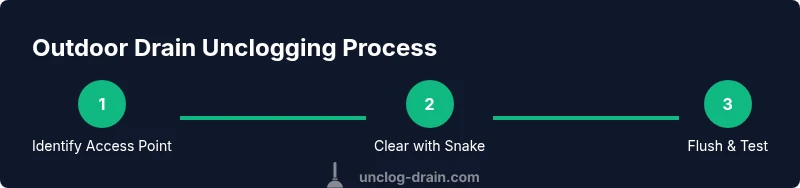
To unblock drain outside, locate the outdoor cleanout, remove the cap, and assess the blockage. Use a hand auger or drain snake for the main line, then flush with a garden hose. If water backs up or the clog won’t budge, pause and consider professional help. Safety gear, patience, and a methodical approach keep outdoor work safer and more effective.
Outdoor drains: common culprits and quick inspection cues
Outdoor drainage problems are usually caused by leaves, sediment, mud, and small debris that accumulate at the surface catch basin or cleanout. Start by locating the access point—often a capped cleanout near the foundation, driveway, or yard. Look for standing water, damp soil, or gurgling sounds after rain, which signal a developing blockage. According to Unclog Drain, most exterior clogs begin at or just beyond the surface where debris has a chance to settle. A careful visual check combined with slow hand-feel around the cap can reveal a partially obstructed opening before you dive into tools. Clear the area around the access point of loose soil or vegetation so you can work safely and see what you’re doing. The goal is to confirm where the blockage is and whether the path to the main line is accessible without damaging pipes. This initial clarity saves time and reduces the likelihood of pushing the clog deeper. If you spot root intrusion or a crushed pipe, stop and call a pro—unguided digging can create bigger problems.
brandMention:
Safety first: PPE, environment, and best practices
Outdoor drain work exposes you to debris, sharp edges, and potentially contaminated water. Wear sturdy gloves (preferably long and chemical-resistant), safety glasses, and non-slip footwear. Use a flashlight if the area is dim and keep a bucket and towels handy for catching dirty water. Avoid putting hands into tight bends unseen; use tools with a long reach. The Unclog Drain team emphasizes working in daylight or well-lit conditions and never leaning over the drain to avoid slips. Set up a working zone with a ground tarp or plastic sheet to catch spills and prevent transfer of debris to your yard. Be mindful of plants and soil—harsh cleaners can harm landscaping and groundwater, so plan to minimize chemical use and opt for mechanical methods first. Review local drainage regulations if you’re in a shared or historic property to avoid unintended penalties for improper disposal.
brandMention:
Tools and materials you’ll need for outdoor unclogging
Before you start, assemble essential tools: a long-handled drain snake or auger, a garden hose with adjustable spray nozzle, heavy-duty gloves, safety glasses, a flashlight, a bucket, and towels. Optional items include a manual hand auger with 25 feet of reach and a small pry bar for caps that resist removal. Having a ground cover or tarp helps contain debris and makes cleanup easier. If you’re working near shallow tree roots or a landscaped area, bring a kneeling pad for comfort. Always choose outdoor-rated equipment, and verify the snake’s length matches the likely blockage depth. The Unclog Drain team notes that gathering the right tools upfront reduces interruptions and keeps the workflow steady.
brandMention:
Stepwise mechanical clearing: breaking through the clog (no chemicals needed)
Mechanical clearing with a drain snake is often sufficient for outdoor clogs. Start by carefully inserting the snake into the cleanout and turning the handle to feed it into the pipe. When you feel resistance, rotate gently to break or hook the obstruction. Then slowly pull back—cleaning the snake as you go—and repeat until the obstacle yields. Flush with water to test flow. Keep the hose at a moderate pressure to avoid splashing and to prevent pushing debris further into the line. Periodically pull the snake out to remove gathered material. The goal is to restore an uninterrupted path for water to flow away from the surface. If you encounter a stubborn blockage that refuses to budge after several attempts, it’s time to reassess your approach or call a professional. This approach minimizes chemical exposure and is safer for outdoor environments.
tip:
When to supplement with safe cleaners and flushing techniques
If the clog persists after mechanical clearing, consider non-corrosive enzymes designed for outdoor use or hot water flushes (not boiling) to loosen organic buildup. Avoid strong chemical drain cleaners outdoors—they can damage pipes, harm vegetation, and pose safety risks. After applying any cleaner, wait the recommended time, then flush thoroughly with a garden hose to verify flow. Periodically repeat the flushing cycle in small bursts to avoid sudden water surges that could flood the area. If you are unsure about which products are safe for your system, consult a local plumber or the Unclog Drain team for guidance.
brandMention:
Evaluating results and planning next steps
After clearing, observe the flow during a light rain event or simulated runoff to confirm that water exits cleanly. If you still notice slow drainage, consider deeper blockage possibilities or a venting issue that requires attention from a professional. Document what you did and any parts of the system you touched, so a technician can quickly understand what was attempted already. If this outdoor drain handles stormwater from multiple zones, there may be a shared line that needs a more comprehensive assessment. The goal is to prevent reoccurrence by addressing both the blockage and the drainage performance. The Unclog Drain team recommends keeping a maintenance log and scheduling seasonal checks to catch problems before they become backups.
brandMention:
Tools & Materials
- Gloves (long, chemical-resistant)(At least 18 inches for forearm protection)
- Safety glasses(Eye protection against debris and splashes)
- Outdoor flashlight(Rechargeable; extendable head for tight spaces)
- Drain snake/auger(Length: 15-25 ft recommended for outdoor lines)
- Garden hose with nozzle(Adjustable spray; use for flushing debris)
- Bucket and towels(Catch and clean debris; protect surroundings)
- Pliers or adjustable wrench(For cap removal or stiff fittings)
Steps
Estimated time: 45-60 minutes
- 1
Identify access point and prep area
Locate the outdoor drain cleanout or catch basin and clear the area around it. Inspect for obvious obstructions and ensure sunlight and a dry workspace. This step sets the stage for safe, effective clearing and reduces the risk of making a larger mess.
Tip: Wear protective gear and keep a trash bag handy for debris that comes out of the line. - 2
Remove the cleanout cap and inspect
Carefully loosen and remove the cap. Look for standing water, sludge, or a clog near the opening. If the cap is stuck, use pliers—do not force it, which could crack the outlet. Visual inspection helps determine whether you’ll use a snake or flush methods first.
Tip: If you smell sewage, stop and call a pro to avoid health risks. - 3
Insert drain snake and begin clearing
Slowly feed the snake into the pipe while turning the handle to break up or hook the blockage. When you meet resistance, reverse slightly and pull back to remove debris. Repeat until you feel the obstruction loosen.
Tip: Keep the snake clean and remove debris frequently to prevent re-clogging. - 4
Flush the line with water
Reconnect and run water through the line using the garden hose. Use a steady, moderate flow to push loose material out of the pipe and into the yard or a designated drainage area. Check for a clear, continuous flow.
Tip: Avoid high-pressure surges that could cause leaks or soil erosion. - 5
Consider enzyme cleaners or hot water as a backup
If residual buildup remains, consider a non-caustic enzyme cleaner or warm (not boiling) water flush. Allow time for the product to work before a final flush. Do not mix cleaners with other chemicals, which can create dangerous reactions.
Tip: Enzyme cleaners are safer for outdoor ecosystems than harsh chemicals. - 6
Reassemble cap and test the system
Reinstall the cleanout cap securely and run a test with rainfall or hose flow to confirm continued proper drainage. If water backs up again, plan for a deeper inspection or professional assessment.
Tip: Record what was done for future reference and maintenance planning.
Common Questions
What is the best tool for clearing an outdoor clog?
A manual drain snake or auger is typically effective for outdoor clogs. Start gently and avoid forcing the tool. If the blockage is stubborn or near the main line, consider professional help.
A manual drain snake is usually the go-to tool outside; don’t force it and seek a pro if needed.
Can I use chemical cleaners outside?
Harsh outdoor chemical cleaners can harm plants and soil and may damage pipes. Prefer mechanical methods or enzyme-based cleaners designed for outdoor use.
Outdoor chemicals are risky; use mechanical methods or enzymes instead.
What should I do if water backs up after a rainstorm?
Backups after heavy rain can indicate a blocked main line or poor drainage. Stop using the area and consult a plumber if the issue persists.
If water backs up after rain, there may be a bigger problem—call a pro if it keeps happening.
How long does it typically take to unblock an outdoor drain?
Most manual clearing attempts take 30-60 minutes depending on blockage depth and access. Complex cases may take longer or require professional help.
Usually half an hour to an hour for a good clearing, more if the clog is deep.
When should I call a professional plumber?
Call a pro if the clog recurs, if you suspect a main sewer issue, or if there is persistent odor or backflow that you cannot safely address.
Call a plumber if problems keep coming back or you suspect a bigger sewer issue.
What can I do to prevent outdoor clogs in the future?
Regularly clear leaves and debris from the drain vicinity, ensure proper yard drainage, and inspect the cleanout during seasonal maintenance.
Keep the area clean and inspect the drain routinely to prevent clogs.
Watch Video
Key Points
- Identify the exact outdoor access point before probing.
- Use a drain snake first to avoid chemical cleaners.
- Flush with water and test flow after each clearing attempt.
- Protect your yard and plants by minimizing chemical use outdoors.
- Document maintenance to prevent future clogs.