One Nostril Won't Unclog: Urgent Troubleshooting Guide
Urgent troubleshooting for a stubborn unilateral nasal blockage. Learn common causes, safe at-home fixes, when to seek care, and daily prevention tips to restore comfortable breathing.


Most often, a nasal blockage on one side is due to a nasal cycle or mild inflammation, not a serious obstruction. Start with safe fixes: saline spray or rinse, steam inhalation, and a warm compress. If the blockage lasts beyond a few days or is accompanied by fever or breathing trouble, seek medical advice. Unclog Drain recommends starting simple and safely.
What does it mean when one nostril won't unclog?
A single-nostril clog is surprisingly common and often not an emergency. In many people, it results from the nasal cycle—a normal, side-to-side variation in airflow that can leave one side feeling congested for hours or days. Mild inflammation from allergies, dry air, or an irritant can also trap mucus on one side. Less commonly, a deviated septum, nasal polyps, or an infection may produce unilateral blockage. For homeowners tackling this issue, understand that temporary unilateral congestion is usually manageable with simple steps, and escalating symptoms should guide you toward professional care. Remember: practical, calm troubleshooting often makes a big difference before reaching for medications.
Why unilateral congestion happens and what to monitor
Unilateral nasal obstruction often starts with a normal nasal cycle, which alternates airflow between nostrils roughly every few hours. When mucus thickens or the nasal passages swell, one side can feel plugged longer. Other contributors include allergic reactions to dust or pollen, irritants like smoke, dry indoor air, and dehydration. If you notice facial pain, fever, persistent congestion beyond 7–10 days, or worsening breathing, these are signals to seek medical evaluation. In a home setting, watching for evolving symptoms helps determine if you can safely manage at home or need a clinic visit.
Safe, at-home fixes that often relieve a single-nostril blockage
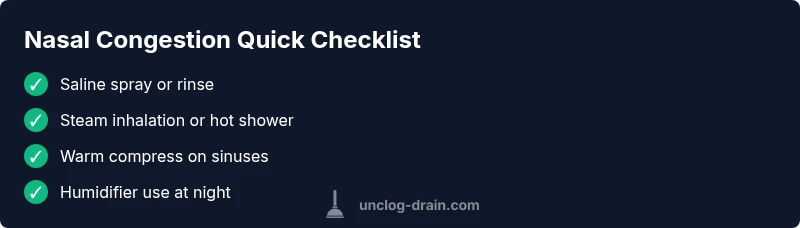
Start with the simplest fixes first. Saline sprays or nasal saline rinses moisten and clear mucus without medications. A steamy shower or breathing in warm, moist air can loosen secretions. A warm compress on the sinuses for 5–10 minutes may improve drainage. Use a humidifier in your bedroom to keep air moist overnight. Hydration supports mucus thinning, and gentle nose blowing in a controlled way prevents irritation. Avoid forcing air or poking around inside the nose, which can worsen inflammation.
When to avoid or limit certain methods
Avoid overusing nasal decongestant sprays or oral decongestants, as dependence or rebound congestion can occur. If you have high blood pressure, heart conditions, or take certain medications, consult a clinician before using decongestants. Essential oils or homemade steam mixtures should be used with caution around children and people with breathing sensitivities. If a method causes dizziness, chest tightness, or severe headaches, stop and seek care.
Diagnostic clues that require professional evaluation
If unilateral congestion persists beyond 10 days, is accompanied by facial pain or swelling, fever over 100.4°F (38°C), or visual disturbances, a clinician should evaluate for sinus infection, nasal polyps, or a deviated septum. A health professional may perform a nasal exam, tastings, or imaging tests if needed. In rare cases, unilateral blockage may signal a more serious issue. Trust your body: if you’re unsure, seek a professional opinion sooner rather than later.
Step-by-step home troubleshooting plan
This middle section expands on practical, safe actions you can take today to relieve unilateral congestion while avoiding common mistakes. The steps are designed to be easy to execute and safe for most adults and older children. If symptoms persist after following these steps, exact guidance from a clinician is advised to rule out underlying problems.
Steps
Estimated time: 25-40 minutes
- 1
Gather safe supplies
Collect saline spray or a squeeze bottle, a clean towel, a warm washcloth, and a humidifier or steam-ready setup. Have water handy to stay hydrated. This prep ensures you can perform each fix safely and effectively.
Tip: Use distilled or boiled water for nasal rinses if you prepare solutions at home. - 2
Perform a saline rinse
Lean over a sink, tilt your head to the side, and gently rinse one nostril with the saline. Repeat on the other side after a brief pause. This helps thin mucus and clear the pathway without irritation.
Tip: Avoid forcing solution too hard; a gentle flow works best. - 3
Breathe steam safely
Take a warm shower or lean over a bowl of hot water with a towel over your head to trap steam. Inhale slowly through the nose for several minutes. Steam helps loosen stubborn mucus and reduce inflammation.
Tip: Keep water temperature comfortable to prevent burns or irritation. - 4
Apply a warm compress
Place a warm, damp cloth over the cheeks and nose for 5–10 minutes. Gentle pressure can ease sinus pressure and improve drainage from the blocked side.
Tip: Do not apply a heat source directly to the skin; test temperature first. - 5
Use a humidifier and hydrate
Run a humidifier in the bedroom at night and drink water regularly. Moist air and fluids thin mucus, making drainage more efficient and keeping nasal passages comfortable.
Tip: Aim for room humidity around 40–60% if possible. - 6
Reassess and decide on next steps
If you notice improvement within 24–48 hours, continue these methods. If there is no improvement, or if fever, facial pain, or breathing difficulty occurs, consult a clinician for a personalized plan.
Tip: Keep a simple symptom log to share with your healthcare provider.
Diagnosis: One nostril won't unclog
Possible Causes
- highNasal cycle causing alternating congestion
- highMild inflammation from allergies or irritants
- mediumDeviated septum or blocked sinus drainage
- lowNasal polyps or infection
Fixes
- easySaline nasal spray or rinse to moisten and clear mucus
- easySteam inhalation or hot shower to loosen mucus
- easyWarm sinus compress for 5-10 minutes to improve drainage
- easyHumidifier use and staying hydrated
- easyBrief use of a clinician-approved nasal spray or decongestant if advised
- mediumSeek medical assessment for persistent symptoms beyond 7–10 days
Common Questions
What is the most common cause of a nose staying blocked on one side?
The most common cause is the nasal cycle combined with mild inflammation from allergies or irritation. Less often, structural issues or infection contribute. If symptoms persist, seek medical advice.
Most unilateral blockage is due to the nasal cycle plus minor inflammation; persistent symptoms deserve professional guidance.
Is it safe to use decongestant sprays for children?
Decongestant sprays are generally not recommended for young children without a doctor's guidance due to potential side effects. Always consult a pediatrician before use.
Don't give decongestant sprays to kids without a doctor’s OK.
Can allergies cause unilateral nasal congestion?
Yes. Allergies can cause swelling on one side depending on irritation and nasal anatomy. Identifying triggers helps prevent recurrence.
Allergies can cause one-sided congestion if a trigger irritates one side more.
How long should home remedies be tried before seeing a clinician?
Try home remedies for 7–10 days. If there’s no improvement, or if fever, severe pain, or breathing difficulty occurs, seek medical care promptly.
Give home remedies about a week; see a clinician if there’s no improvement or danger signs.
Do essential oils help with nasal congestion?
Some people find relief with diluted essential oils, but evidence is limited. Use with caution, especially around children and those with sensitive airways.
Essential oils may help some people, but use them carefully and sparingly.
What if I have facial pain and fever with congestion?
This combination can signal a sinus infection or other condition requiring medical evaluation. Seek care to determine the cause and treatment.
If you have facial pain and fever, see a clinician to check for infection.
Watch Video
Key Points
- Start with simple saline and steam fixes.
- Monitor for red flags that require medical care.
- Hydration and humidity support natural drainage.
- Limit decongestant sprays to avoid rebound effects.