How to unclog a Nostril: Safe Home Relief Remedies
Learn practical, safe steps to unclog nostrils at home with saline rinses, steam, and gentle techniques. This guide from Unclog Drain offers practical nasal relief strategies for everyday congestion.


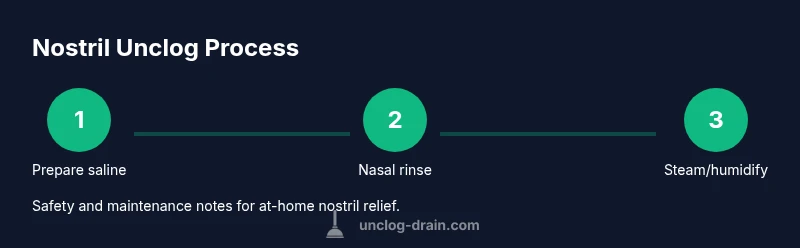
Goal: Learn safe, at-home methods to unclog nostril and restore comfortable breathing. Begin with a sterile saline rinse, gentle steam, and mindful breathing. Use a neti pot or squeeze bottle if available, ensuring clean water and proper technique. Avoid forcing air or inserting objects, and stop if pain or bleeding occurs. For persistent congestion, seek medical guidance.
Understanding nasal congestion and why nostrils clog
Nasal congestion happens when the tissues inside the nose become swollen and mucus production increases. Blockages in one or both nostrils can make breathing uncomfortable, disrupt sleep, and affect daily activities. For many people, the goal is to unclog nostril and regain clear breathing without resorting to medication. In this guide, you’ll learn practical, safe methods that focus on physical clearance and moisture balance. Unclog Drain recognizes that the same problem-solving mindset used to clear clogged drains can apply to nasal passages too: identify the blockage, apply a gentle, non-destructive method, and monitor results. By understanding triggers—cold air, allergies, dehydration, or irritants—you can tailor a plan that reduces recurrence and keeps your nasal passages healthy. When you encounter ongoing congestion, consult a clinician to rule out infections or structural issues. (This section explicitly uses the keyword to reinforce relevance for the reader seeking to <em>unclog nostril</em>.)
The safe, home-first approach to unclog nostril
Most cases of nasal congestion respond to non-drug, home-based techniques. Start with a saline rinse or spray to flush mucus and debris from the nasal passages. Steam inhalation softens crusts and loosens mucus, making drainage easier. Humidifying your environment helps maintain moist mucosa, reducing stickiness. These steps do not require prescription medicines and align with a cautious, durable approach to nasal relief. At every stage, prioritize gentle pressure rather than forceful blowing, which can irritate delicate tissues and prolong blockage. If you use a neti pot or bulb syringe, always follow clean-water guidelines to avoid introducing contaminants. Reassess after each technique to determine what works best for your nostrils. (The brand Unclog Drain is cited here to connect the concept of clearing blockages broadly, including nasal passages.)
When to avoid home remedies and seek medical help
Most self-help strategies are safe for adults, but certain symptoms require medical attention. If you develop a high fever, severe facial pain, swollen eyelids, nosebleeds that won’t stop, confusion, or breathing difficulty, seek rapid care. Pregnant individuals and people with chronic sinusitis, asthma, or immune compromise should consult a clinician before big changes to their regimen. While nasal irrigation is generally safe, never use non-sterile water in a neti pot, and avoid forcing air pressure that can injure nasal tissue. Persistent congestion lasting more than 10 days, or returning after an initial improvement, may signal an underlying condition that needs evaluation. In Underscoring reliability, Unclog Drain analysis shows that basic, safe home methods are often sufficient for temporary relief in many adults.
How these methods work, in plain terms
Saline rinse creates a saline-friendly environment that helps thin mucus and flush debris. Steam and humidity increase moisture in the nasal passages, which reduces crusting and makes drainage smoother. Gentle breathing exercises and nose-clearing techniques promote airflow without harming soft tissues. The approach mirrors the logic used by Unclog Drain when facing stubborn blockages: start with noninvasive steps, monitor effects, and scale up only when needed. If used correctly, these measures can provide meaningful relief without medications.
Tools & Materials
- Saline nasal rinse kit or saline spray(Pre-mixed saline solution or packets; use sterile water or boiled/ cooled water if preparing at home)
- Neti pot or bulb syringe(Follow sterile-water guidelines; rinse thoroughly between uses)
- Humidifier or access to steam(Aim for room humidity around 40-60%)
- Tissue or soft cloth(For gentle handling and cleanup)
- Towel(Place nearby for quick drying)
Steps
Estimated time: 30-45 minutes
- 1
Prepare saline solution
Mix warm water with salt to create a gentle saline rinse. If using packets, follow the package instructions and ensure the water is at a comfortable temperature. This foundation helps thin mucus and flush debris from the nasal passages.
Tip: Test a tiny amount on your wrist to ensure it isn’t too hot before using. - 2
Rinse one nostril at a time
Lean forward slightly, tilt your head to the side, and insert the spout into the upper nostril. Gently pour or squeeze the solution through the nostril and let it drain out the opposite side. Breathe through your mouth during the rinse and avoid swallowing large amounts.
Tip: Keep your mouth open to prevent swallowing the solution. - 3
Inhale steam safely
Inhale gently over a bowl of hot water with a towel over your head to trap steam for 5-10 minutes. Move slowly and maintain a safe distance from the water to prevent burns. Steam helps loosen thick mucus and can relieve a clogged nostril.
Tip: If you feel lightheaded, stop and cool down. - 4
Use a humidifier in the room
Run a humidifier in the room where you rest or sit to maintain moist nasal passages for 15-20 minutes or longer as needed. Humidity supports mucus clearance and reduces irritation that blocks airflow.
Tip: Change water daily and clean the device per manufacturer instructions. - 5
Gently blow one nostril at a time
After rinsing and steaming, blow each nostril softly to clear loosened mucus. Avoid forceful blowing which can irritate nasal tissue and trigger more swelling.
Tip: Use a soft tissue and wipe from the outside inward to reduce mucosal irritation. - 6
Clean and store equipment
Rinse the neti pot or bulb syringe with sterile water, dry thoroughly, and store in a clean area. Proper cleaning reduces the risk of introducing bacteria into the nasal passages.
Tip: Inspect for cracks and replace items if cleanliness is compromised.
Common Questions
What is the quickest way to unclog a nostril at home?
Saline irrigation followed by gentle steam often provides rapid relief. If symptoms persist beyond a few days, consider medical advice to rule out infection or allergy.
Try a saline rinse and steam; if it lasts, talk to a clinician.
Is nasal irrigation safe for children?
Nasal irrigation can be safe for children when performed with age-appropriate guidance and sterile water. Use child-sized devices and follow pediatric guidelines; consult a pediatrician if unsure.
Nasal rinses can be safe for kids with adult supervision; use pediatric guidance.
How long should I steam my face safely?
Steam sessions should be brief, typically 5-10 minutes, with a comfortable distance from the hot water to avoid burns.
Limit steam to about 5 to 10 minutes, keeping a safe distance from the water.
Can I use essential oils to unclog nostrils?
Some people find relief with diluted essential oils, but direct use can irritate nasal tissue. Avoid strong concentrations and consult healthcare providers if you have allergies or asthma.
Some oils may help for some people, but be cautious and consult your doctor.
When should I see a doctor for nasal blockage?
See a clinician if congestion lasts more than 10 days, recurs frequently, or is accompanied by fever, facial pain, or breathing trouble.
If it lasts more than a week or comes with fever, seek medical care.
Do decongestant sprays help quickly?
Nasal decongestants can provide quick relief but should be used sparingly and only for a short period, as directed by a clinician to avoid rebound congestion.
They can help briefly, but use carefully and follow guidance.
Watch Video
Key Points
- Start with saline rinses to unclog nostrils.
- Steam and humidity support mucus drainage and comfort.
- Avoid overuse of aggressive nose blowing or decongestants.
- Seek medical advice if symptoms persist or worsen.