How to Tell If a Clogged Duct Is Gone
Learn how to confirm a clogged duct is truly gone with safe tests, practical steps, and prevention tips from Unclog Drain. Get back to a flowing drain fast.


Most drains are truly clear when water flows freely within 5 seconds, there’s no backflow, and odors are gone after testing. For a reliable check, start with the simplest tests: run hot water for a minute, then optionally use a plunger for small clogs. If water still backs up or stinks, move to deeper diagnostics.
How to tell if clogged duct is gone: practical confirmation steps
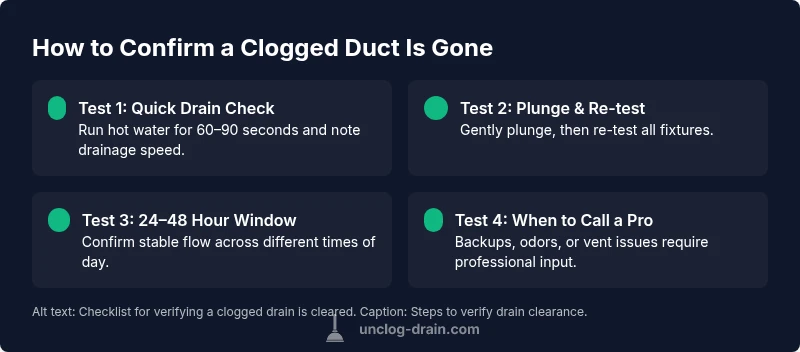
When you’re dealing with a stubborn drain, the key question is how to tell if clogged duct is gone. The most reliable confirmation comes from multiple, repeatable tests that show consistent drainage without backflow or odors. According to Unclog Drain, a truly clear duct demonstrates smooth, predictable drainage, no gurgling, and no recurring backups over a 24–48 hour period after testing. Start with simple checks, then progressively verify under different conditions (hot water, different fixtures, and varied flow). Document each result so you can compare over time and be confident in your fix.
Quick pass/fail tests you can perform today
Begin with the most accessible checks first. Run hot water down the fixture for 60–90 seconds and observe the speed of drainage. If the water clears quickly and stays clear for a while, that’s a positive sign. Then perform a light plunge using a standard plunger to see if a minor residual clog remains. If you don’t observe any backflow or unusual noises, proceed to test another fixture to ensure the issue isn’t isolated to one point. Always perform tests with caution and avoid forcing water down if backups intensify.
Common pitfalls that fool you into thinking the clog is gone
Many DIY attempts create a temporary improvement rather than a lasting fix. A partial blockage, venting issues, or a problem further down the line can masquerade as clearance. Odors can linger even after drainage improves, and a single successful test doesn’t guarantee the entire line is free. If you notice recurring backups after a few hours or the odor returns after a brief improvement, you may be dealing with a more complex problem such as a main line blockage or sewer gas intrusion. In these cases, it’s wise to escalate to a professional assessment.
Deeper verification: when to test again and what to measure
To validate long-term clearance, repeat the tests at different times of day and with multiple fixtures (sink, shower, toilet). Measure drainage speed in seconds, not just whether water flows. Look for consistent performance over 24–48 hours, and monitor for any changes after using cleansing methods or after heavy usage (e.g., morning routines, cooking bursts). If the drain maintains good flow through these cycles, you’re significantly closer to declaring the clog gone. If not, revisit step-by-step fixes or consider professional evaluation.
When to call a professional: safety and thresholds
If you observe persistent backups, fluctuating flow between fixtures, or if you suspect a vent stack issue or main line blockage, stop DIY fixes and contact a licensed plumber. Professional tools, such as inspection cameras and hydro-jetting, may be necessary to determine the true extent of the issue and ensure a permanent fix. Don’t delay if there is sewage odor, standing water, or sewage backup into other areas of the home—these are red flags that require immediate professional attention.
Prevention tips to keep drains clear and ready
Prevention is the best path to long-term drain health. Use drain screens, avoid pouring grease or oil down disposals, and flush drains with hot water regularly. Periodically treat drains with a baking soda and hot water flush, followed by a splash of vinegar, then rinse with hot water. Schedule routine checks for vent issues, especially in multi-story homes, and keep a basic toolkit on hand to address minor clogs promptly before they become bigger problems.
Steps
Estimated time: 45-60 minutes
- 1
Gather tools and prepare the area
Bring a bucket, gloves, plunger, a hand auger, baking soda, vinegar, and a bottle of hot water. Clear the area around the fixture and place a towel to catch splashes. This keeps the work clean and reduces the risk of splashing dirty water.
Tip: Wear eye protection if you’re working with large backups. - 2
Run hot water to test basic flow
Turn on the hot water and let it run for 60–90 seconds. Observe the drainage speed and whether the water backs up or gurgles. A steady, fast flow without backing suggests partial clearance.
Tip: If the hot water isn’t moving, stop and reassess before continuing. - 3
Perform a cautious plunger test
Cover the drain and give a few firm plunges. Listen for consistent suction and a change in flow. If the clog loosens, you’ll hear a pop or feel the water drain more quickly.
Tip: Use a cup plunger rather than a flange plunger for best contact on flat surfaces. - 4
Apply baking soda and hot water flush
Pour ½ cup baking soda into the drain, flush with hot water, and wait 5–10 minutes. Rinse with another round of hot water. This can help clear minor buildups without harsh chemicals.
Tip: Do not mix baking soda with vinegar at the same time; they cancel out each other’s fizz. - 5
Use a hand auger if needed
Insert the auger into the drain and rotate gently to dislodge debris. Retract slowly to bring up obstructions. Repeat until material feels loose and push water improves.
Tip: Do not force the auger aggressively to avoid damaging the pipe. - 6
Re-test across fixtures
Test water flow in the affected fixture and at least one other connected fixture to ensure consistency. If all drains run freely, you’re closer to a confirmed clearance.
Tip: Document the test times for future reference. - 7
Assess the need for professional help
If backups persist, odors linger, or you suspect vent/ main line issues, schedule a professional inspection. A camera crew or hydro-jetting may be required to confirm full clearance.
Tip: Avoid DIY fixes that could cause more damage when the problem is beyond a simple clog. - 8
Adopt prevention habits
Install screens, avoid pouring grease down drains, and flush with hot water monthly to prevent future clogs. A small effort now saves bigger headaches later.
Tip: Keep a maintenance routine to catch problems early.
Diagnosis: Water backup or slow draining after attempting fixes
Possible Causes
- highPartial blockage in the drain line or main line
- mediumVent stack obstruction or sewer gas intrusion
- lowTrap seal dried out or misaligned P-trap
- lowRoot intrusion or pipe collapse further down the line
Fixes
- easyFlush with hot water and baking soda, then observe drainage over several cycles
- easyUse a plunger on the affected fixture to clear residual resistance
- mediumEmploy a hand auger (pipe snake) to reach partial blockages
- hardInspect vent stacks for obstructions or call a professional for main line issues
Common Questions
How long should I wait after a fix to be sure the clog is gone?
Wait at least 24–48 hours and re-test each fixture. If flow remains steady across multiple checks, the clog is likely gone. If backups return, reassess the cause or seek professional help.
Wait one to two days and re-test each fixture; steady flow indicates clearance. If backups return, consider professional help.
What signs indicate a new clog might form soon?
Recurring slow drains after normal use, new gurgling sounds, or odors emerging after initial clearance can signal a developing clog. Monitor and test early.
Watch for slower drainage after use, new gurgling sounds, or smells; these may mean a new clog is forming.
Can a drain still smell after clearing?
Yes, odors can linger if the sewer gas is still venting or if there’s a residual buildup. Re-test with clean water flow and consider odor-specific cleaning methods if the problem persists.
Odors can linger after clearance due to venting or residual buildup. Re-test and address odors if they continue.
Is it safe to reuse chemical drain cleaners after testing?
Avoid relying on chemical cleaners as a cure-all. They can damage pipes over time and may mask deeper problems. If you must use them, do so sparingly and never mix with other cleaners.
Chemical cleaners aren’t a long-term solution. Use them sparingly and avoid mixing chemicals.
When should I call a professional?
Call a licensed plumber if backups persist, you suspect vent issues, or you’ve hit a main line blockage. Professional tools provide a definitive diagnosis and safe resolution.
Call a pro if backups persist or you suspect main line or vent problems.
Watch Video
Key Points
- Confirm clearance with multiple tests over time.
- Rule out vent/main line issues before assuming a fixed clog.
- Use safe, gradual DIY steps before calling a pro.
- Prevent future clogs with screens and routine maintenance.