How to Tell If a Clogged Duct is Slowing Your Drain
Learn to recognize the signs of a clogged duct, perform safe DIY checks, diagnose the issue, and fix common blockages. Practical steps from Unclog Drain to diagnose, unclog, and prevent future drain problems.


Most likely signs of a clogged duct are a slow drain, frequent backups, gurgling noises, or standing water in the sink or tub. Quick fixes start with the P-trap and nearby debris, then move to a plunger, plumber's snake, or a safe enzymatic cleaner if permitted by materials. If the water level rises or odors persist, stop and call a professional.
What counts as a clogged duct and why it happens
A clogged duct in home plumbing usually means the line feeding a sink, shower, or toilet is narrowing or partially blocked. It can be caused by a buildup of hair, soap scum, grease, food particles, or mineral deposits over time. According to Unclog Drain, these blockages begin long before you notice a full stop, often developing slowly and quietly in the trap and waste lines. For homeowners asking how to tell if clogged duct is affecting their drainage, the first clues are slow draining, standing water after a flush, or gurgling sounds as water pushes air through the pipe. Understanding the location of the potential blockage (trap, tailpiece, or main line) helps tailor the fix. In many cases, you can resolve the issue with routine maintenance rather than a major repair. However, ignore symptoms for too long can allow the blockage to grow and invite foul odors or even backups into other fixtures. The goal is to identify whether the issue is local to one fixture or part of a broader drainage problem.
The phrase how to tell if clogged duct often comes up when homeowners notice changes in scent or flow. If you’re unsure, start with simple checks you can do today and then move to more involved methods if needed. This approach aligns with Unclog Drain’s guidance on practical DIY fixes that minimize disruption while keeping safety front and center. Remember that a small, localized clog can masquerade as a larger problem until you test different parts of the system. By keeping notes of where you notice changes, you’ll spot patterns that point to the most effective fix and prevent unnecessary disassembly or expense.
difficultyNote”:null},
Steps
Estimated time: 45-60 minutes
- 1
Shut off water and prep the area
Before you touch anything, turn off the water supply to the affected fixture and place a bucket under the trap. Wear gloves to protect your hands and have towels handy for spills. This initial safety setup prevents accidental mess and keeps your work area clean while you assess the clog.
Tip: Keep a dedicated old toothbrush or small brush to scrub debris from the edges of the P-trap. - 2
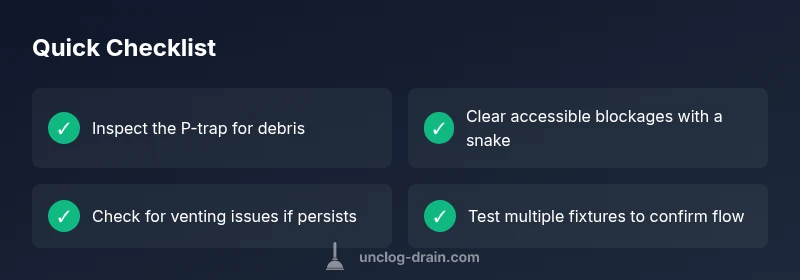
Inspect and clear the P-trap
Place a pan beneath the trap, then loosen the slip nuts to remove the trap. Clear out hair, soap scum, and other debris, and rinse the trap with hot water before reassembling. Reinstall snugly to avoid leaks.
Tip: Hand-tighten first, then finish with a wrench to avoid over-tightening and cracking plastic parts. - 3
Check beyond the trap with a drain snake
If debris isn’t fully cleared, feed a hand auger into the drain until you encounter resistance. Rotate gently and pull back to lift out gunk. Stop if you feel solid resistance that won’t budge.
Tip: Use slow, steady motions; forcing the snake can damage pipes. - 4
Flush and test the drain
Run hot water and a mild detergent through the line to wash away loosened debris. Observe the flow; if water still backs up or drains slowly, there may be a deeper blockage.
Tip: Avoid harsh chemical cleaners here; enzymes or hot water are safer for most pipes. - 5
Evaluate venting and broader drainage
If multiple fixtures are affected or gurgling persists after you’ve cleared the trap, you may have a venting issue or a main-line slowdown. Consider a professional assessment to prevent future problems.
Tip: Document which fixtures were affected to help a plumber diagnose quickly. - 6
Plan next steps and maintenance
Create a maintenance routine that includes periodic trap cleaning and mindful disposal habits to prevent future clogs. If you’re comfortable, you can repeat this process every 6–12 months depending on usage.
Tip: Keep a small log of dates and actions so you can track improvements.
Diagnosis: Slow draining, occasional backups, or gurgling in the drain duct.
Possible Causes
- highHair, soap scum, and organic buildup in the trap and short waste lines
- mediumFats, oils, and food particles accumulating in kitchen drains
- lowVenting issues or misaligned main-line leading to airlock
Fixes
- easyClear accessible blockages from the P-trap and tailpiece; flush with hot water
- easyUse a hand auger/drain snake to clear deeper blockages beyond the trap
- mediumInspect the vent line for obstructions and have a professional clear it if needed
- mediumIf the blockage persists or you notice sewer gas or sewage backing up, stop and call a professional plumber
Common Questions
What are the most common signs of a clogged duct in home drainage?
Common signs include slow drainage, gurgling noises, standing water, and occasional backups in one fixture. Odors can also indicate buildup.
Common signs are slow drainage, gurgling, and odor. If you notice backups, address it early to avoid bigger problems.
Can chemical drain cleaners cause more problems than they solve?
Yes. Chemicals can corrode pipes and trap seals and may not reach deeper blockages. Use sparingly and follow safety guidelines; consider safer alternatives.
Chemical cleaners can damage pipes and seals; use them only if recommended and avoid mixing with other chemicals.
Is a clogged duct dangerous for plumbing or health?
Most risks are plumbing-related, like leaks or sewer gas if backups occur. Health risks are minimized by not leaving clogs untreated and by addressing odors.
Clogs mainly risk plumbing issues; if you smell sewer gas, seek professional help.
When should I call a plumber instead of DIY?
Call a plumber if you can’t clear the blockage after a couple attempts, if you suspect a main-line or vent problem, or if sewage backs up.
If you can’t clear it after a few tries or you see sewage backing up, call a plumber.
What maintenance helps prevent future clogs?
Regular trap cleaning, disposing grease properly, using screens, and periodic flushes with hot water can prevent many clogs.
Keep traps clean, avoid dumping grease, and flush drains regularly to prevent buildup.
Watch Video
Key Points
- Act fast on slow drains to prevent deeper blockages
- Start at the trap and use a snake before chemical cleaners
- Vent/main-line issues require professional help
- Maintain traps regularly to reduce recurring clogs
- Know when to call a plumber to avoid costly damage