Caustic Soda for Drain Cleaning: A Practical DIY Guide
Learn how caustic soda (sodium hydroxide) can clear drains, when to use it, safety steps, and practical alternatives for stubborn clogs. Unclog Drain provides expert DIY guidance for homeowners.


Caustic soda for drain cleaning can dissolve organic clogs in many household drains, but it must be used with strict safety. Check pipe material and codes, ventilate well, wear gloves and goggles, and follow label directions. For toilets or septic systems, or persistent blockages, consult a professional. This guide explains when and how to use caustic soda safely.
What is caustic soda for drain cleaning?
Caustic soda, or sodium hydroxide, is a strong chemical cleaner used to dissolve hair, grease, and soap scum that can accumulate inside drain pipes. In the context of drain cleaning, it provides a chemical method to clear organic blockages without disassembling the piping. The Unclog Drain team emphasizes understanding the product label and the material of your pipes before applying caustic soda. While it can be effective on certain clogs, it is not a universal cure and should be treated as one tool in your DIY toolkit. Always confirm that your drain type and septic system can safely tolerate caustic soda, especially if your home uses PVC or older metal pipes. As with any chemical, follow the manufacturer’s instructions to avoid injuries or damage. The Unclog Drain analysis, 2026, highlights the importance of PPE and ventilation when handling any caustic cleaner.
How caustic soda works in drains
When dissolved in water, caustic soda raises the pH inside the drain, helping break down organic materials like hair and soap scum. This chemical reaction can loosen clogs that are not purely mineral-based. It is most effective for light to moderate buildup in traps, elbows, and horizontal runs where flow is partially blocked by organics. For best results, use a product labeled for household drains and apply it to the affected area, not the entire system. Remember, caustic soda works slowly compared to mechanical methods and may require repeated applications for stubborn blocks. The goal is to soften the clog enough to restore proper flow rather than erode or damage the pipe material.
Safety first: PPE, ventilation, and storage
Handling caustic soda requires careful safety planning. Always wear chemical-resistant gloves, eye protection, and long sleeves. Work in a well-ventilated area to avoid fumes. Keep the area away from children and pets, and never mix caustic soda with acids or other cleaners. Store containers tightly closed in a cool, dry place away from heat sources. If you have a history of chemical sensitivity or respiratory issues, consider alternatives or consult a professional. This section reflects safety considerations emphasized by the Unclog Drain team and aligns with general chemical safety guidelines.
When to avoid caustic soda or choose alternatives
Caustic soda is not appropriate for every clog. Do not use it if your pipes are older metal, corroded, or if you have PVC piping that could be damaged by high pH cleaners. Do not use caustic soda in toilet bowls or septic systems unless explicitly rated for those applications. In many bathrooms, hair and soap scum in traps respond better to mechanical methods or enzyme-based cleaners. For those with frequent clogs or fragile plumbing, safer options like enzyme cleaners, plunger, drain snake, or auger may be preferable. Always start with the least aggressive method and escalate only if necessary. The goal is to minimize chemical exposure while achieving a clear drain.
Preparing, applying, and flushing safely (overview)
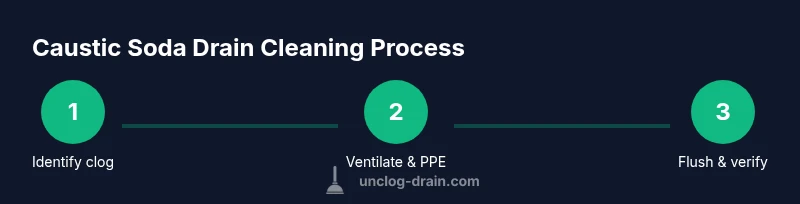
- Read the label thoroughly to confirm dilution and contact time. 2. Put on PPE and ensure good ventilation. 3. Measure the product according to the label and slowly pour it into the drain. 4. Wait the recommended time, typically 15–30 minutes for many household products. 5. Rinse with plenty of cool water, keeping your hands and face away from the stream. 6. Check for flow improvement and repeat only if the manufacturer allows. 7. Clean up and ventilate the area after the treatment. This overview gives you a structured approach while staying within safety guidelines.
Post-cleanup and maintenance
After using caustic soda, flush the system with copious amounts of water to ensure any residual chemical is washed away. Clean the surrounding area and store the container according to the label. Regular maintenance can reduce the likelihood of clogs: use mesh sink strainers, avoid pouring fats or grease down the drain, and rinse drains with hot water periodically. If the drain remains slow or blocked after one treatment, switch to a mechanical method or contact a professional.
Common myths and misconceptions
Myth: Caustic soda will fix all clogs, including mineral buildup. Reality: It mainly targets organic materials and may not clear mineral deposits or solid objects. Myth: It’s safe for all pipes if diluted. Reality: High pH chemicals can stress certain pipe materials and joints. Myth: If it smells strong, it means it’s working. Reality: Fumes indicate chemical exposure risk and require proper PPE and ventilation. Understanding these nuances helps you use caustic soda more responsibly.
Tools & Materials
- Caustic soda (sodium hydroxide) product labeled for drains(Only use products designed for household drainage; check compatibility with your pipe material.)
- Protective gloves(Chemical-resistant; nitrile or neoprene recommended.)
- Goggles or face shield(Protect eyes from splashes.)
- Ventilated area or fan(Minimize inhalation of fumes; never apply in confined spaces without airflow.)
- Measuring cup or ladle(Used to measure recommended quantities; do not guess dilutions.)
- Plastic bucket or container(For pouring the solution and containment in case of spills.)
- Old towels or rags(Guard against spills and drips around the drain area.)
Steps
Estimated time: 30-60 minutes
- 1
Identify the clog type
Assess the blockage (hairy vs. solid) and confirm that caustic soda is a reasonable option for your drain. If the clog is caused by a solid object or mineral buildup, caustic soda may not help and could cause damage. This step reduces unnecessary chemical use and aligns with safe DIY practices.
Tip: If unsure, start with a mechanical method like a plunger to gauge the clog before applying chemicals. - 2
Ventilate and prep the area
Open doors or windows and run a fan to disperse fumes. Put on PPE: gloves, goggles, and a long-sleeve shirt. Clear the area of children and pets and prepare a plan for immediate cleanup if a spill occurs.
Tip: Never perform this step in a small, enclosed space. - 3
Read label directions
Carefully read the product label for dilution ratios, contact time, and any pipe-material cautions. Do not improvise dilution or exposure times; incorrect use can lead to pipe damage or chemical burns.
Tip: Note the wait time before pouring; setting a timer helps ensure you don’t rinse too soon or too late. - 4
Dilute and pour
Add the caustic soda solution to the drain slowly, following the product instructions. Do not add dry chemical directly to water or mix with other cleaners. Pour over the drain edge to minimize splashes toward skin or eyes.
Tip: Always add chemical to water, never water to concentrated caustic solution. - 5
Wait the recommended time
Let the solution sit for the specified contact time. Do not disturb the drain during this period, as agitation can spread fumes and reduce effectiveness.
Tip: Set a timer and stay nearby to monitor for any unusual reactions. - 6
Flush with water
Rinse the drain with a generous amount of cool water while the drain is open. Observe the flow; if water drains slowly, avoid multiple aggressive applications and instead consider mechanical cleaning.
Tip: Use a high-volume stream if your plumbing allows; avoid forcing water through stones or fittings that might loosen with chemical exposure. - 7
Assess results
Recheck the drain after flushing. If there is improvement, you may repeat once more if the label allows. If there’s no improvement, stop and explore safer alternatives or call a professional.
Tip: Overuse can damage seals and joint connections; more isn’t always better. - 8
Clean up and dispose
Dispose of any remaining solution according to the label and rinse tools and surfaces. Store the chemical in its original container, tightly closed, away from heat and children.
Tip: Never store opened diluted solution in a non-labeled container.
Common Questions
Is caustic soda safe for septic systems?
Caustic soda can disrupt septic systems and microbial balance; it’s usually not recommended for septic tanks. If you must, use only products labeled for septic use and follow all safety directions. Consider safer alternatives first.
Caustic soda can upset septic systems, so it’s generally not recommended for septic tanks. If you must use it, choose products labeled for septic use and follow safety directions.
Can I use caustic soda in toilets?
Using caustic soda in toilets is generally not advised due to the risk of porcelain damage and sewer system implications. If a manufacturer explicitly approves toilet use, follow their directions precisely and avoid repeated applications.
Using caustic soda in toilets is usually not advised. Only use it if the product explicitly allows toilet use and follow the directions.
What dilution should I use?
Always use the dilution recommended on the product label. Do not improvise or guess, as improper strength can damage pipes or create hazardous fumes.
Always follow the product label for dilution. Do not guess the strength.
What should I do if someone is exposed to caustic soda?
If contact occurs, rinse skin with generous water for at least 15 minutes and remove contaminated clothing. If it gets into eyes, rinse for 15 minutes and seek urgent medical care if irritation persists.
If someone is exposed, rinse with water for 15 minutes and seek medical help if irritation lasts.
Can I mix caustic soda with other cleaners?
Do not mix caustic soda with acids, bleach, or ammonia-based cleaners. Chemical reactions can release toxic gases and heat.
Do not mix with acids or bleach; dangerous gases can form.
What are safer alternatives for stubborn clogs?
Mechanical methods like plungers or drain snakes, enzyme-based cleaners, and preventive maintenance (filters, hot water flushes) are safer first-line options before considering caustic soda.
Try plungers or drain snakes first, then enzyme cleaners, before resorting to caustic soda.
Watch Video
Key Points
- Assess clog type before using caustic soda.
- Wear PPE and ensure ventilation during use.
- Follow label guidance for dilution and wait times.
- Avoid toilets or septic systems unless explicitly approved.
- Prefer safer alternatives first; contact a pro for stubborn clogs.