How to Unclog a Fountain Pen: A DIY Guide
Learn safe, proven methods to unclog a fountain pen. This guide covers nib and feed care, flushing techniques, gentle soaks, and prevention tips for long-term smooth writing.


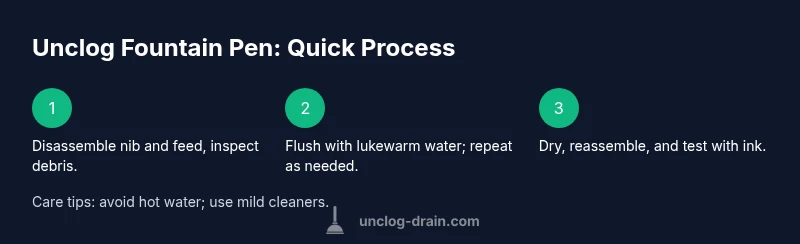
To unclog a fountain pen, start by inspecting the nib and feed, then flush with clean water, soak if needed, and reassemble. Avoid harsh solvents near brass nibs, ink sacs, or adhesives. Dry, test with a few drops of ink on scrap paper, and repeat if flow is uneven. This process prioritizes gentle cleaning and careful reassembly.
What causes the clog in a fountain pen
Clogs in fountain pens typically arise from dried ink, sediment, or deposits that accumulate in the nib channels and feed. Even when you buy a new cartridge, it can happen if the ink isn’t compatible with the feed geometry or if moisture exposure causes crystallization over time. If you are trying to unclog fountain pen, you’ll often see symptoms like intermittent flow, skipping, or sudden stops in ink delivery. Understanding the pen’s anatomy helps you target the right area: nib tines, the feed’s ink channels, and any piston or converter components around the sac. Dried ink can form crusts that obstruct capillary action, while sediment from certain inks can cling to the feed’s microscopic grooves. A methodical, patient cleaning approach—like treating the pen as a tiny plumbing system—tends to be effective without risking damage to delicate parts.
As with drain unclogging, success comes from tracing the path ink takes and maintaining steady, gentle pressure during flushing. Rushing or forcing parts can bend the nib or crack seals. This mindset—calm, measured, and careful—helps preserve performance over the long term and reduces the likelihood of repeat clogs.
Safety first: essential precautions
Before you begin, prepare a safe workspace and review basic precautions. Fountain pen cleaning uses water and mild cleaning solutions; avoid harsh solvents such as acetone or lacquer thinners, which can damage feeds or nib finishes. Protect your eyes and hands with basic safety gear if you’re using any cleaners beyond plain water. Keep solvents away from pets and children, and work in a well-ventilated area. Never apply heat to a pen to speed up flow; hot water, boiling liquids, or warm air can warp components. If your pen uses a fragile ink sac, avoid soaking that part for extended periods. Most clogs respond to gentle flushing rather than aggressive chemical treatment. For reference, the Unclog Drain team emphasizes careful, deliberate steps over quick fixes in all DIY maintenance tasks, and fountain pen care is no exception.
Understanding these safety considerations helps you approach the unclogging process with a clear plan and reduces the risk of accidental damage to your instrument.
The anatomy you need to know: nib, feed, and converter
To effectively unclog a fountain pen, you should know the key components involved in ink flow. The nib is the metal tip that touches paper; it contains tines that must align correctly for even ink delivery. The feed sits behind the nib and channels ink from the reservoir to the nib, using capillary action to regulate flow. Some pens use a cartridge converter system, which stores ink and provides a path to the feed. Deposits can lodge in the nib slit, between tines, or inside the feed’s channels. Recognizing where a clog most likely resides helps you choose the right cleaning method. A calm, informed approach helps you avoid unnecessary disassembly or force, which can damage delicate fittings and void warranties.
How to prepare your workspace and plan the clean
Set up a clean, uncluttered workspace with a shallow tray of water and a soft towel. Gather all tools you’ll need before you start, so you don’t interrupt the process. Lay out the pen in a way that you can observe the nib and feed during the flush without dripping onto surfaces. Decide in advance whether you’ll soak the nib, perform a simple flush, or attempt a more thorough disassembly. Planning reduces the risk of losing small parts and makes the workflow smoother. When you’re ready, ensure you’ve aligned the pen’s cap, nib, and feed so reassembly is straightforward. This step mirrors best practices in DIY drain maintenance: prepare, observe, and proceed with confidence.
Step-by-step approach to unclogging a fountain pen
First, assess whether full disassembly is necessary; many clogs clear with flushing alone. If disassembly is needed, gently separate the nib from the feed and any converter or cartridge assembly. Next, rinse the nib and feed under lukewarm, running water to remove loose ink. If deposits persist, soak the nib and feed in a warm, mild-soap or water solution for several minutes, then rinse again. Use a soft brush or cotton swab to carefully scrub only the exterior surfaces and ink channels that are accessible. Reassemble the components, ensuring a snug but not forced fit, and perform a water test before refilling with ink. If the flow remains inconsistent, repeat the flushing sequence or consider a deeper soak. The goal is to restore a smooth, even ink path without bending or damaging parts.
Pro tip: take photographs during disassembly to guide reassembly and avoid missing small pieces. If you’re unsure about the nib’s alignment, consult the manufacturer’s guidelines for your specific model.
Flushing and soaking methods for stubborn clogs
Flushing is the first line of defense against clogs. Hold the nib under lukewarm water and gently push water through the feed with a bulb syringe or by turning the nib slightly to encourage flow. For stubborn clogs, a brief soak in distilled water (or a very light cleaning solution) can loosen dried deposits. Do not soak for too long, especially if the pen has an ink sac or a resin finish; prolonged exposure can cause swelling, cracking, or loss of seal integrity. After soaking, rinse thoroughly to remove any loosened residue. If the clog is stubborn, a second, shorter soak followed by a careful flush often resolves the issue. Avoid aggressive scrubbing that could scratch the nib or widen the nib slit—gentleness yields better long-term results.
Drying, reassembling, and testing your pen
Dry the nib, feed, and converter components completely with a lint-free cloth or paper towel. Leave parts to air dry for 30–60 minutes to ensure there’s no moisture in hidden channels before reassembly. Reassemble the pen in the reverse order of disassembly, taking care to align the nib and feed correctly. After reassembly, perform a water test to confirm there’s no leakage and that the flow is even. If water flows smoothly, load a small amount of ink and test on scrap paper to confirm there’s no skipping or blob formation. If issues persist, repeat the flushing and soaking steps or consider a professional check. A dry, careful reassembly reduces the risk of leaks and ensures consistent performance.
Maintenance and prevention to keep ink flowing
To minimize future clogs, develop a routine that includes regular flushing of the nib and feed, especially if you use highly pigment-rich or old inks. Rinse the pen after use if you’ve stored it with ink for an extended period, and avoid exposing the nib to solvents or cleaners outside of recommended guidelines. Use only inks compatible with your pen’s feed and avoid mixing ink brands unless the pen’s manufacturer permits it. Periodic inspections of nib alignment, feed channels, and seals help catch issues before they become clogs. The Unclog Drain team emphasizes systematic maintenance as a foundation of reliable performance—this principle translates well to fountain pen care, where consistent, gentle care yields smoother writing and fewer interruptions.
Authority sources and further reading
For additional safety and care guidelines, consider these reputable sources:
- https://pubmed.ncbi.nlm.nih.gov
- https://www.osha.gov
- https://www.fda.gov
Tools & Materials
- Soft microfiber cloth(For drying and gentle polishing)
- Lukewarm distilled water(Preferred for flushing to avoid minerals)
- Small bowl or dish(For soaking small parts)
- Bulb syringe or feeder bulb(One-way flushing of the feed)
- Mild, non-abrasive cleaning solution (optional)(Only if recommended by pen maker)
- Soft brush or cotton swabs(Gentle cleaning without scratching)
- Toothpick or bamboo skewer (optional)(Dislodges stubborn deposits carefully)
- Towel or paper towels(Protect work surface)
- Gloves (optional)(Keep hands clean when using cleaners)
Steps
Estimated time: 45-75 minutes
- 1
Disassemble safely
Remove the cap and, if applicable, detach the cartridge or converter. Gently separate nib and feed; don’t force components. Photograph the setup if you’re unsure about reassembly.
Tip: Photographs streamline reassembly and avoid missing parts. - 2
Inspect components
Check nib for misalignment or bent tines; inspect feed channels for visible deposits; examine the converter or cartridge for cracks. Decide whether flushing alone will suffice or a deeper disassembly is needed.
Tip: Identify the likely clogged area before choosing a method. - 3
Flush with water
Hold nib under lukewarm water or use a bulb syringe to push water through the feed. Observe flow; if it’s blocked, advance to soaking or deeper cleaning.
Tip: Never use hot water on finishes or seals. - 4
Soak stubborn parts
Soak the nib and feed in warm distilled water for several minutes if deposits remain. Rinse thoroughly after soaking.
Tip: Limit soaking time to protect seals and finishes. - 5
Clean exterior and channels
Gently scrub exterior surfaces and accessible channels with a soft brush or swab; do not force into tight crevices. Rinse again to remove loosened residue.
Tip: Avoid applying pressure to the nib slit during scrubbing. - 6
Dry and reassemble
Dry all parts completely before reassembly. Reassemble in reverse order, ensuring correct orientation of nib and feed.
Tip: A dry assembly minimizes leaks and air blocks. - 7
Test writing
Fill with ink and test on scrap paper to confirm smooth flow. If skipping occurs, repeat flushing or soaking as needed.
Tip: Test with a small amount of ink first to avoid waste.
Common Questions
Can I use dish soap to clean a fountain pen?
Dish soap is generally not required; use plain water or a mild, pen-safe solution. If you must use soap, dilute it very lightly and rinse thoroughly to remove any residue. Harsh cleaners can strip finishes or affect seals.
Dish soap can be risky; use water or a mild solution and rinse well. If you must, dilute it and rinse completely.
My nib shows rust; can I save it?
Rust on a nib is serious; it may be salvageable if caught early, but often replacement is safer. Do not attempt aggressive rust removal that could widen the nib slit. If in doubt, consult a professional repair service.
Rust on a nib can be tricky; consider replacement if the corrosion is significant. Avoid aggressive rust removal.
Is hot water safe for cleaning?
Hot water can warp or damage certain nibs and seals, so it’s not generally recommended for fountain pens. Use lukewarm water and gentle flushing instead.
Hot water can damage components; stick to lukewarm water and gentle flushing.
How often should I clean to prevent clogs?
Clean pens that use unique inks or have storage gaps every few weeks, and flush after long storage. For regular use, a light flush monthly helps maintain smooth flow.
Regular, light flushing keeps ink flowing smoothly.
Why does ink skip after cleaning?
Skipping often means residual deposits or misalignment in the nib/feed. Recheck the nib alignment, flush more, or soak briefly and retest with scrap paper.
Skip usually means deposits or misalignment; reflush and test again.
What if the ink sac leaks after reassembly?
Leaks after reassembly can indicate improper seating or a damaged seal. Disassemble again, inspect seals, and reseat components. If the issue persists, seek professional repair.
If it leaks after reassembly, check seals and seating; reseat or seek help if needed.
Watch Video
Key Points
- Inspect before you act to identify clog type
- Flush gently; avoid harsh chemicals
- Dry thoroughly before testing with ink
- Prevent future clogs with regular maintenance