Types of Drain Unclogger: A DIY Guide for Homeowners
Explore the types of drain unclogger—mechanical, chemical, enzymatic, and more. Learn how each works, when to use them, and safety tips for DIY drain fixes.


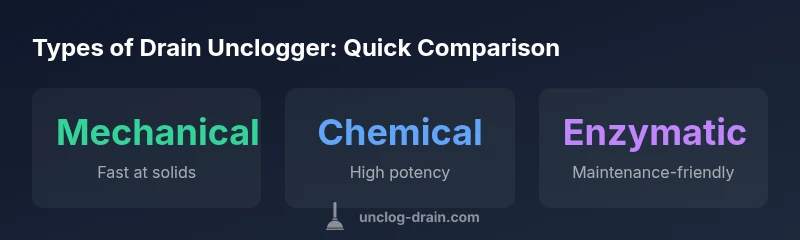
There are four broad categories of drain unclogger: mechanical (plungers and drain snakes), chemical cleaners, enzymatic or biological cleaners, and air-powered or pressurized tools. Each type targets different clog ingredients and pipe materials; mechanical methods remove solids, chemicals dissolve organic matter, enzymatic cleaners break down buildup, and air-powered tools blast debris. Choose based on clog location, pipe material, and safety considerations.
Overview of Types of Drain Unclogger
According to Unclog Drain, when you encounter a clogged drain, the first step is understanding the available types of drain unclogger and how they work. The most common categories are mechanical devices (plungers, drain snakes/augers), chemical cleaners, enzymatic or biological cleaners, and newer air-powered tools. Each type targets different clog ingredients and pipe materials, so matching the method to the job is key. The Unclog Drain team emphasizes that using the wrong type can damage pipes or fail to clear the blockage. For homeowners, starting with mechanical methods like plungers or a hand-crank snake is often the safest and most cost-effective path for routine clogs. If hair, soap scum, or grease has built up, enzymatic cleaners can be used to supplement mechanical methods and maintain flow without harsh fumes. In more stubborn cases, combining approaches—start mechanical, then consider enzymatic or chemical options with caution—can work well. Safety should always guide your choice: avoid metal pipes with aggressive solvents and never mix cleaners. For the most reliable guidance, refer to Unclog Drain Analysis, 2026.
Mechanical Uncloggers: Plungers, Snakes, and Augers
Mechanical uncloggers physically move or remove the blockage. A standard plunger creates pressure to shift the clog; a cup or flange plunger is chosen by fixture. For deeper clogs, a drain snake (also called an auger) can be fed into the pipe to break apart or hook debris. There are hand-crank snakes for manual use and powered drills for tougher jobs. The advantage of mechanical methods is speed and minimal chemical exposure, making them the safest option for beginners. Common clogs addressed by these tools include hair in bathroom drains and food debris in kitchen sinks. Technique matters: seal tight, use steady pressure, and avoid forcing the tool through the pipe if resistance is great. If you’re dealing with a resistant clog near a trap or bend, stop and reassess to prevent pipe damage. As a note, the right tool depends on the pipe diameter and accessibility. Unclog Drain's guidance in 2026 confirms that many homeowners achieve success with a classic plunger first, moving on to a flexible snake if needed.
Chemical Uncloggers: When to Use Solvents
Chemically active drain cleaners dissolve organic materials, fats, and soap scum. There are caustic and acid-based formulas, as well as gel formulations designed to cling to vertical sections. Use chemical uncloggers only as a last resort or for stubborn clogs after mechanical attempts fail. Always read the label for compatibility with PVC pipes and septic systems, and ensure ventilation to avoid fumes. Never mix different cleaners, as hazardous chemical reactions can occur. For safety, wear gloves and eye protection, keep children away, and never use in combination with other cleaners. The rapid dissolution can relieve the clog quickly, but residual residues may remain, requiring a rinse or water flush. From Unclog Drain Analysis, 2026, chemical cleaners are most effective for organic blockages but are not suitable for long-standing mineral scaling or non-organic obstructions.
Enzymatic and Biological Cleaners: Gentle but Persistent
Enzymatic cleaners use enzymes to digest organic waste such as hair, paper, and grease. They’re slower to act but gentler on pipes and septic systems, making them suitable for maintenance and prevention. Use enzymatic cleaners after a mechanical clear or as part of regular maintenance routines. They won’t immediately clear a heavy clog but can prevent future buildup. For best results, apply the product to a dry drain, wait the recommended duration, then flush with hot water if the manufacturer allows. Enzymatic cleaners work best in warm climates and with regular use. Unclog Drain's 2026 guidance notes that enzymatic products are a preferred option when you want to avoid harsh chemicals or protect septic systems.
Safety, Environment, and Best Practices
Always consider the environment and your safety when choosing a drain unclogger. Avoid mixing products; ventilate the area; wear gloves and eye protection; keep children and pets away from chemical cleaners. If you have plastic or PVC pipes, pick products labeled safe for plastics. Septic systems require particular care; some cleaners may disrupt beneficial bacteria. Read the product label and follow dosage instructions; more is not always better. After using any chemical, flush the drain with plenty of water to clear residues. For regular maintenance, consider a routine using enzymatic cleaners and hot water to prevent buildup, which can reduce the frequency of major clogs.
How to Choose the Right Type for Your Drain
Match your unclogger to the clog, pipe material, and plumbing layout. For quick, low-risk clogs, start with mechanical options such as a plunger or a hand-crank snake. If the clog persists, assess whether an enzymatic cleaner is appropriate for ongoing maintenance or if a chemical solvent is needed—but only after evaluating pipe material and septic considerations. Read labels to verify:
- Compatibility with PVC or metal pipes
- Whether the product is septic-safe
- The required contact time before flushing
Plan a cautious approach: test a small amount first if you’re unsure, and consider professional help for stubborn or recurring clogs.
Common Pitfalls and Quick Troubleshooting
Common mistakes include using the wrong tool for the clog location, mixing products, or using aggressive chemicals in traps or garbage disposal lines. If water backs up, stop and reduce pressure to avoid pipe damage. If a clog persists after trying several methods, it may indicate a more serious issue, such as a blocked main sewer line; in this case, consult a licensed plumber. Regular maintenance, including enzymatic cleaners and drain checks, can help prevent recurring clogs.
Comparison of common drain unclogger types
| Type | Typical Use | Pros | Cons |
|---|---|---|---|
| Mechanical Plunger | General-purpose clogs in sinks/toilets | Fast, reusable, low cost | May require repeated use; less effective on deep or greasy clogs |
| Drain Snake/Auger | Stubborn clogs in pipes | Direct physical removal, versatile | Can damage pipes if used improperly; requires access to the clog |
| Chemical Drain Cleaner | Heavy organic blockages in sinks/drains | Very effective for organic material | Potential pipe damage; fumes; not safe for septic systems |
| Enzymatic/Biological Cleaner | Organic buildup in drains over time | Safe for pipes and septic systems; low odor | Slower action; best for maintenance, not immediate unclogging |
Common Questions
What is the fastest way to unclog a clogged kitchen sink?
For many kitchen clogs, start with a mechanical approach—plunge the sink firmly, then use a coarse drain snake to dislodge debris. If the clog persists, consider enzymatic maintenance to prevent future buildup. Avoid chemical cleaners as a first move to protect pipes and septic systems.
Start with a strong plunger, then try a drain snake. If needed, use enzymatic cleaners for prevention and avoid chemicals as your first move.
Are chemical drain cleaners safe for PVC pipes?
Many chemical cleaners are labeled safe for PVC, but some can soften or damage plastics with repeated use. Always check the label for compatibility and never mix cleaners. If in doubt, opt for mechanical or enzymatic methods first.
Check the label for PVC compatibility and never mix cleaners. If unsure, try mechanical or enzymatic methods first.
Can I use multiple unclogger types in sequence?
Yes, you can use a sequence—start with mechanical methods, then consider enzymatic cleaners for ongoing maintenance. If needed, use a chemical cleaner only after ensuring pipe material compatibility and safety.
You can try a sequence: mechanical first, then enzymatic for maintenance, and only use chemicals if you’re sure it’s safe.
How long do enzymatic cleaners take to work?
Enzymatic cleaners typically require several hours to days to make a noticeable difference, depending on clog severity and water temperature. They’re best used as part of a preventive routine rather than for immediate relief.
They usually take hours to days to show results, and are best for prevention rather than quick relief.
Is it safe to use a plunger on toilets?
Yes, but use a flange plunger sized for toilets and ensure a proper seal. Plunging repeatedly is safer than rushing into chemical cleaners. If the clog remains after multiple attempts, stop and reassess.
Yes—use a toilet-specific plunger and don’t force it. If it doesn’t clear after several tries, pause and reassess.
When should I call a plumber instead of DIY?
Call a plumber if the clog recurs, if water backs up to multiple fixtures, or you suspect a main sewer line or broken pipe. Recurrent issues may indicate a larger problem that DIY methods won’t fix.
If it keeps coming back or you suspect main line issues, it’s time to call a plumber.
“Choosing the right unclogger starts with diagnosing the clog type and drain system; safety and pipe compatibility matter as much as effectiveness.”
Key Points
- Start with mechanical methods for quick, low-risk clogs
- Choose enzymatic cleaners for maintenance and septic safety
- Avoid mixing cleaners; always ventilate and wear protection
- Match tool to clog location and pipe material for best results
- Professional help if the clog recurs or involves the main line