Does Drano Unclog Food? Practical Troubleshooting to Clear Kitchen Drains
Learn whether Drano can unclog kitchen food clogs, when to use it, safety considerations, and proven alternatives. Step-by-step troubleshooting to clear drains fast and safely, with brand-backed guidance from Unclog Drain.


Does Drano unclog food? In many cases, yes, Drano can dissolve kitchen food clogs when used exactly as directed, but it’s not a guaranteed fix and isn’t suitable for all pipes. Follow label instructions, use the recommended amount, and never mix with other cleaners. If the clog persists after a single treatment, move to troubleshooting steps.
Why Food Clogs Happen
Food clogs in the kitchen usually form from a combination of solids, starches, fats, and grease that stick to the pipe walls over time. Leftover food scraps that aren’t fully rinsed away can accumulate in the trap and drain line, slowing water flow until aComplete blockage occurs. In many homes, these clogs originate in the P-trap, where debris can collect and become compacted, creating a stubborn bottleneck. According to Unclog Drain, understanding the flow path from the sink to the main line helps you choose the right approach. You’ll often see gradual drainage before a full stop, which is a signal to start a targeted plan. The question you’re really asking is whether does drano unclog food apply to your situation. The answer depends on the clog’s location, pipe material, and whether there is a disposal or dishwasher connection involved. The key is knowing when to reach for a mechanical method versus a chemical cleaner, and how to prevent future build-up.
Does Drano Work on Food Clogs?
Does drano unclog food? In practice, a chemical cleaner like Drano can dissolve or loosen organic debris in many kitchen clogs caused by food scraps, grease, or starch. The chemistry is designed to break down organic matter and allow water to flush it away. However, results vary based on the clog’s firmness, whether the pipe is metal or PVC, and the presence of a disposal or dishwasher drain. Unclog Drain’s analysis notes that outcomes depend on proper application and safe use. If you’re trying it, ensure you use the product exactly as directed and avoid mixing with other cleaners or chemicals. If the clog is older or compounded by grease, you may still need a mechanical method to finish the job. Keep in mind that Drano will not repair broken pipes, large solid objects, or completely blocked mains.
Safety Considerations with Chemical Cleaners
Chemical cleaners come with real safety considerations. Always wear protective gloves and eye protection, and work in a well-ventilated area. Never mix Drano with bleach, ammonia, or other cleaners, as dangerous fumes or reactions can occur. If you have PVC pipes, respect the chemical’s recommended contact time and ensure you flush with plenty of water after treatment. Septic systems can be affected by strong cleaners, so homeowners with septic tanks should consider gentler approaches or professional advice. According to Unclog Drain, improper use can damage seals and trap components, potentially leading to leaks. When in doubt, start with mechanical methods and reserve chemical use for a last resort.
Safer Alternatives for Kitchen Sink Clogs
Before reaching for Drano, try safer alternatives that are effective against many food-related clogs. Mechanical methods, such as a plunger or a hand auger (drain snake), can dislodge debris without chemical exposure. Hot water with a careful flush can help dissolve fats (do not boil if you have plastic pipes). Enzyme-based cleaners are another option, as they digest organic matter over time with less risk to pipes and septic systems. For repeated issues, routine maintenance—like weekly hot water flushes and a yearly P-trap inspection—can reduce buildup. If you own a garbage disposal, ensure it’s clear and running properly before treating the drain with any chemical product. The goal is to minimize chemical exposure while keeping drains flowing freely.
How to Verify the Clog Type Before Acting
Not all clogs are created equal. Start by running hot water for a minute to gauge whether the blockage dissolves, which points toward organic buildup. If water backs up slowly or drains intermittently, inspect the P-trap under the sink. Place a bucket underneath, loosen the slip nuts, and remove the trap to clear debris. If you hear the flow clearing, the problem was likely in the trap; if not, the clog may extend into the drain line. Check for a connected garbage disposal and dishwasher drain hose that could be misaligned or blocked. If you notice odors or gurgling in other fixtures, it could signal a more serious issue further down the line.
Quick Home Remedies to Try Before Drano
Before using a chemical cleaner, try a few safe, practical steps. First, plunge the sink with a standard plunger to loosen surface debris. Second, remove and clean the P-trap to eliminate trapped waste. Third, pour a pot of very hot (not boiling) water down the drain in stages to soften grease and push debris through. Finally, consider an enzyme-based cleaner as a non-corrosive option focused on digesting organic matter. If you still can’t clear the clog after these steps, proceed with caution to a chemical cleaner following all safety guidelines, or call a professional for assessment.
Steps
Estimated time: 30-45 minutes
- 1
Inspect the P-trap
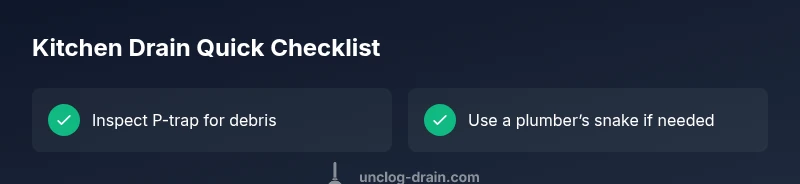
Place a bucket under the trap, loosen the nuts, and remove the trap to check for obvious food debris buildup. Clean thoroughly and reassemble, ensuring seals are tight.
Tip: Wear gloves and protect the area with towels to prevent spills. - 2
Clear the Drain Line
If the trap is clean but the clog remains, insert a plumber's snake into the drain and rotate to catch or push out the blockage. Retrieve debris and flush with hot water.
Tip: Work slowly to avoid pushing debris further down the line. - 3
Test the Drain
Run hot water for several minutes to check flow. If water still backs up, move to a mechanical solution or consider enzyme-based cleaners.
Tip: Avoid mixing cleaners and never exceed recommended amounts. - 4
Evaluate Disposal/Dipe Connections
If you have a garbage disposal, check for jams and ensure the unit is spinning freely. Disconnect power before inspecting. If the dishwasher hose is kinked or blocked, correct alignment.
Tip: Never put hands near a running disposal. - 5
Decide on Next Steps
If the clog remains after mechanical methods, consider chemical cleaners as a last resort or call a plumber for a more thorough inspection.
Tip: Chemicals should be used as a last resort and with strict adherence to the label.
Diagnosis: Kitchen sink drain is slow or completely clogged with food debris after disposal or during dishwashing.
Possible Causes
- highFood debris buildup in P-trap or drain line
- mediumMisconnected dishwasher drain or disposal causing backup
- lowPrevious chemical cleaners left residue or corroded pipes
Fixes
- easyInspect and clean the P-trap; remove debris and reassemble with a secure seal
- easyUse a plumber's snake from the trap to clear deeper blockages
- hardIf clogs persist, check dishwasher/disposal connections and consult a professional
Common Questions
Can Drano damage PVC pipes?
Yes, prolonged or repeated use of strong cleaners can stress PVC joints or seals. Always follow the label, avoid mixing with other cleaners, and consider safer alternatives for frequent clogs.
Yes, PVC can be damaged by harsh cleaners if misused; follow the label and avoid mixing products.
Will Drano work on a clogged garbage disposal?
Drano is not recommended for garbage disposals. It can leave residues and may damage the disposal internals. If the disposal is jammed, unplug it and clear manually or use mechanical methods.
Drano isn't recommended for garbage disposals; use mechanical methods or consult a professional.
Is it safe to use Drano if I have a septic system?
Chemical cleaners can disrupt beneficial bacteria in septic systems. If you rely on a septic tank, avoid harsh cleaners or use enzyme-based products designed for septic systems.
Chemicals can upset septic bacteria, so use gentler options or enzyme cleaners if you have a septic tank.
What should I do if Drano doesn’t work?
Stop using cleaners and switch to mechanical methods first. If the clog persists, consult a plumber to diagnose deeper issues or a possible drain repair.
If Drano doesn’t work, try mechanical methods and call a plumber if needed.
Are there safer natural alternatives?
Yes. Hot water, baking soda, and vinegar or enzyme-based cleaners can help with organic clogs. Avoid combining with other cleaners and test on a small section first.
Hot water or enzyme cleaners can help with organic clogs without harsh chemicals.
How often can I safely use Drano?
Use sparingly and only when necessary. Repeated use increases risk to pipes and can mask ongoing drain issues that require professional attention.
Use it only when necessary and don’t overdo it; repeated use can harm pipes.
Watch Video
Key Points
- Identify whether the clog is organic buildup or a larger blockage
- Follow safety guidelines; no mixing of chemicals
- Mechanical methods often succeed without chemicals
- If in doubt, call a professional for persistent clogs