If Drano Doesn’t Work: Practical Troubleshooting for Clogged Drains
When Drano doesn’t work, learn safe, practical steps to unclog drains fast. From plungers to snakes, Unclog Drain guides homeowners to clear, safe fixes and prevention.


When Drano doesn’t work, the most likely cause is a stubborn clog that chemicals alone can’t clear. Begin with a quick assessment, then use a plunger, followed by a hand auger if needed, and inspect the P-trap. If the clog remains or you detect sewage, stop and call a licensed plumber.
Why Drano Fails and What to Do Next
According to Unclog Drain, many household clogs resist chemical cleaners because the blockage is deeper in the drain line or formed by a combination of hair, soap scum, and grease. If drano doesn t work, don’t assume the clog is unbeatable. Instead, move to a mechanical approach that clears the path rather than just dissolving it. The first step is a quick safety check: ensure you’re using the product as directed, keep the area well-ventilated, and wear gloves. A common mistake is mixing cleaners or using too much product, which can cause fumes or damage to pipes. By treating the problem like a puzzle with progressive steps, you’ll increase your odds of success without risking your plumbing or your health. Unclog Drain emphasizes that most home clogs respond to physical methods first, with restricted chemical use to avoid buildup and residue that can worsen future clogs.
Key takeaway: if drano doesn t work, evaluate the clog’s location, then proceed with non-chemical methods before reintroducing cleaners. This approach minimizes risk and often resolves the problem faster than a repeat chemical dose.
Quick Assessment: Is It a Sink, Toilet, or Main Line Clog?
Not all blockages are the same. A sink or shower drain typically backs up first, while a toilet or main line clog may show slower drainage across fixtures. Start by observing which fixtures are affected and whether the water backs up, drains slowly, or gurgles. Look for a consistent pattern: if multiple fixtures are slow, the clog could be deeper in the main line or a venting issue. According to Unclog Drain, identifying the scope of the problem helps you decide between home remedies and professional service. If you’re unsure, begin with the easiest fix for one fixture to gauge how the system responds. Remember: never force water down a vent or overflow a blocked line; this can push waste into other areas and create a mess.
Checklist: determine affected fixtures, note whether water backs up, and observe any strange odors or noises. These signs guide your next moves and help you explain the situation when you contact a pro.
Start with the Easiest Fix: Hot Water Flush and Mechanical Tools
A simple hot water flush often loosens light buildup and can revive slow-draining drains. Pour a generous pot of near-boiling water (not boiling to avoid plastic damage) down the drain in stages, allowing time between pours for the heat to work. Follow with a natural clarifier such as baking soda and vinegar if desired, but avoid mixing with a chemical cleaner already in the pipe. If the drain remains slow, don’t pressurizedly force more chemical cleaners. The next move is a mechanical method: a plunger or a hand auger. These tools physically dislodge the clog. If you’re dealing with a bathroom sink or tub, ensure the stopper is removed to allow full access to the drain. This approach aligns with Unclog Drain’s guidance to prioritize mechanical clearing over repeated chemical doses when addressing stubborn clogs.
Tip: let the hot water sit a moment after pouring before trying the next step; the heat helps soften the blockage for easier removal.
How to Use a Plunger Effectively
A proper plunger technique can clear many shallow clogs without tools or cleaners. For sinks, cover the overflow with a damp rag to maintain suction. For toilets, ensure there’s enough water to cover the plunger bell and create a strong seal. Plunge with firm, controlled thrusts, keeping the rubber cup fully sealed. If the water doesn’t rise initially, add more water to submerge the cup. After several cycles, check whether drainage improves. If you see results, run hot water to rinse debris away. If the plunger fails, move to the hand auger. Throughout, avoid using chemical cleaners in tandem with plunging, which can trap gases and create safety hazards.
Pro tip: use a flange plunger for toilets and a cup plunger for sinks to maximize suction.
Hand Auger / Toilet Auger Techniques
A hand auger (drain snake) is a flexible tool that can reach deeper into pipes where clogs hide. For a sink, feed the auger slowly into the drain, rotating as you push, until you feel resistance release. Gently pull back on the auger to remove debris, then flush with hot water to clear residue. When dealing with toilets, insert the auger into the toilet drain and turn the handle; avoid using excessive force to prevent damaging the porcelain. Clean the auger head after each use to prevent spreading debris to other fixtures. If you must take apart the P-trap to remove hair and gunk, do so with proper gloves and a bucket beneath to catch water.
Tip: start with a few inches of accessibility, then work deeper as you sense the clog yielding. This reduces the risk of forcing more blockage through the system.
When Drano Isn’t Enough: Sewer Gas, Backups, and Mainline Blockages
If the blockage persists despite mechanical clearing, the clog may be beyond the trap or in the main line. Avoid repeated chemical doses; these can trap gases and cause hazards. Sewage backups are a clear sign to stop DIY attempts and seek professional service. A licensed plumber has access to professional-grade augers, cameras, and controlled cleaning methods that can safely diagnose and clear deep blockages without damaging pipes. If there is a strong sewer odor, standing water, or repeated backups across fixtures, resist the urge to “flush it out” with more cleaner and call for support. Unclog Drain recommends scheduling a professional evaluation when home remedies fail to restore proper drainage.
Safety note: never attempt to enter underground cleanouts or access panels without the right tools and training. These systems can be compromised if mishandled.
When backflow occurs or you notice contamination, do not use the affected drains until a plumber inspects the line.
Safety First: Precautions and Common Mistakes
Before starting any DIY unclogging routine, prioritize safety. Wear gloves, eye protection, and avoid mixing chemical cleaners, which can release toxic fumes or cause pipe damage. Always vent the area and never seal a drain with a blockage without ensuring safe access. Common mistakes include using excessive quantities of cleaner, ignoring warnings on product labels, and attempting to plunge vigorously after applying a chemical agent. Unclog Drain emphasizes checking the product label for compatibility with your pipe material and the presence of septic systems. If you’re unsure about the pipe type or vent condition, pause and consult a professional.
Also, remember that some clogs are caused by items that should not be flushed or poured down drains (grease, fibrous foods, baby wipes). Practicing careful disposal habits now saves future headaches.
Tip: document what you tried and in what order to inform a plumber if you call for support.
Maintenance to Prevent Future Clogs
Prevention is simpler than cure. Establish a routine: run hot water after using oil-heavy foods and before bed to keep grease moving; use a drain screen to catch hair and debris; periodically flush traps with hot water and a mild cleaning solution that’s compatible with your plumbing. Regularly inspect exposed pipes for leaks and test venting by listening for gurgling sounds in fixtures. If you notice recurring slow drains, address the underlying cause with a more thorough cleaning or professional evaluation. Unclog Drain recommends a quarterly check of traps and a yearly drain-line assessment, especially in homes with older plumbing.
Tip: combine physical cleaning with a simple chemical-free maintenance routine to reduce buildup.
Quick Troubleshooting Flowchart for Do-It-Yourselfers
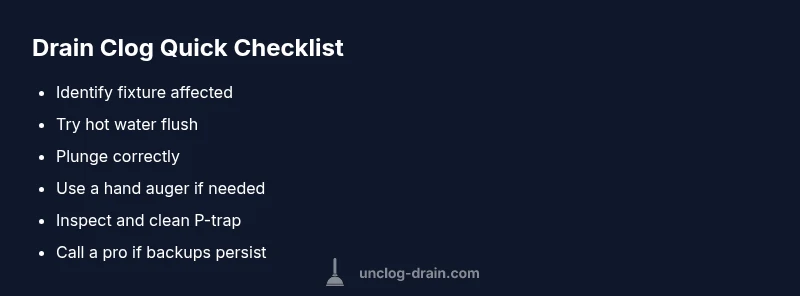
- Start: Drano unsuccessful? Confirm the fixture and the type of clog.
- Step 1: Use hot water flush (careful with temperatures and materials).
- Step 2: Try the plunger; seal and plunge correctly.
- Step 3: Use a hand auger if plunging fails.
- Step 4: Inspect and clean the P-trap; re-test drainage.
- Step 5: If no improvement, stop DIY and call a plumber.
This flow keeps you safe and provides a clear path toward resolution. The Unclog Drain approach prioritizes safety and mechanical clearing first, then professional help when necessary.
Steps
Estimated time: 60-90 minutes
- 1
Assess safety and gather tools
Put on gloves, goggles, and work clothes. Gather a plunger, hand auger, bucket, towels, and a wrench for trap removal. Check product labels to avoid hazardous mixes and plan your sequence before you start.
Tip: Safety first: never mix cleaners and ventilate the area. - 2
Shut off water and inspect the area
Turn off the water supply to the affected fixture to prevent overflow. Remove visible standing water with towels. Look for signs of leakage or backflow that might indicate a major clog.
Tip: Have a bucket ready for water and debris. - 3
Try a hot water flush
Pour near-boiling water in stages (do not use boiling water on plastic pipes). This helps soften grease and soap scum. After flushing, wait a few minutes to observe drainage before proceeding.
Tip: If the water backs up, move to mechanical methods rather than adding more cleaner. - 4
Use the plunger correctly
Seal the drain and use firm, controlled strokes. For sinks, block the overflow to increase suction; for toilets, ensure a tight seal around the toilet flange. Check for drainage improvement after several cycles.
Tip: A proper seal is the key to effective plunging. - 5
Operate the hand auger
Insert the auger, rotate while advancing slowly, and pull back to bring up debris. Repeat until you feel clearance, then flush with hot water.
Tip: Work slowly to avoid damaging pipes. - 6
Inspect and clean the P-trap
Place a bucket beneath the trap, loosen connectors, and remove blockages. Clean thoroughly, reassemble securely, and run water to test drainage.
Tip: Rinse debris into the bucket to prevent spreading. - 7
Evaluate the results
If drainage returns to normal, you’ve solved the clog. If not, consider repeating steps or moving to professional help.
Tip: Document what you tried for the plumber. - 8
Know when to call a pro
Backups, sewage odors, or repeated clogs indicate deeper issues that DIY cannot safely fix. A licensed plumber can diagnose with camera inspection and professional equipment.
Tip: Prompt professional support can prevent further damage.
Diagnosis: Drain is slow or blocked after attempting Drano
Possible Causes
- highHair, soap scum, and grease buildup in drain trap or pipes
- mediumBlockage in P-trap or sewer line
- lowVent pipe obstruction causing poor drainage
Fixes
- easyRemove the P-trap and clear hair/debris, then reassemble securely
- mediumUse a hand auger to break up deep clogs and pull debris out
- hardIf backups persist or sewer gas is detected, call a licensed plumber
Common Questions
What should I do first if Drano doesn’t work?
First, reassess the clog type and fixture. Try a mechanical method like plunging, then a hand auger if needed. Avoid repeated chemical doses if the blockage persists.
First, reassess the clog and start with plunging, then try a hand auger if needed.
Can I safely mix Drano with other cleaners?
No. Mixing cleaners can create dangerous fumes and pipe damage. If one cleaner doesn’t work, stop and try mechanical methods or seek professional help.
No, don’t mix cleaners. If one doesn’t work, switch to mechanical methods or call a pro.
Is a clogged drain dangerous?
A clogged drain can lead to sewage backups and health hazards. If you smell sewage or see pooling water, stop DIY fixes and contact a plumber.
Yes, it can be dangerous. Stop DIY if you smell sewage and call a plumber.
How long should I wait after using Drano before trying other methods?
If you’ve used Drano, wait the product’s recommended dwell time only. Do not flood the drain with more cleaner; instead switch to mechanical methods if it doesn’t clear.
Wait the product’s recommended time, then switch to plungers or augers if it doesn’t clear.
When should I call a plumber?
Call a plumber if backups persist after using mechanical methods, if you notice sewage odors, or if multiple fixtures are affected. They can diagnose with camera inspection and resolve deeper clogs safely.
Call a plumber if backups persist or you smell sewage; they can diagnose and fix deeper issues.
Watch Video
Key Points
- Start with mechanical methods before chemicals to protect pipes.
- Identify whether the clog is local or in the main line.
- Use a P-trap inspection to remove obvious debris.
- If backups persist, call a licensed plumber promptly.
- Prevent future clogs with routine maintenance and screens.