Why Drano Fails to Unclog Your Sink: Troubleshoot
Struggling with a stubborn sink clog? Learn why why is drano not unclogging my sink may happen, plus practical fixes, step-by-step guidance, and safety tips from Unclog Drain to get water flowing fast.


Most likely cause is a deep or stubborn clog that Drano can’t reach, or a blockage formed by solid objects in the drain. Quick fix: start with a plunger, then use a hand-crank snake to clear the trap and pipes, followed by a hot-water flush. If it still won’t drain, stop using chemical cleaners and consider professional help.
Understanding the problem and the keyword at hand
When homeowners ask, "why is drano not unclogging my sink," the answer often points to clog depth, material type, and the limits of chemical cleaners. Drano and similar products can help with light to moderate buildup, but many sinks face blockages beyond the reach of a chemical agent. The Unclog Drain team notes that while these products can offer a quick relief, they are not a guaranteed fix for every clog. In some cases, mineral buildup, grease, or a foreign object create a barrier that chemicals alone cannot dissolve. For best results, combine mechanical methods with chemical cleaners when appropriate, and always follow label directions to avoid hazards. This approach aligns with Unclog Drain Analysis, 2026, which emphasizes diagnosing the right type of clog before selecting a fix.
Common causes that block sinks and resist Drano
Many people assume Drano will magically dissolve any clog, but several real-world culprits often defeat chemical approaches. Organic material such as hair and soap scum can bind to minerals, forming a solid mass that’s difficult to shift chemically. A blocked P-trap or a partially obstructed vent can also mimic a chemical clog while requiring different tools to fix. In some homes, tree roots invade the municipal line, creating heavy pressure and backflow that no household cleaner can solve. Understanding these causes helps homeowners choose the correct next step and prevents ongoing damage to pipes.
The role of pipe geometry and sewer dynamics
Drano works best when the clog is near the outlet and not wrapped around bends or inside the vertical portions of the drain. If a clog sits past the trap arm or inside a vertical stack, chemical cleaners may fail to reach it. The water in the trap is a diagnostic clue: water-backed pipes, unusual gurgling, or repeated slow draining often indicate a blockage beyond the trap seal. In these cases, mechanical methods like plunging, snaking, and manual cleaning become more effective than chemical treatments, especially when the clog is heavy or hardened.
Safe checks you can perform at home (non-destructive)
Start with basic, safe checks before escalating to aggressive tools. Remove the trap under the sink using a bucket and a wrench to inspect for clogs in the U-shaped pipe. If you see debris, clean it out and reassemble with a tight seal. Run hot water down the drain to loosen soft buildup, but avoid boiling water in PVC pipes to prevent damage. Use a plunger with a steady seal and firm push-pull action to dislodge the blockage. If these steps don’t resolve the issue, it may indicate a deeper clog or non-plumbing obstruction.
When to switch from Drano to mechanical fixes
If the clog persists after a safe, thorough flush, it’s time to employ a mechanical remedy such as a hand auger or plumber’s snake. These tools physically break up or grab the blockage, allowing it to be pulled out or pushed through. Use slow, steady turns and retract to remove debris as you go. For stubborn clogs, you may need to repeat the process several times. Always wear gloves and eye protection when operating augers to reduce splash risk.
Safety reminders and best practices
Never mix chemical cleaners with other cleaners, acids, or bleach, and always ventilate the area. Read the product label for exact directions and closures, and never use Drano in a drain connected to a septic system without verifying compatibility. If you notice foul odors, unexplained water damage, or persistent backups after attempting fixes, pause and seek professional plumbing assistance. Regular maintenance, like running hot water weekly and using a drain screen, helps prevent future incidents.
A balanced approach: combine methods for best results
The most effective strategy combines quick chemical relief for minor buildup with robust mechanical clearing for deeper clogs. After clearing, flush with hot water and consider a maintenance routine to prevent future issues. Document what worked and what didn’t to inform future attempts. The goal is to restore flow without risking pipe damage or accidental chemical reactions.
Steps
Estimated time: 45-60 minutes
- 1
Safety prep and tool gathering
Put on gloves and eye protection. Gather a bucket, towels, plunger, plumber’s snake, adjustable wrench, and a flashlight. Clear the area and keep pets away. This prepares you to handle clogs without splashing harmful cleaners or causing damage.
Tip: Check your local hardware store for a basic plumber’s snake kit. - 2
Inspect the P-trap
Place a bucket under the trap, loosen the fittings with a wrench, and remove the trap. Clear any hair or gunk with a brush, rinse the trap, and reassemble tightly. Run hot water to test flow.
Tip: Ensure gasket is clean and seating surface is dry before reassembly. - 3
Plunge the drain
Seal the sink overflow if present and use a cup plunger to create a solid seal over the drain. Push and pull firmly for 15-30 seconds, then check for water return. Repeat if necessary.
Tip: A good seal matters more than force. Reposition as needed to maintain contact. - 4
Use a hand-crank snake
Insert the snake into the drain and rotate clockwise while pushing forward. When you feel resistance, continue to rotate and pull back debris in stages. Retract and clean the tip before reusing.
Tip: Be gentle to avoid scratching plastics; gradually apply more pressure if required. - 5
Flush with hot water
Boil water unless you have PVC pipes; then use hot tap water. Run water for several minutes to wash away loosened debris. Observe if the drain continues to run slowly and note changes.
Tip: Do not use boiling water on PVC; risk of deformation. - 6
Address deeper clogs if needed
If the blockage remains, reattempt the snake deeper into the line or consider professional hydro-jetting. Do not over-torque the snake; stop if you feel resistance that hurts.
Tip: Persistent resistance may indicate larger issues beyond the trap. - 7
Reassemble and test
Tighten all fittings securely, replace any washers, and run cold water for a few minutes to ensure no leaks. Monitor for any foul odors or slow drainage.
Tip: A small leak is easier to fix now than later. - 8
Evaluate for vent or sewer problems
If slow drainage persists after mechanical fixes, inspect the vent stack from the roof or call a plumber to perform a professional check. Bad venting can cause ongoing drainage problems.
Tip: Do not ascend the vent if you’re unsure—hire a pro. - 9
Prevent future clogs
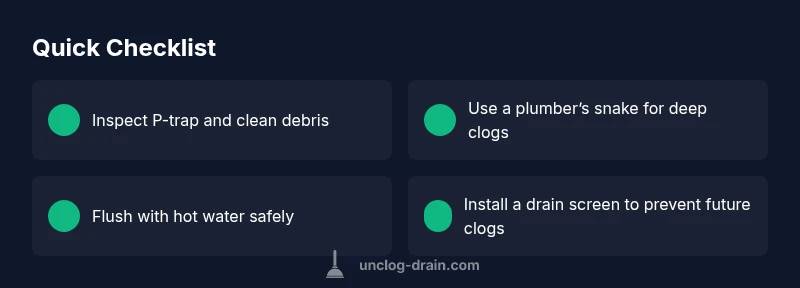
Install a drain screen, avoid pouring fats or solids down the sink, and run hot water with a splash of dish soap to periodically clean the line. Consider routine maintenance every 6-12 months.
Tip: Small habits prevent big clogs over time.
Diagnosis: Drain is slow or won’t drain after using Drano
Possible Causes
- highDeep clog beyond the trap or in the vertical stack
- mediumNon-plumbing obstruction (foreign object in pipe)
- mediumMineral buildup or grease forming a stubborn mass
- lowVent stack blockage causing poor drainage
Fixes
- easyInspect and clean the P-trap; remove debris manually
- mediumUse a plumber’s snake to clear deeper blockages
- easyFlush with hot water (not boiling) and a safe cleaning cycle
- hardIf the clog remains, call a licensed plumber for advanced hydro-jetting or camera inspection
Common Questions
Why isn’t Drano working for my sink, and could it be more than a simple clog?
Drano may fail when the clog is deep or composed of hardened grease or non-organic materials. It can also be overwhelmed by mineral buildup or a blocked vent. If basic clogs respond poorly, move to mechanical clearing and professional assessment if needed.
Drano fails when clogs are deep, greasy, or obstructed in vents. Consider mechanical clearing and a professional check if needed.
Is it safe to mix Drano with hot water or other cleaners?
Only use hot water after following Drano’s label. Do not mix Drano with other cleaners, acids, or bleach. Mixing cleaners can release toxic gases or cause dangerous reactions.
Don't mix Drano with other cleaners and follow the label. Hot water is okay if recommended, but never mix with other chemicals.
When should I call a plumber instead of continuing DIY fixes?
Call a plumber if you see persistent backups, gas-like smells, leaks, gurgling from the drain, or if a snake cannot clear the clog beyond the trap. A professional can diagnose vent issues or sewer line problems with specialized equipment.
If you have persistent backups or unusual odors, call a plumber. They can check vents and deeper lines.
Can I re-use Drano after a failed attempt?
If a previous Drano treatment failed, avoid reapplying immediately in a smaller amount. Follow label guidelines and prefer mechanical cleanup before retrying chemical products to prevent buildup and chemical reactions.
Wait before retrying Drano and follow the label. Prefer mechanical fixes first.
What maintenance helps prevent clogs in the future?
Use a drain screen, avoid pouring grease down the sink, run hot water weekly, and perform periodic mechanical checks. Regular maintenance reduces the chance of future clogs and the need for harsh cleaners.
Install a screen, avoid grease, and routinely flush with hot water to prevent clogs.
What are the signs a clog is beyond DIY fixes?
Backups in multiple fixtures, sewage smells, slow drain that worsens over time, or a blockage that cannot be cleared with a snake are signs you should seek professional help.
If other fixtures are affected or you smell sewage, call a pro.
Watch Video
Key Points
- Start with mechanical fixes before chemical cleaners.
- Inspect the trap and use a snake for deeper clogs.
- Only proceed with professional help if basic steps fail.
- Prevention is cheaper than constant repairs.
- Never mix cleaners; safety first.