Main Sewer Line Keeps Clogging? A Troubleshooting Guide
Urgent troubleshooting guide for homeowners dealing with a main sewer line that keeps clogging. Learn signs, safe checks, step-by-step fixes, and prevention tips from Unclog Drain.


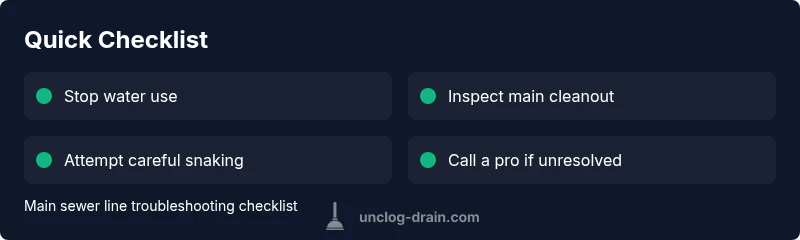
The most likely cause is a blockage in the main sewer line, not just individual drains. Stop using water and avoid flushing non-biodegradable items to prevent overflow. If you can access the cleanout, gently snake the main line or run a push drain auger, but prepare for a professional inspection if the clog remains.
Why the main sewer line keeps clogging
This happens when your home's primary drain path collects more buildup than it can safely carry. Common culprits include grease and wet wipes, but roots from trees, cracked pipes, or shifting soil can block the main line and cause backups across multiple fixtures. According to Unclog Drain, many homeowners first notice backups in sinks, toilets, and showers after ongoing moisture or heavy use. A professional inspection often reveals whether the clog is local near the cleanout or farther downstream. Recognizing the signs early—slow drainage, gurgling sounds, or sewage odors—helps you act fast and prevent overflow.
Immediate safety checks you can perform
Before you touch any pipes, prioritize safety. If you hear sewage smells or see standing wastewater, evacuate children and pets and ventilate the area. Do not mix bleach with ammonia or other cleaners; never enter a flooded basement without PPE. If you have a cleanout access, wear gloves and use a flashlight to inspect for obvious blockages. Turn off the main water supply if you suspect a severe backup. These steps reduce the risk of splashes and exposure while you assess the situation.
How to interpret sewer signs and symptoms
Backups in multiple fixtures point toward a main line issue rather than a single drain. Slow drainage that worsens after heavier water use (laundry, showers) suggests a downstream obstruction. Bubbles, gurgling noises, or sewage backups into tubs indicate pressure buildup behind a blockage. If effluent backs up into the lowest fixtures first, the main line is likely compromised. Document the symptoms with dates to share with a plumber.
Common culprits behind persistent clogs
Several factors contribute to recurring clogs: grease buildup that solidifies in the pipe, hair and feminine products in wastewater lines, food waste in garbage disposals, and tree roots forcing their way into older clay or PVC pipes. Additionally, a broken or collapsed main sewer line, offset joints, or collapsed pipe sections can trap waste and trap air, causing repeated blockages. Maintenance with regular cleanouts and camera inspections helps catch early signs.
When to call a professional and what to expect
If multiple fixtures back up, or you cannot access the main cleanout safely, it's time to bring in a licensed plumber. A pro will typically perform a camera inspection to locate the exact blockage, then choose between mechanical augering, hydro jetting, or trenching/replacement for damaged sections. Expect a diagnosis report, a scope of work, and a written estimate. The Unclog Drain team emphasizes that attempting aggressive DIY methods on a main sewer line can cause more damage than good.
Prevention: daily habits and seasonal considerations
To minimize future clogs, avoid flushing wipes, grease down the drain, or dumping coffee grounds into the sewer. Use a drain screen in every sink, run hot water in citrus or vinegar flushes, and schedule annual camera inspections if you live in areas with old pipe infrastructure. In climates with tree roots, plant trees away from sewer lines and remove invasive roots before they reach the line. Regular maintenance helps keep the main sewer line clear and reduces costly emergencies.
Cable snaking and hydro-jetting: what works for main line problems
Snake tests can clear short sections of the main line if the clog is near the cleanout, but they often fail for long, stubborn roots or collapsed pipes. Hydro-jetting provides a powerful flush that can remove mineral buildup and small roots but requires professional equipment and may damage fragile old pipes if misused. The safest path is to have a camera inspection guide the service so you know exactly where the blockage is and what method will work best.
What a camera inspection can reveal
A sewer camera reveals the interior condition of the line: the location of the blockage, pipe diameter, and any structural damage. This information helps you decide between repair, replacement, or relining. The camera report also documents root intrusion levels and sediment buildup so you can plan preventive steps and budget accordingly.
Steps
Estimated time: 60-120 minutes
- 1
Stop water use and locate the main cleanout
Shut off the building’s main water supply to prevent overflow. Find the main cleanout access (usually outside, in the basement, or near the foundation) and inspect for debris or a tight cap. Gather PPE and a flashlight before touching anything.
Tip: Keep a nearby utility knife handy to cut through any dirt seal if required. - 2
Prepare safe access and inspect
Put on gloves, eye protection, and a mask. Clean the area around the cleanout, remove any standing water if present, and check for a visible clog near the cap. Do not force the cap if it’s corroded; instead, contact a professional.
Tip: If you smell sewage or feel a rush of air, back away and call for help. - 3
Attempt careful snaking from the main cleanout
Insert a sewer snake and push gently until you meet resistance. Rotate the snake as you advance and pull back debris gradually. Do not force the cable or yank hard, which can damage pipes.
Tip: Use slow, steady turns to minimize pipe abrasion. - 4
Flush test and incremental recovery
Reconnect a small amount of water and observe drainage at a single fixture first. If flow improves, test others gradually. If the clog returns or worsens, stop and document for the plumber.
Tip: Document symptoms with times and fixtures affected for the technician. - 5
Call a professional if needed
If you cannot clear the blockage from the cleanout, or if backup recurs quickly, schedule a professional service for camera inspection and advanced clearing.
Tip: Professional technicians can determine whether hydro-jetting or trenching is required. - 6
Post-service check and maintenance plan
After clearance, re-test drainage in all fixtures. Create a preventive plan including regular cleanouts, root management, and avoiding flushables that can cause future clogs. Schedule a camera inspection if in an area with aging pipes.
Tip: Mark a calendar reminder for annual checks.
Diagnosis: Multiple fixtures backup or slow drainage across sinks, toilets, and showers
Possible Causes
- highBlockage in main sewer line from grease, wipes, hair, or sediment
- mediumTree roots growing into the sewer line
- lowCollapsed or cracked main sewer pipe due to age or shifting soil
Fixes
- easyLimit water use and access the main cleanout to try a safe clearance with a sewer snake
- mediumCall a licensed plumber for hydro-jetting or augering with camera inspection
- hardReplace or repair damaged pipes after professional assessment
Common Questions
Why does the main sewer line keep clogging?
Main-line clogs usually stem from a combination of grease buildup, tree roots, and pipe damage. If backups appear across multiple fixtures, the obstruction is probably in the main line rather than a single drain. A professional camera inspection helps identify the exact location and cause.
Main-line clogs come from buildup, roots, or damaged pipes. If multiple fixtures back up, you likely have a main-line issue; a camera inspection will pinpoint the cause.
Can I clear a main sewer line clog myself?
Limited DIY clearing from the main cleanout is possible for small, near-cleanout clogs, but aggressive attempts can damage pipes or push debris farther. If you’re not experienced with sewer tools, it’s safer to call a licensed plumber for evaluation and clearing.
You can try a careful snake from the cleanout if you’re comfortable, but avoid forcing methods and call a professional if unsure.
How much does it cost to fix a main sewer line blockage?
Costs vary widely depending on blockage location, pipe condition, and required methods. Expect higher costs if replacement or trenching is needed, and lower costs for simple clearance. A plumber can provide a detailed estimate after inspection.
Costs depend on what the blockage is and the work needed. Get an estimate after inspection from a plumber.
What are the signs of a main sewer line problem?
Common signs include backups in multiple fixtures, slow drains spreading across the house, gurgling sounds, and sewage odors. If water backs up in the lowest fixtures first, the problem is likely in the main line.
Watch for multiple backups, slow draining, gurgling, and smells. Backups in the lowest fixtures point to the main line.
Is hydro jetting safe for older pipes?
Hydro jetting can be effective but may risk damage on aging or fragile pipes. It should be performed by trained professionals who can assess pipe condition with a camera before proceeding.
Hydro jetting can help, but only if your pipes can tolerate it. Have a pro inspect first.
Can root invasion be prevented from recurring?
Root invasion can be mitigated with proactive measures: keep tree roots away from sewer lines, use root barriers where feasible, and schedule regular camera inspections to catch growth early.
Yes. Keep roots away and get periodic inspections to nudge growth before it causes backups.
Watch Video
Key Points
- Identify main-line backups early
- Safety first when dealing with sewage
- Professional help for stubborn clogs
- Prevent future clogs with routine maintenance