does unclogging cleaner work: a practical DIY guide
Explore whether chemical unclogging cleaners actually work, when to use them, risks, and practical steps for a safe, effective DIY unclog without hiring a pro.


Does unclogging cleaner work? In many common household clogs it can provide a quick, temporary fix, especially for hair and soap scum in sinks, showers, and tubs. It’s not universal or a guaranteed fix; results vary based on blockage type and pipe condition. Always follow safety guidelines, test a small area, and if the clog persists after 15-30 minutes, move to mechanical methods or consult a professional. This guide also covers safety, alternatives, and prevention.
does unclogging cleaner work
Does unclogging cleaner work? In many common household clogs it can provide a quick, temporary fix, especially for hair and soap scum in sinks, showers, and tubs. It’s not universal or a guaranteed fix; results vary based on blockage type and pipe condition. Always follow safety guidelines, test a small area, and if the clog persists after 15-30 minutes, move to mechanical methods or consult a professional. This article also covers safety, alternatives, and prevention. 2026 is a good year to review your approach to DIY unclogging and decide when to escalate.
How chemical uncloggers work and where they help
Chemical uncloggers work by dissolving organic material inside the drain. Most products use caustic agents such as sodium hydroxide or sulfuric acid to create a chemical reaction that breaks down hair, soap scum, and food particles. When you pour the product into the drain, it coats the blockage and loosens the bonds so water can carry the debris away. They are most effective when the clog is relatively fresh and located near the fixture (sink, tub, or shower trap). They are less effective for grease buildup in long runs or mineral scale that coats the pipe interior. They may also affect rubber seals and gaskets if used repeatedly or in improper concentrations. Always read the label for compatibility with your pipes (PVC vs metal) and never use in combination with other cleaners. If you have a septic system, consider an enzymatic or septic-safe product and avoid harsh chemicals that can disrupt bacterial balance.
Safety, compatibility, and do/don’t
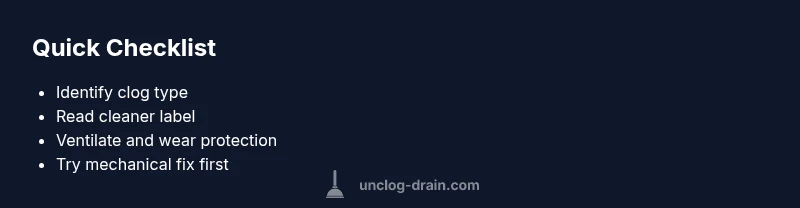
Safety comes first with any chemical unclogger. Use gloves and eye protection, ensure good ventilation, and keep children and pets away. Never mix cleaners with bleach, ammonia, or other chemicals—toxic fumes can form and harm you or damage plumbing. Check your pipe material; some formulas can corrode metal fittings or degrade rubber gaskets. Avoid repeated use in septic systems unless the product is labeled septic-safe. If you notice unusual smells, coughing, or chest tightness when using a product, stop immediately and ventilate the area. Consider safer alternatives if you have PVC piping or antique fixtures that may be sensitive to harsh chemicals.
When cleaners fail: next steps
If the cleaner doesn’t clear the clog, don’t force more of the product down the drain. Switch to mechanical methods: a plunger or a drain snake (auger) can physically dislodge or pull out the blockage. For sinks and showers, start with a standard cup plunger; for toilets, use a flange plunger designed for toilet use. If necessary, use a toilet auger to address commodes. After mechanical work, flush with hot water (not boiling) to help wash away debris. If multiple fixtures are involved or the problem persists beyond a single session, it’s time to call a licensed plumber.
Alternatives and best practices for stubborn clogs
Enzymatic or septic-safe cleaners are gentler options and may help over time without harming pipe integrity or septic systems. For stubborn clogs, combine mechanical methods with periodic enzyme treatments rather than relying on harsh chemicals alone. Maintain regular drain care: use a mesh screen, avoid pouring grease down sinks, and run hot water after use to reduce soap and fat buildup. For toilet clogs that won’t budge, a toilet auger avoids forcing chemicals where they aren’t needed and reduces risk to seals. Finally, understand when to escalate: repeated blockages or sewer odors indicate a more serious issue that warrants a professional assessment.
Step-by-step: safe usage and next steps
This section provides a safe, repeatable approach to unclogging with or without cleaners. Start with basic checks, identify the fixture, and decide on a plan. Always ventilate and wear protective gear. If you decide to use a chemical cleaner, follow the product label precisely and avoid combining multiple products. After attempting a cleaner, test the drain with a small amount of water to observe any improvement before proceeding to mechanical methods. If progress stalls, move to a mechanical approach or seek professional help.
Steps
Estimated time: 40-60 minutes
- 1
Assess the fixture and safety
Identify whether you are dealing with a sink, tub, or toilet clog. Read the label on any chemical cleaner you plan to use and gather gloves and eye protection. Ensure good ventilation in the area.
Tip: Ventilate the area before opening chemical products; a simple window or fan helps a lot. - 2
Try a mechanical first approach
For most household clogs, a proper plunger is your fastest test. Use full, confident strokes to pull the clog away from the trap. If water doesn’t seal well, add a little water to help create suction.
Tip: Seal the drain surface well; a poor seal reduces effectiveness. - 3
If needed, use a drain auger
Insert the auger slowly, rotating as you push to break through the blockage. Apply steady pressure and pull back to remove debris. Clean the auger after use.
Tip: Wear gloves and maintain steady pressure to avoid damaging the pipe. - 4
Consider a chemical cleaner as a last resort
If you choose to use a chemical cleaner, pour as directed and wait the recommended time before flushing with hot water. Do not mix with other cleaners and avoid using multiple products in quick succession.
Tip: Always follow the label; misuse can cause fumes or pipe damage. - 5
Test and re-evaluate
After attempting fixes, run water to test drainage. If water drains slowly or smells, repeat a step or proceed to professional help.
Tip: Document what methods you tried to inform the plumber if needed. - 6
Prevent future clogs
Install a drain screen, avoid pouring oils, and flush with hot water regularly. Consider maintenance routines to minimize buildup.
Tip: A quick weekly flush can significantly reduce clogs.
Diagnosis: Drain is slow, gurgling, or experiences partial drainage after using a chemical unclogger
Possible Causes
- highHair, soap scum, or food particles clogging the trap or proximal pipe
- mediumGrease buildup or mineral scale further down the line
- lowBlockage beyond the trap or main sewer/vent issues
- lowChemical reaction or incompatibility with existing cleaners in the system
Fixes
- easyTry a mechanical method first: use a plunger appropriate for the fixture (cup plunger for sinks, flange plunger for toilets)
- easyIf the plunger fails, use a drain snake/auger to reach further down the pipe
- easyFlush with hot water after mechanical work to help clear remaining debris
- hardIf the clog persists, call a licensed plumber; persistent blockages may require specialized equipment
Common Questions
Do chemical drain cleaners damage pipes?
Yes, misuse can damage pipes, seals, and fixtures. Follow the label, avoid mixing products, and use chemicals sparingly, especially on PVC piping.
Yes, misuse can damage pipes. Follow the label and don’t mix cleaners.
Can unclogging cleaner be used in toilets?
Some products are designed for toilets, but many are for sinks and showers. If used, follow toilet-specific instructions and avoid mixing with other products.
Only use toilet-specific cleaners when addressing toilets.
What should I do if the cleaner doesn’t work?
Stop using it after the recommended time, flush with water, and switch to mechanical methods. If still clogged, call a plumber.
If it doesn’t work, stop and try mechanical methods, then call a plumber if needed.
Are enzymatic cleaners safer for septic systems?
Enzymatic cleaners are generally gentler on septic systems and work over time; they are less likely to disrupt beneficial bacteria.
Enzymatic cleaners are usually safer for septic systems and work gradually.
Is it okay to mix cleaners?
No. Mixing cleaners can create toxic fumes or dangerous reactions. Use one product at a time and ventilate.
Avoid mixing cleaners; use one product and ventilate the area.
When should I call a plumber?
If you’ve tried basic methods and the clog persists, or if you smell sewer gas, call a plumber. Persistent blockages often indicate a bigger problem.
Call a plumber if the clog stays after fixes or you smell sewer gas.
Watch Video
Key Points
- Start with a mechanical fix before chemicals.
- Never mix cleaners—fumes can be hazardous.
- Know when to escalate to a plumber for main-line or vent issues.
- Prevention reduces future clogs and saves time/money.